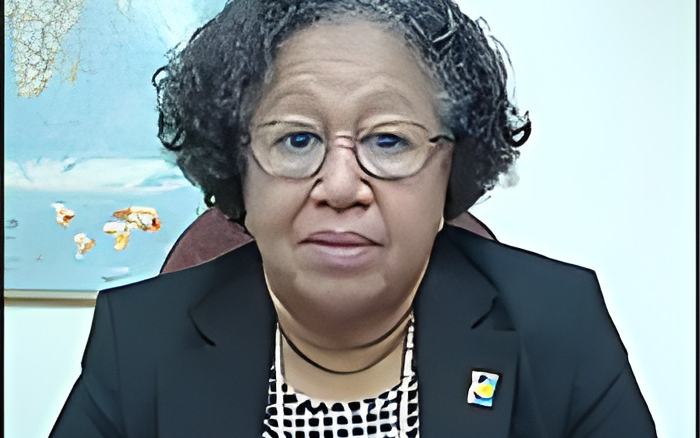
Turning to other regional matters, the CARICOM Secretary-General also discussed how the 15-member countries have been attempting to use the Caribbean Single Market and Economy to strengthen food security within the region. This is especially important because Belize and the other nations import a lot of its food for its population. And given the current bottlenecks within the world's shipping lanes, the Heads Of Government want to ensure that their citizens will not suffer any shortages due to COVID.
Here's what Dr. Barnett had to say on that topic:
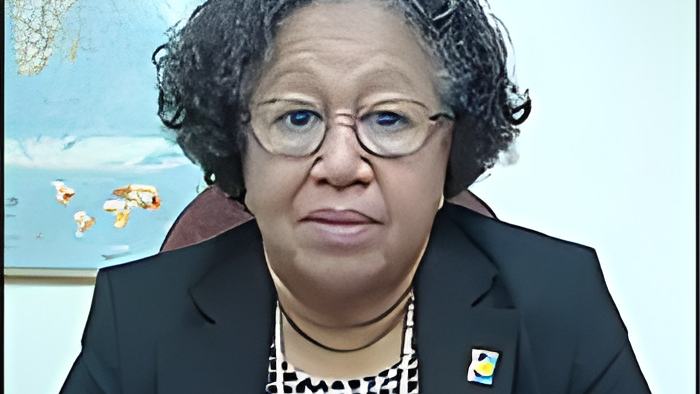
Dr. Carla Barnett - Secretary-General, CARICOM
"With regard to the CSME, in Agriculture, the special ministerial task force on Food Production and Food Security has been working closely with the private sector on an action plan to follow up and monitor implementation of the strategy put forward by the President of Guyana, who is the head responsible for the agriculture sector in our quasi cabinet. In a document entitled Advancing the CARICOM Food Systems Agenda, Prioritizing Regional Food, and Nutrition Security, we look forward to receiving a comprehensive plan from the CARICOM Private Sector Organization for Investment in the Sector. We have also agreed on a program of support measures for industries and firms in the OESC and Belize, to make them more competitive within the CSME. This is in keeping with treaty provisions which aim to make the benefits and opportunities of the CSME more equitable."
The press also asked the Secretary-General for her views on barriers to trade that are still causing friction for members of the Caribbean single market. Viewers will remember that Belize sued the State of Trinidad and Tobago for allegedly allowing extra-regional brown sugar to be imported into their borders without charging the 40% common external tariff. Here's what the Secretary-General had to say on the topic of barriers to trade between member states:
Reporter
"On food security in the region here in Guyana, President Ali has spoken extensively about inter-regional trade barriers that still exist, that that may be limiting, that continue to limit the food security, the propulsion of the food security agenda."
Dr. Carla Barnett - Secretary-General, CARICOM
"As regards the trade barriers that may be seen, maybe be affecting the transportation of agricultural commodities within the CARICOM region. The Treaty and the Practice provide for ways for that to be dealt with. it's an issue that's always hot on the table, and it is extremely hot on the table right now because of the calls for increasing food security. And therefore, the increased production of agricultural commodities, particularly by those states that are seen to be great - have great potential, meaning that the coastal states like Guyana, like Belize, like Suriname. We would like to be able to see those countries produce more food and have that transported, exported within the region to the other countries. It's not all the issues faced. There are not only in terms of trade barriers, of course, but also basic transportation. So transportation has risen to two high priorities there as well. The COTED is the ministerial council that treats with the removal of the addressing of trade barriers, the addressing of derogation from the treaty, where that may be required. And then, of course, the agency that has the responsibility for interpreting what the treaty means in particular, the CCJ. I always encourage countries, and we've seen greater use of facilities by certain countries."