Throughout our newscast so far, we've shown you several public officials commenting on different national interest topics. Most of those press encounters happened during or after the official launch of the Briceno Government's National Investment Policy and Strategy, aka NIPS.
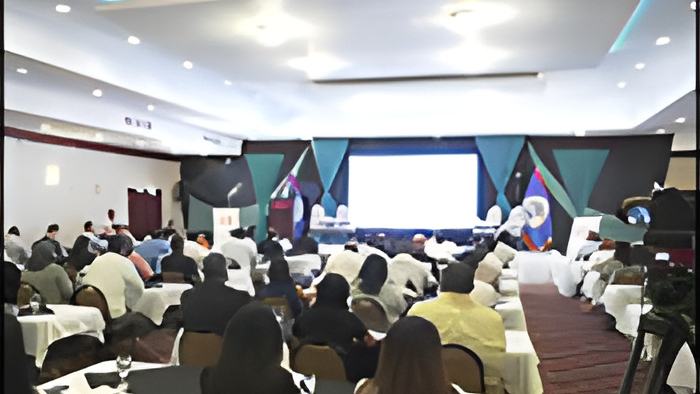
We gather that it's supposed to continue the government's investment policy that Belize is open for business. The launch event happened at the Biltmore Plaza Hotel this morning, and our news team was there. Daniel Ortiz has that story:
This morning, the Briceno Government officially introduced its new plan to encourage and attract foreign direct investment in Belize.
It is unclear how much of an influence the first ever Belize Investment Summit, under the theme, "Belize: Open for "Business," has had in developing this plan.
But, it is officially known as the National Investment Policy & Strategy, aka NIPS.
Narda Garcia - CEO, Office of the Prime Minister
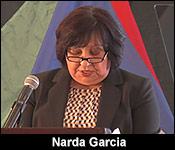
"The government of Belize, under the leadership of our Prime Minister from the beginning of this administration, has undertaken strategic initiatives to create an enabling environment by creating policies that mitigate the challenges faced by businesses when attempting to enter our local markets. The NIPS is one of the greatest responses as it seeks to establish a national framework to guide both domestic and foreign investments that will determine with greater certainty and predictability a national direction towards Belize's continued socio-economic development. It is expected that this policy will ultimately lead to continued reforms that will be implemented to improve the overall investment climate in Belize."
The CARICOM Development Fund funded the careful calibration of this Investment Policy and Strategy under its Country Assistance Programs.

Rodinald Soomer - CEO, CARICOM Development Fund
"We at the CARICOM Development Fund and CDF are delighted to have played an integral role by providing the necessary grant financing for the development of the NIPS, which is intended as indicated just a while ago, to position Belize as a competitive, robust, and favored investment location in the Central American Caribbean region by the year 2030."
So what is the NIPS? How does it work? And most importantly should, why you, the general public, and more specifically, investors, care about this new policy and strategy?
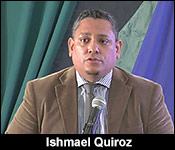
Ishmael Quiroz - Executive Director, Economic Development Council
"The document itself is structured beginning with the situation analysis, followed by the highlight of the policy and strategy, which are the nine pillars of the next. Pillar number one speaks to the development of an integrated national strategy for promoting investment. And what this specifically speaks to is to ensure that the various programs, packages, policies, and processes that contribute towards investment, attraction, and fostering and facilitation are aligned and harmonious. Pillar number two speaks to the delivery of government services. I think of government e-government, and what this speaks to is the accessibility to government services by the private sector and by the general public. A lot of what this entails is improving service delivery by simplifying the processes and by digitizing what is on offer. Pillar number three covers the delivery of financial services for investment and access to finance for investment. Pillar number four is the reform of the taxation system for sustaining private investment. For a long time, especially, the private sector has complained that the tax regime, the tax system in Belize is burdensome, is complicated, and therefore a lot of work has already been done in ensuring that that is improved policy. Pillar number five speaks to the revision of the existing regulatory framework and the judicial system to make it more investment to make millions more investment friendly. As mentioned before, investors require certainty. They need to be assured that their investment is legally protected and that their rights as investors are protected."
The NIPS has four other pillars, and they all seek to address the pain points of doing business in Belize.
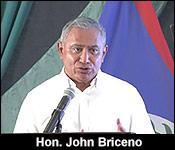
Hon. John Briceno - Prime Minister
"The primary objective of this initiative is to increase macroeconomic growth, which would provide room and opportunity for all Belizeans with the potential to accelerate foreign direct investment growth on the global stage. In fact, my recent trips to Brussels and Lisbon stimulated great interest to increase foreign direct investment to please. And we have assured those and other countries that Belize is open for business. The country has commenced reforms to facilitate local and foreign investments in our established priority sectors. While we are undergoing these reforms, there are still several key elements that need to be improved to encourage and facilitate private investment in Belize and contribute to the sustainable development of our country."

Kay Menzies. - Representative, Belize Chamber of Commerce & Industries
"As local investors, we have certain advantages. We know who to call or who to talk to in order to get things done. But we have a long way to go to where we reach the point where I wake up in the morning, I have a business idea, and by tomorrow, I form the company and I'm ready to go. That's where we should be heading as a country. Because in doing that, yes, there will be a number of businesses that won't make it. But the more businesses that can try their hand at it, the faster they can get going, the quicker they can get financing, and the stronger the likelihood that their idea will take off. And all those ideas then contribute to economic growth. So the nine pillars that were outlined earlier by Ismael in his presentation are what we've been seeing for years the issues that are faced by businesses trying to get going, businesses trying to continue and businesses trying to grow and access the broader outside markets."
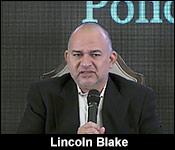
Lincoln Blake - Investment Policy & Compliance Unit
"There are several pillars within the NIPS that interject regarding diversification. One is the establishment of a network of market intelligence using data, a data-driven approach to preparing policies and initiatives. So this is not guessing. This is actually using data to prepare those specific initiatives that would actually generate employment, and change legislation so that you can grow the economy."
We understand that this investment policy is expected to guide the government all the way up until the year 2030, on how best to create an enabling climate for foreign direct investment.