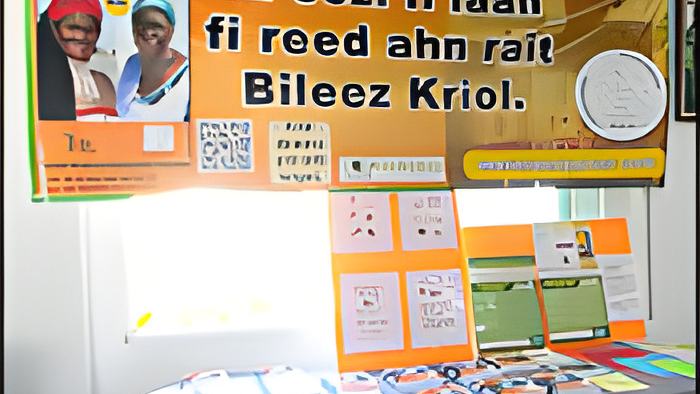
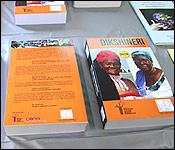
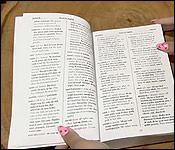
The National Kriol Council Launched its second edition of the Kriol dictionary this morning with more than 500 new additions and phrases. Jomarie Lanza was at the launch and here's her report.
Often you hear people debate whether Kriol is a language that stands on its own or not, but with the volume of work The National Kriol Council has invested over the past 7 years, finding words, verifying spellings pronunciations and so forth, it's safe to say that for them Kriol isn't just a language, its a way of life and expression.
Silvanna Udz, Editor in Chief, National Kriol Council
"That's the power to have it codified to have it in a way where everybody can have it, one sound and one symbol which right at the beginning explains graphically, There are pictures and so that explains how you are a long A or a long O always one sound and one symbol."
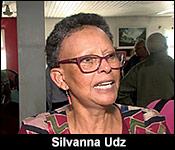
"Well it has more than 560 new entires and a new entry might be a new sense of the word like the word thought "Taat" "Yuh di tink kukunat taat" right? But we went to Flowers Bank and the lady is talking about " No man tel ah sidung pan di taat in a di doari." The little board, now we didn't know that but anyone who doesn't know dory and they live at the river banks know about Taat so that got added in as a new sense of the word "Taat" a new meaning of Taat so some words hey had as adjective like maybe one word already got to add in for the upcoming third edition is "Wasa" because we have "Wasi" if you are "Wasi" then you fiery and so right but that is that adjective. But on a show someone said how about "Wasa" so we said no man its "Wasi," "Wasa" is the noun. "You da wasa yuh tu wasi" alright? So things like that are in here "Bollo bruto" from the Spanish language "Bollo Bruto" comes from a tamales and left over pol. So we have a lot of words like that "Pepeswinto" alright yeah."
So is there a wrong or right way to spell a word in Kriol? a phrase? Or how are the meanings derived? According to Udz many of these expressions originate from some of the oldest Kriol speakers, and before it gets added to the other thousands of words they've listed online, she says they first consult with the committee for feedback.
Silvanna Udz, Editor in Chief, National Kriol Council
"If you use a standard orthography then there is a right way to spell it. You might have a variant way, Ana accepted variety because that's how people pronounce it like Fi lots of people say Fu. So "Fi, Fa, Fu," are one of the words for, for that has the most variants but when you standardise you don't want too many variants because then you move away from the standard so a dictionary is set out to be descriptive to describe what people are already doing. The minute you get it codified it becomes prescriptive and you start prescribe down the road, let me check the "Dikshineri" "Men we check the Dikshineri" right so we begin this one in 2018, more than a decade the 207 was the first one so 2018 online we decided. I was in Taiwan and then we had States and of course Yvette holding it down here, we started collecting, and we said we can't go to the villages and so again we can't do that so there is the internet. "Mek wi hyaa" so I the listen from 2:00 in the morning I am listening Taiwan time to their morning show whatever time it was, no at 7:00 in the morning would be 9 at night in Taiwan, and I am collecting words and collecting and sending it to the committee to check, so this is a labor of love and with the internet and technology we can go faster now."
And that word "Pepeswinto" - what does it mean? Well, it translates to Big Shot or self important person.
Copies for purchase are available at the Leo Bradley library.