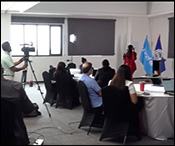
The Ministry of Human Development, Family Support and Gender Affairs, in collaboration with the Anti-Trafficking in Persons Council, the Child Justice Committee, and the Judicial Education Institute of the Senior Courts of Belize, today launched a two-day training under the theme, "Promoting Child-Centered Justice: A Judicial Training on Trafficking in Persons, Restorative Justice, and Diversion." The initiative brings together members of the judiciary and justice sector stakeholders to enhance judicial knowledge and promote child-centered decision-making that prioritizes the rights, safety, and well-being of children. Consultant Dr. Cherisse Francis explained how Belize has improved in addressing this:
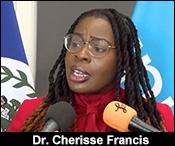
Dr. Cherisse Francis, Consultant
"There's a lot of issues, a lot of conflicts and tensions with young people in Belize and across the Caribbean, and it's important for judicial officers to have the knowledge to be able to understand that it's not just about applying the law strictly, but to understand how it impacts people, especially young people. What are the ramifications of that and the impacts that this could have on long-lasting lives for children, communities, and families."
Dr. Cherisse Francis
"I think that oftentimes judicial officers, they have a limited remit. Their remit is to apply the law as it is set out within the legislation. Oftentimes that does not allow a lot of space for judicial officers to bring their more human side or their compassionate side to the courtroom. So whereas a judicial officer might understand or see, as my presentation would have highlighted, that something is unfair, that does not mean that it is against the law, and they might not be able to make those changes that they would like, as humans, to make. So that becomes a challenge."
Reporter
"Belize, comparatively to other countries in the Caribbean, how are we doing in terms of addressing human trafficking?"
Dr. Cherisse Francis
"I would say that that is an interesting question. It depends on how you measure how you're doing. I think that Belize is doing really well in terms of the prevention aspect. There's been a lot of training done by the Anti-Trafficking in Persons (ATIP) Unit, by the ATIP Council, in terms of persons with liquor licenses, training transport officials, training media. There's been a vast amount of training which increases the knowledge on anti-trafficking."