As we have reported, the government has announced that off shore oil drilling is banned in all 7 World Heritage Sites in and along the Belize Barrier Reef System. OCEANA, COLA and other agencies have welcomed and applauded this decision. But they say, there is still more to research, more to be done on this issue. And that's why OCEANA held a conference today at the Radisson to continue the discussion of off shore oil drilling in Belize. Trinidadian Expert Marc De Verteuil was invited to present on Trinidad and Tobago's challenges as the oldest and most experienced oil producing country in the world. He says that Belize can learn a thing or two about the catastrophic risks involved in off shore oil exploration.

Marc De Verteuil - Director and Founder, Papa Bois Conservation Group
"Trinidad is littered with ancient oil and gas infrastructure, old pipes, platforms, well heads. Some of these well heads have never been properly capped. There's one well head in particular I can think about 5 years ago I stumbled across it and it was Trinidad's first commercial oil well. It was drilled in 1867; the oil well was leaking about 4 or 5 gallons every day into this big sump which occasionally would be emptied by the oil company. If it started to rain the sump would fill up with water, the oil drifts on top of the water, it would flow into the neighbourhood. Create a huge environmental hazard, go straight into wetlands. In dry season the whole area would dry out and you get bush fires and the oil and the well would actually get caught on fire every year; fire services would have to come and put it out."
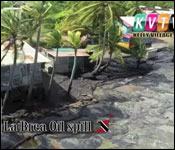
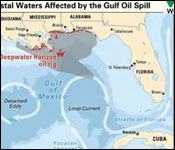
"Off shore oil production is a very risky, very technical industry. If something goes wrong, it's not easily dealt with. Just look at the Gulf of Mexico disaster, we had the most advance country in the world in the United States; one of the biggest most advanced oil companies in the world, British Petroleum. They could not contain the Gulf of Mexico oil spill. In Trinidad and Tobago, we had an oil spill in 2013. It causes a leak of 7,000 barrels of oil; devastated our mangroves, devastated fisheries. The cause was literally a 10 dollar bracket on a transmission line that broke. The bracket could have been bought in a hardware, it caused damages totalling we don't even know how much damages was really caused but you talking 10 of millions of dollars, maybe 100 of millions of dollars. These are the risks that Belize is exposing itself to and it will happen, at some point you are going to get an oil spill, a big one, a small. Belize is very unique and fragile in a sensitive ecosystem; I don't think it's a chance you can take."
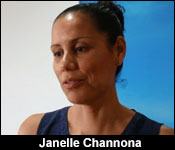
Janelle Channona - President, OCEANA
"We have called this event the energy of nature vs the nature of energy. So if you think about the nature of energy of course we're talking about inherit hazards and consequences of extraction of natural resources; meaning of course crude. Then you think of the energy of nature which is waves and wind and sun that fuel actual life. Fossil fuels are of course used to fuel routines and this conference we have been putting together for several months. So I have to say it was more time with climate change conference happening in Europe right now than it was with local activities but timing wise I think it worked out perfectly that the first week of December we get such an announcement about a ban within a moratorium and then to have this conference come in the 2nd week to talk about continuing the conversation. This is about making sure we continue to have this conversation, that we are bringing information to the table. Objectively we've had several different sides shared today and it's all about having people make an informed decision. We don't want to tell people what to think, tell people what to do, we want people to be able to internalize the information, localize it to Belize and then make an informed decision."
"Looking at where we are now, we're talking about approximately 14 to 15 percent of Belize's off shore areas being permanently banned. That leaves that if the moratorium is ever lifted about 85 percent of Belize's off shore area as explorable. That's why we have to continue the conversation. Because if in the very distant future the moratorium is ever lifted, we have to make sure 1.) We know what we're doing when we decide as a people to lift the moratorium. 2.) We would have had enough conversation and stimulation to decide what needs to be in place to ensure the integrity and protection of those resources if we'd ever decide to engage in off shore oil."
OCEANA says it is already planning for the anniversary of the People's Referendum in February.