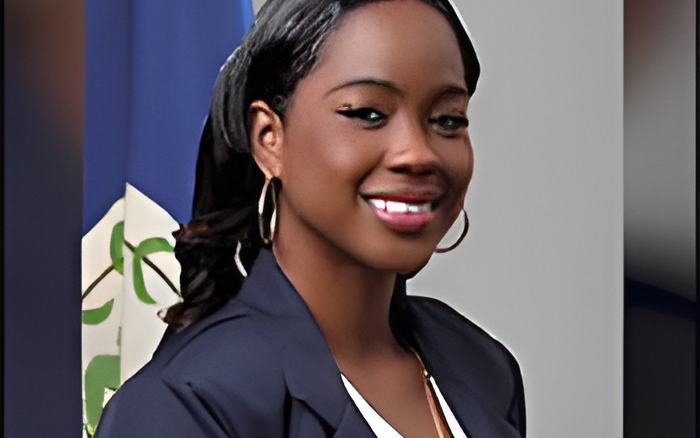

Prime Minister of Barbados, Mia Mottley was at the US Capitol building in Washington DC yesterday speaking up for CARICOM Countries. She testified before the House Committee on Financial Services chaired by congresswoman Maxine Waters. The subject was the impact of bank de-risking on the region.
As you probably know by now - de-risking occurs when large international correspondent banks terminate their relationships with banks in small countries to avoid, rather than manage, risk - which can be costly. This has been a major problem in Belize's banking sector over the past 15 years - where correspondent relations have been cut off almost at a whim, significantly limiting the international business reach of domestic banks.
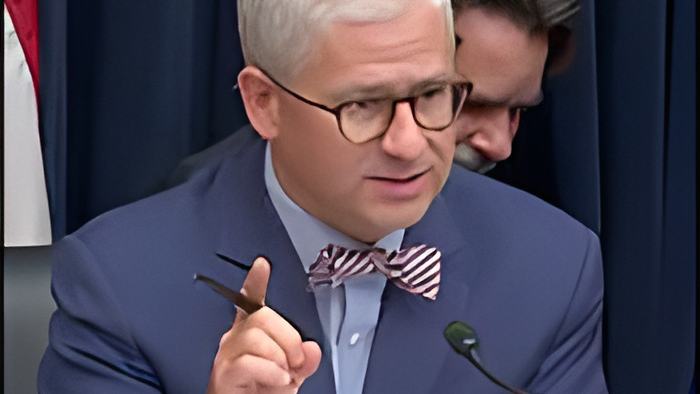
One of the Committee members - a senior US congressman - opened up the session by noting that widespread de-risking is bad business for the United States in a geopolitical context. After that, PM Mottley gave an impassioned address:
Patrick McHenry, US Congress
"The result is a large scale de-risking and de-banking for entire geographic areas that can sweep up ordinary people and small businesses and have severe economic consequences and severe consequences for friends, allies and neighbors. As a matter of American policy, we are we driving people away from our friendship as a Nation."
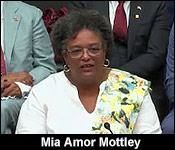
Mia Amor Mottley, Prime Minister, Barbados
"It means that those corresponding banks, over the course of the last 10-12 years have made a judgement that we are simply too small as I just told you. In order to get involved because the enhanced due diligence means increase cost of regulation, increase cost of compliance and rather than do business with us they say 'thank you but no thank you'. We, the majority of our country also depend on tourism, what happens when your tourists come, what happens when your investors want to build hotels. This is the most nonsensical thing that we have seen in public policy. An investor who wants to come to Barbados from Europe goes into a bank and says 'I want to transfer x million dollars for an investment', the bank then says 'oh Barbados, no we have to do enhanced due diligence because they're on a list, oh Belize we have to do enhanced due diligence'. When that happens, they say but guess what, the enhanced due diligence is too costly for us, you need to go and find another bank and therefore what we face is the situation that the very thing you set out to achieve which is the avoidance of terrorism financing, the avoidance of money laundering on which we are all agreed is likely to happen because you are driving people underground. There is no benefit in driving our citizens underground or making our countries uncompetitive such that our economies are at risk of becoming underdeveloped or failed states. We have been making noise for near a decade and we want to thank this committee for hearing us today because that noise cannot continue."
In her remarks - which were biting at times - Mottley noted the central injustice in the US crackdown on money laundering - which has blacklisted small countries such as Belize and Barbados, but let all the major money capitals operate without hindrance - and that's where the Russian oligarchs hid their money:
Mia Amor Mottley, Prime Minister, Barbados
"When you wanted to find the money launders with respect to Russia, you didn't come to the Caribbean, you went to London, you went to New York, you went to Zurich, you went to Luxenberg and I say this because there has to be a fundamental injustice in a system that puts on a list. Not Luxenberg, not the United States of America, not the United Kingdom, but puts Jamaica, Trinidad, Guyana, Barbados, all of which were put on a list. Look at the list of countries that are listed and you'll see that they are all almost former colonies and people of color and look at the countries who in spite of being able to open a bank account within hours in Delaware or Wyoming, within hours in Luxenberg or Zurich and they remain off of these lists. Now speak the risk of money Laundering and look and see where the divide comes. I believe that this committee has a keen eye for fairness and equity and all we ask today is for a leveled playing field."
The hearing lasted over 3 hours and number of banking executives appeared after Prime Minister Mottley.
We note that her testimony in front of the House Financial Services Committee marked the first time in nearly 40 years that a Prime Minister testified before Congress.