But while negotiating the revamped MCC agreement with the Americans has been difficult, settling the issue of the Cuban medical brigade is far more complex.
Belize has been trying to hold onto them-but the Americans insist they've got to be sent back because they call it forced labor. We asked Fonseca about it:
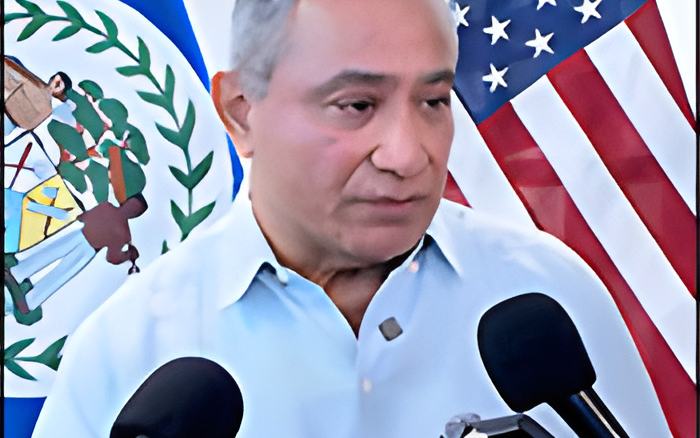
Francis Fonseca, Minister of Education, Culture, Foreign Affairs & Foreign Trade
"I think back in March, or it may have been April, the cabinet considered this very important matter. And what the cabinet directed and instructed was that the Ministry of Foreign Affairs and the Ministry of Health and Wellness work together over a period of six months, so we're like three or four months into that six-month period, to come up with options that could then be taken back to the cabinet for a final decision on how we move forward with the program."
"Now, obviously, one of the options is winding up the program. So winding up the program, can we establish some permanent residence program that the Cubans would be comfortable with, satisfied with, the Americans as well."
"Could we work out individual contracts? So that's the work that really started and has been ongoing to devise this brief, this plan, with a number of options that will then be presented to cabinet. So I think what the Charge was saying was that, because in their briefings with us, we have shared with them that plan."
"That is one of the options and that's what they support. They support winding up the program and if we decide to go in that direction, they obviously would want us to do so. So that is one of the options on the menu, on the table."
Jules Vasquez
"You project that there is some room to work around this issue, but really with the Americans, there's no legal room. Once you are listed for two successive years as having forced labor, as they call it, Cuban medical doctors, and we have already been listed once, and at the end of this year, if we still have it, we will be listed twice."
"They cut you off. You lose all support. The MCC grant gone, etc. So we can talk around the issue, but the fact is, for the Americans, it's a binary situation. At the end of December, they will ask yes or no."
"If the answer is yes, we still have, they will cut us off."
Francis Fonseca
"That may be the case. That may be the case. But we're not there yet. We're not there yet. And that's certainly not the message that we have gotten from them."
"As you know, you know, one of my last trips, you know, before my surgery, Prime Minister Merseño and I were in Washington, where we had an opportunity to meet, you know, with the Deputy Secretary of State, Secretary Landau, who is responsible for the Western Hemisphere."
"And we discussed this issue as well, very briefly. But again, I think they are prepared. They're working with Cuba. They're prepared as well to work with us. So yes, as you rightly point out, they want the program ended."
"But I still think there are opportunities for us to find some reasonable, responsible middle ground."