Just recently, Belize under the International Commission for the Conservation of Atlantic Tunas, received a quota for the production of yellow fin and big eye tunas as well as another marine product: albacore. But for our fishing industry it really means nothing because in reality we do not presently harvest these types of fish. But there's money, big money to be made form them and all that may change soon. The Fisheries Department is looking at new marine products for the export market outside of the traditional conch and lobster. Here to help with that plan is the Japan International Cooperation Agency that over the next week will be training Belizean fishermen in long line fishing. We found out more.
Alfonso Noble Reporting,
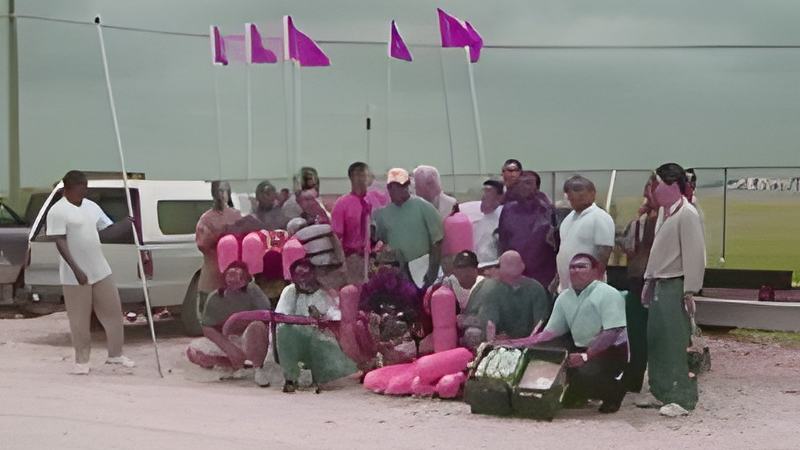
As these fishermen pose with their new long line fishing gear, they are ushering in a new era of fishing in Belize. They will now be harvesting the non-traditional marine resources that previous to this have not been fully exploited in Belizean waters. This is all being made possible with training from the Japan International Cooperation Agency.
Mauro Gongora,
"It has to do with capturey fishery development and preparational fishing gear for deep water fishing in Belize. This is a first for Belize, this type of fishing is what you call long line fishing and we are targeting species like the squid and fish species at depths of between 900 and 3,000 feet. These species have been found in Belizean waters. The fishermen who are participating in the workshop have identified the squid, the diamond back squid, as being found in our Belizean waters. There has not been commercial exploitation of this fish source as yet."
But while new equipment and fresh training on long line fishing will allow for better use of the marine resources, there is the concern that marine stocks will be depleted. That is because long line fishing has had a tainted record where massive, deleterious hauls are made. But while there may be a concern, Fisheries Officer Mauro Gongora says that over the years there have been developments to address the negative impacts of the kind of fishing.
Mauro Gongora,
"These types of hooks that we use for the squid is a special type of hook which for example turtles or any other type of fish will not be catch using this type of hook. So its a targeted fishery that we are looking at and its not detrimental to the fishing industry, that's not true. In some fisheries, in some parts of the world, for example some type of seabirds would get caught in these long lines. In Belize we don't have that problem, as a matter of fact, in the entire Central American region we don't have the problem of seabirds being caught, captured, on the hooks. You will know that in Belize we don't have long line fishery. Belize is one of the only countries in Central America that doesn't have a long line fishery."
And now Belize will be added to the list of countries that come as close as possible to fully exploiting the marine resource with minimal negative impacts.
The training seminar ends on Friday.