
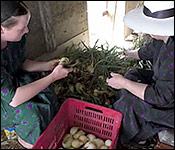
And in agriculture news, last Friday you heard that there were complaints from the farmers of Corozal that onions were being imported while theirs were rotting in the fields. The Minister of Agriculture had said that this is always the issue at the start of the season because of an overlap of when the importation stops and the harvesting starts.
However, this explanation isn't enough for the farmers. They say that if the ministry had bothered to visit their farms, they would know that they started producing from mid-December, and that the importation should have stopped by now. Instead, now the market is saturated with imported onions, which is forcing them to sell their sacks 10 - 30 dollars cheaper than normal. And with the rising cost of fertilizers, insecticides, fungicides, and even sacks, these farmers are barely scraping by.
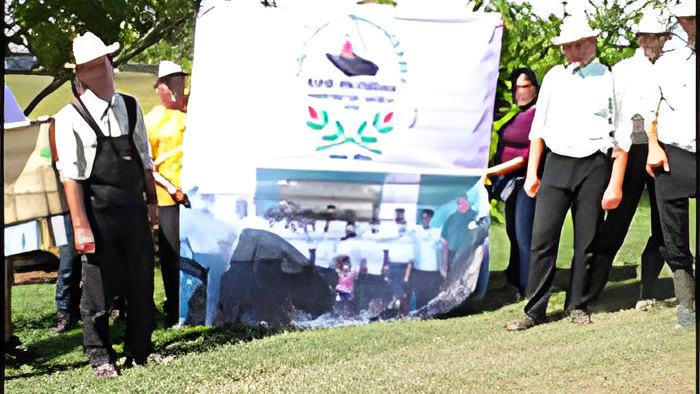
And today, members of three cooperatives gathered in Little Belize to air their concerns. Courtney Menzies travelled north and met with them, here is her story.
Onion - it's the vegetable that's in most of your meals, so the demand is always high. But every year, as the local harvest season begins, the farmers are faced with the same plight - there are too many imported onions still on the shelves.
This happens because the Ministry of Agriculture imports them to fill the gap during the holidays, but the Corozal farmers are saying that it's during this transition period that things get rocky.
Orlando Ek, Chairperson, Concepcion Vegetable Coop

"It's the overlapping that affects us in the production because since the middle of December, the production has already started. It started here in Little Belize where we are here in Little Belize, and it's not only here, Patchakan already sold some onions, Concepcion already sell some, and the production already started."
"This importation bothers us heavily. Why? Because the prices go down. This morning, I have a friend from Xeibe, he told me yesterday that he will be selling at $75 wholesale for a sack and this morning he call me and he told me, hey, they just want to pay me $60. And we are just starting. If you know, the prices of fertilizers gone up like 100%. Chemicals gone up like 15-20%. So our cost of production is very high so if we are selling at a low wholesale price, so we are not gaining that much and we have our families, it's not only one family, it's a lot of farmers, it affects a lot of Corozalenos farmers, and I think it's not fair."
Sabino Yam, Secretary, Northern Sustainable Agro-Producers Coop

"This year, it is one of my worst because I actually had to sell almost cost price and due to this increase like how my friend Orlando said, everything went up, price is sky high, over 100% increase too we can't afford to be selling our products at a low price."
"Last year, this same time of the year I was selling [for] $90 - $100, that would be $2 - $18 per pound. That was last year. Just imagine, the price of fertilizer and everything was not that high last year and I could honestly make a good income, pay the bank, and have a little for me. This year, honestly, it was impossible for me to pay everything that I owe at the bank."
Isaac Nikolai, Member, Little Belize Cooperative
"It's a big problem for them because sometimes when they sell their product, because of the cost of production, expenses are too high, sometimes there is no income left for them and most of the time they are getting credit from a place here called La Bodega and that is more or less how they are working but still, they sell their product and they still don't have income that they want to see."
And they say that even though their farms are full and ready for harvesting, the Ministry is still flooding the market with imported onions, and the farmers believe consumers will be more drawn to those ones.
Orlando Ek, Chairperson, Concepcion Vegetable Coop
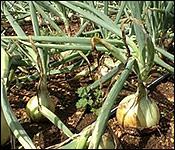
"Our onion is just coming out, it's just starting, and in this transition, they might prefer the imported ones, because they are cured ones because we have to start our onions in this time of the year because if we leave it, if we make it dry, what will happen? All will accumulate and we'll have a low price. Like last year, the same thing happen. They bring a good amount of onions and that bothers the price. And just in this week on the 3rd of January if I am not mistaken, they imported more than 40,000 pounds of white onion and more than 10,000 pounds of purple onion. So imagine, you have that amount imported and plus our one that is going out and that is really affecting us."
And it's this time of the year that these onion farmers normally stand to make the most money - but because of this issue, they'll have to take some drastic measures to ensure that they get the most out of their produce.
Isaac Nikolai, Member, Little Belize Cooperative

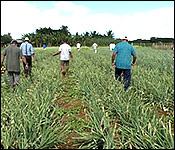
"The problem here on this farm is that they are harvesting, it's not quite the time yet, but they are harvesting it as it is now on the field because they have the fear that the price will go lower so they want to at least make something on it."
And the farmers are now calling on the Ministry to fix this recurring issue once and for all. They say they believe it stems from a lack of communication.
Sabino Yam, Secretary, Northern Sustainable Agro-Producers Coop
"In my point of view, I think it's communication. We're supposed to have the Ministry of Agriculture and the extension officer visiting us every now and then to see how the production, how everything is going on. But I don't know where this has gone, you know, move away from. And then I don't know if this BMDC is taking that to his advantage. So they are not communicating with the farmers along with Ministry of Agriculture."
And if this problem isn't resolved, the farmers are afraid that their livelihoods - for them and their families - will be in great danger.
The farmers are now hoping that there will be immediate intervention from the ministry.