
They're a thousand strong but the members of the Police Department can't do it on their own and the Department has been asking business houses across the country to invest in surveillance cameras. But while the camera's may act as a deterrent, not everyone's sold on the idea that it can be used to track down thieves. Many times, the images are too blurry and the angle too poor to make out a face, unless that face is a familiar face. And that's just what happened at Food and Beverage Company. Alfonso Noble found out more.
Alfonso Noble Reporting,
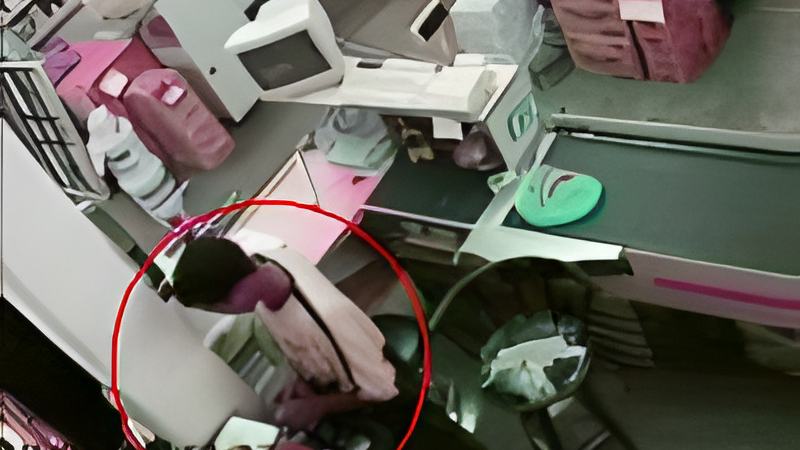
Those few seconds you saw is former Food and Beverage employee Harrison Hamilton caught, that's right, stealing. The video surveillance was put up at the company and manager Robert Wong says he's glad for it.
Robert Wong,
"We didn't know...somebody came and stole some money from our cash drawer but we didn't know until Monday until when the manager of the Food and Beverage and asked what happened to his $5 and that is why we went into the camera system that we have over there and we found out who it was. It was a good thing we set up that camera system. We're glad that we caught him but we're disappointed at who we caught because he was very good worker but I guess he just got stick fingers."
Now this sticky fingered individual was taken to court and was fined $500, an additional $5 cost of court. He is to pay by May 20th in default he'll serve 6 months in prison. For officer commanding patrol branch ASP Edward Broaster, this case is symbolic of how efficiently camera systems can be.
ASP Edward Broaster,
"While he knew that there was a camera there, he thought that the camera was off, he was not aware that the camera was running and he took a risk and he got caught and a camera in itself will deter any criminal from committing a crime. In this instance the culprit went and pled guilty, he is not going to put up a fight after he is being shown doing what he did so it's a 100% guaranteed conviction in the courts. As long as the police do the proper procedure in collecting the videographic evidence and storing it properly and handling it properly and proper chain of custody, yes it will be accepted in the courts."
But while Broaster says that through proper procedures the videos are admissible in court he urges users to record what the camera sees.
ASP Edward Broaster,
"There are those who have cameras and who don't have tapes in their system or CDs in their systems doing the recording so then its not helpful as well for us. If you have a camera system or a DVR system, you need to keep it running. The Police Department as well will be putting cameras in the station to ensure that the police officers treat the public in a professional and proper manner. We'll be having the similar type cameras in our station pretty soon, donated by the same business house as well."
Robert Wong,
"We also see the DVR systems that you can view anywhere in the world via the internet also.
Alfonso Noble,
How long can these things record for?
Robert Wong,
"It depends on how many cameras you have. If you have four cameras, a little bit over a month and it depends on if you have right cameras maybe less than a month. But what it does is when the hard drive is full, it records over itself unless something happens then you could."
Alfonso Noble,
So this is continuous recording for 24 hours a day for an entire month?
Robert Wong,
"Well you set the cameras on motion detection so when it senses movement, that is when the camera turns on. I very approve of them. Its an essential for feeling a little bit more safer, especially when you're handling monetary transactions because it saves you a lot of headache."
ASP Edward Broaster,
"We'd like to encourage the community and other businesses to develop this type of security for their businesses and I am sure that it will help in deterring criminal elements from committing crime in our society."
Wong says that a DVR surveillance system would run somewhere in the region of $2,500.