A month ago, when we last reported on winding twists and turns in the court battle between Caribbean International Brewery Company and the Financial Intelligence Unit, the news of the Orange Walk Magistrate's Court was that they were pushing to have their case heard at the Supreme Court.
As we told you, the two sides have been attempting to convince Magistrate Deborah Rogers why she should or should not order the FIU to return 3.1 million dollars of the company's funds, which a multi-agency law enforcement team seized on October 7th, in a raid of their Carmelita Village compound.
On October 26th, Magistrate Rogers returned with a ruling that she would allow the FIU to introduce evidence against the company from the Belize Tax Services Department that there had been tax evasion. Barrow objected to court procedure last month and asserted that his clients were ambushed by evidence from an agency that did not confiscate the funds. Well, the Magistrate disagreed, and shortly after she delivered her ruling, Barrow announced to the court that he would seek to trigger a review of that decision via constitutional challenge.
That bypass attempt was supposed to happen via what is known in law as a "case stated." CIB's lead attorney, Dean Barrow, was attempting to oblige the Magistrate to state the case against his clients to the Supreme Court because, as we told you, the defendants believed their human rights were being violated.
That was where things stood until a few weeks ago when Barrow decided that a better avenue from the Magistrate Court to the Supreme Court was an application to bring a judicial review claim.
That's where we pick up the conversation we had with Barrow outside of the Orange Walk Magistrate's Court. Here's how he explained why he decided to abandon the "case stated" for an attempt at judicial review:
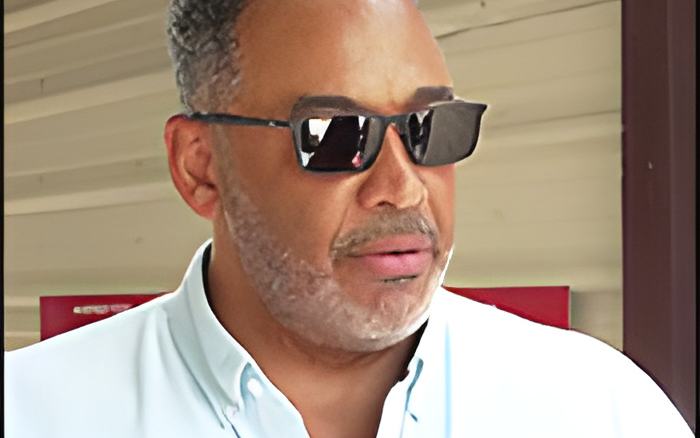
Dean Barrow, SC - Attorney For CIB Ltd.
"I opted for the judicial review because I thought that way, I would have a chance, albeit slim, to get a stay, and if I would have been able to succeed in getting the stay, that would have practically meant that the money would have had to be returned. Going the route of the case stated would mean that they would be no chance of getting that sort of interim order, and we would have had to wait until eight-nine months, long after the fact, and then just try to settle for damages if we were still able to show that what the magistrate did was wrong. So, that was the reason for electing to go the route of judicial review."
"I made my case, and she found - she declined to grant the interim stay. She said that when she looked at the balance of convenience, her position was that harm has already been done to my clients. They're already suffering harm, and they seem to be managing. So, she did not think that it would be right to grant a stay - which would mean that they get back immediately, in effect, making the extended judicial review proceedings almost academic. She said that she heard us about our clients being prejudiced as long as the money is being detained. But, she said, if you succeed with a judicial review, they can be compensated with a suitable award in damages. In other words, the loss that they're undoubtedly suffering from being operationally squeezed as a consequence of not having all this money that they would use as working capital can be dealt with by a proper award in damages if you win down the road, which I don't quarrel with that."
So, that brings us to another chess move from the legal team representing the beer company. The two sides returned to the Orange Walk Magistrate's Court for a continuation of evidence taking connected to the confiscation of those 3.1 million dollars. But before the hearing could start in earnest, Barrow announced to the court that he was making an application that Magistrate Rogers should recuse herself on the grounds of appearance of bias. Here's how he justified that course of action to us when we asked about it in our interview:
Dean Barrow, SC - Attorney For CIB Ltd.
"The application for judicial review, or for permission to bring a judicial review, is to challenge the magistrate, her jurisdiction, the orders made on the basis that those orders are a nullity, unlawful, [and] without the proper authority under the statute within the context of which she purports to operate. So, she is the respondent - or the first respondent - to our application. She is a party. The judicial review is basically against her. The Attorney General is the second respondent. The Attorney General is only joined, as I made clear to the court yesterday, because of two things. Number one, we are also asking, by way of the judicial review challenge that we're seeking, for constitutional redress. We're saying our client's constitutional rights have been violated. Once you bring in the question of the constitution, the Attorney General also has to be there. But secondly, because the agents of the state that seized the money, the police, are functionaries of the Attorney General - as is the magistrate, not a function of the Attorney General, per se. But she is a state agent. She is a judicial officer operating for and in the service of the Government of Belize. And so, the Attorney General, representing the Government of Belize, is the entity that when we make this challenge against the magistrate, it is the Attorney General who has the responsibility of providing representation for the magistrate."
"That is what was in issue on Tuesday. When we got there on Monday, and Mr. Smith asked for time, he indicated, as I recollect, that he had just been retained over the weekend by the Attorney General. He had been retained by the Attorney General but to - as it were - represent all the agents of the state. That had to have included the Magistrate. Otherwise, nobody represented the Magistrate yesterday and on Monday? [That] makes no sense."
"He represented the Magistrate and defended the magistrate against the application that we brought, an application that arose out of this case that's before the magistrate; in my submission, the magistrate can't get the benefit of representation by Mr. Smith yesterday, and then come back sit today, and allow herself to hear Mr. Smith in his representation of one of the parties before her when Mr. Smith has just represented her."
"The ordinary man on the street on street will right away say, 'No man, there's something wrong with that. This lady can't continue to sit on a case where Mr. Smith is counsel before her when Mr. Smith is, at the same time, representing her in her own case of judicial review."