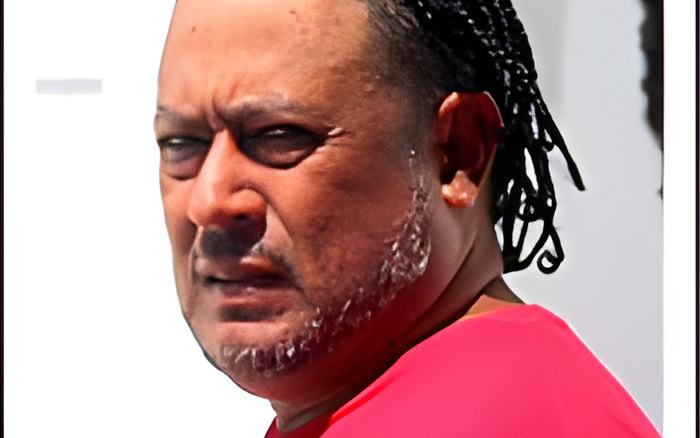



It's been a while since we've heard from Jasmine Hartin, she's the former daughter-in-law of Michael Ashcroft who back in 2021 made international headlines when she killed Superintendent of Police Henry Jemmott in what she says was an accidental shooting.
And since then Hartin's life has certainly, and some would say fittingly, gone on a downward spiral, with the formerly privileged expat losing her home, her business, and even her children.
Still, she's complained bitterly to the international press on more than one occasion, alleging both abuses and neglect by local authorities and claiming that her route through Belize's legal system is tougher even than what a born Belizean would have to endure.
And while that is highly arguable - we do know that Hartin is going up against the police brotherhood for killing one of their own, and she has made herself persona non grata to the Ashcroft Alliance - where she once held pride of place as the mother to Michael Ashcroft's grand children.
Tonight Cherisse Halsall brings you a detailed look back at the legal and personal challenges of Jasmine Hartin.
2021-2023 has been a saga of legal drama for Jasmine Hartin. Of course, she stands accused of the Manslaughter of a police officer but she's also been embroiled in a bitter custody battle. And if that weren't enough she was also detained for questioning concerning an alleged plot to kill both the commissioner of police and the director of the family court. That plot has since been established as having no foundation in fact.
And today Hartin is more concerned about a cocaine charge, a charge filed not on the night of the manslaughter but almost a month later and based on two distinct samples, we asked the commissioner about both this morning:
Cherisse Halsall:
"One that was handed in on the night that she is initially arrested for the officer's death, and that was processed that night but there is a second amount that if you check the disclosure and I have seen the disclosure, disappears for a month. While it's logged on the 28th of May it doesn't arrive at the forensic lab until the 25th of June and there is no chain of custody for that sample, the question is where is that cocaine sample all that while? Why it's important is because while the first sample is testing as Tylenol, that sample the one that went missing for a month is testing as cocaine, what would you say about that?"

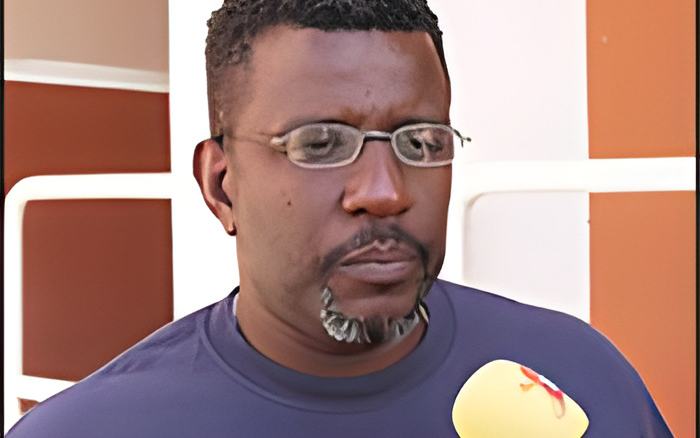
Chester Williams, Commissioner Of Police
"I don't see an issue with that at all. You would know that drugs are not tested in San Pedro, whenever officers in San Pedro do recover drugs those drugs go to the National Forensic Services for testing and if it was found in May and it disappeared for a month it is obviously because it was at the national forensic service where the testing is to be done. The arresting officer would take the drugs to the National Forensic Service, it would stay there until they have the chance to process it, and once it is processed then it is picked up by the officer or another officer and taken to the location where it was found in this case San Pedro and so I don't see a difficulty with that at all no."
Cherisse Halsall:
"There is no reason in your mind that because this particular sample doesn't have a chain of custody she can somehow get this thrown out in court for that reason?"
Chester Williams, Commissioner Of Police
"I don't know that it doesn't have a chain of custody. I am certain that it does have one, maybe it is not in the disclosure but I am sure that there is a chain of custody because once the drugs leave the police station, the case officer would use the chain of custody to sign it over to the officer who is taking it to the lab if it is not the same arresting officer, once it gets to the lab then the person at the lab signs for it and once it is picked up, whoever it is picking it up will also sign that chain of custody form. So, I am sure that there is one, It may not be in the disclosure and that is an issue which, that the prosecutor can cure down the road so I don't see a difficulty with that."
And while the Commissioner is confident that the cocaine charge will stick to Hartin, he has been wrong before, namely about her guilt in a conspiracy to murder him.
He's since walked back that allegation but today we wanted to ask him about the manner in which Hartin's detention was handled.
Cherisse Halsall:
"If we could touch briefly on this rumour of this plot to kill you which you have said there was no evidence of, I want to ask now because we have footage of her being cuffed when she came in and the other day I had the privilege of reading a report that you wrote as a younger officer about Fareed Ahmad who was handcuffed on a scene just for questioning. You state in the report that no one should be handcuffed when they are only being brought in for questioning. So, was it right that Ms Hartin was cuffed?"
Chester Williams, Commissioner Of Police
"Um, there is a provision in the summary jurisdiction of offences act. If I am not mistaken I think it may be section 99 or 95 somewhere around there that speaks to the handcuffing of prisoners, um, I think it says that a prisoner may be handcuffed where the prisoner poses a threat to other officers or to the public."
"I don't know what the feeling of those officers was at the time when they detained her but in the case of Fareed Ahmad he was not accused of committing a crime per se, he was just being detained or being invited to the police station to be searched in that case certainly there was no need to handcuff him. In the case of Jasmine Hartin, she was detained under the assumption that she may have committed a crime which would have been to threaten me and the Director Of The Family Court. So it is like comparing apples and oranges, her case is totally different than Fareed's case. And so it will be dependent a lot on the officers who detained her at that particular moment in terms of how they felt about her being a threat to them or to herself or to society."
Cherisse Halsall:
"Well, in terms of that Sir if you review the video she is laughing in the video because she thinks it's so ridiculous but what is interesting to me is that she was not accused of a crime. She was being detained for questioning just like Fareed."
Chester Williams, Commissioner Of Police
"No, it's a difference she was accused of sending threats to two or more individuals. You are accused of committing a crime once that happens."
Cherisse Halsall;
"Even if though there is no proof?"
Chester Williams, Commissioner Of Police
"Yes, yes as a part of the process, you will be questioned and the fact that she was smiling should not be seen as her not being a threat, people bomb planes smiling."
Hartin too has made striking allegations against Belizean police, even telling foreign Press that during her last stint at the Queen Street station, she came to fear for her life. She claims that during her detention officers, without any clear process, told her she was free to go not through the front but through the station's 'back door'. According to Hartin, she wouldn't leave for fear of being labelled an escapee and being shot n the back.
Cherisse Halsall;
"Now, the only discrepancy there are your comments about the police station, you say there is no back door. The cellblock has no backdoor, you have one way in and one way out, but there is a side door."
Chester Williams, Commissioner Of Police
"Where?"
Cherisse Halsall;
"On the side of the police station, which goes into the yard and so in those comments where you said there is only a front entrance, it just came off a little disingenuous."
Chester Williams, Commissioner Of Police
"I, honestly Cherisse, I am not too sure of that side door if there is one it must have always been closed because I have every time I go into that station I see one door and that is the one at the front, I don't know if there is a side or whatever. If there is one It is always closed."
And finally, in what Hartin says is the greatest injustice of all, she alleges that her children, now 6-year-old, twins Charlie and Elle Ashcroft were taken out of Belize without her consent at a time when, according to the law that speaks to custody of a child born to a single woman, custody remained with her.
Cherisse Halsall:
"She tried to log this report with you guys but she rebuffed the first time and finally, she was able to log the report. An officer went to that gentleman's hotel and tried to find out whether or not the children were there, to what extent did that offer a check? Was it just knock knock is Mr Ashcroft here and a receptionist says, they are here and that's it?"
Chester Williams, Commissioner Of Police
"I, I am not aware of that. I know that yes a report was made and I had instructed my officers to stay away from that report as much as they can simply because the matter was before the family court. It isn't within the purview of the police to determine who is to have custody of who, custody is a matter that is determined but the court and not the police. I did not want to put my officers or the department in a situation where they can be sued later on down the road."
In a statement to Channel 7, this evening addressing the COMPOL's claim that the second sample dated June 25th, 2021, being used as evidence against Hartin was, quote: "obviously at the National Forensic Lab." end quote, Director of the NFSS Gian Cho sent us the following statement: "As part of quality system requirements, every laboratory report states the date on which an item of evidence was submitted to the Laboratory as well as the date(s) the evidence was analysed. This information is recorded in multiple other places and can easily be verified."