
It's a reality that we confront every day: men and women addicted to crack cocaine who live on the thin outer edge of the social strata: hustling, begging and stealing just to get from one hit to the next. In fact, "crack-heads," as we casually call them, have become so prevalent that we take them as a permanent fixture of the urban and rural landscape. But looking at it more deeply than the everyday, crack cocaine is one of the most impacting cultural forces Belize has seen in two decades. But because it is considered an outsider event, it is the least studied phenomenon.
So what does fuel the demons deep inside the abyss of addiction? That's what we tried to find out last year when our cameraman Fortunato Noble spent an evening with a crackhead. We reprise it because it's a story that was lost in the shuffle. Why? Well, it first aired on April fourteenth, 2005; 24 hours later the city would be in chaos with looting, civil unrest and de facto military law on the streets. So tonight we take another look at the story, inside the world of one crack addict. Again, we advise this story isn't for children, and if you have young ones in the room, you might want to turn off the television. But while it may not be a nice or uplifting story, it's one we feel compelled to tell. Here's why.
Jules Vasquez Reporting,
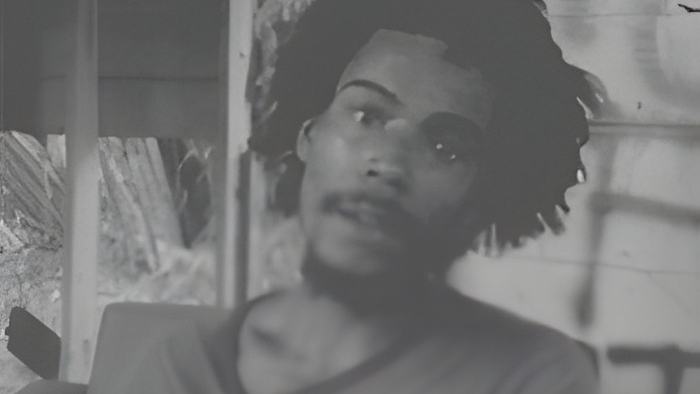
This is the sure, slow sound of crack cocaine roasting in Ernest's foil pipe. He has been using crack for much of the past decade and now this hardened veteran of the drug game wants to share his hard knock wisdom.
Ernest,
"You will say that it will never happen to you or this would never happen in your family. But I got this to say to you: whosoever you are or wherever you may be sitting down cooking or whatsoever you're doing, I got this to say to you and listen keenly, quote this, open your eyes whether you're first, third, or no class people in society because this is for real."
A real nightmare that he's been living for over a decade. When we found him he was holed up in this house, waiting, always waiting for the next hit. It's a cycle of desperation from which it seems he can never escape.
Ernest,
"Me personally I love cocaine, I love it but I know its not something good for me. You ask any drug addict, he would put down a plate of food, he would go and rob, thief his mom, thief anybody who he could deprive."
Sage lessons from the underbelly of the beast and going from one high to another as evening progressed into night he continued to share, to preach from the pulpit of addiction about the lean terms of the life he's chosen.
Ernest,
"I live on the street."
Fortunato Noble, 7NEWS Videographer
How does it feel?
Ernest,
"Well it's the best kind of life one could ever look for but I would advise you don't even try pick it up if you're not ready for it, if you're mind is not strong for it. Why I say it's the best kind of life is no bills, no baby crying, no gas bill, you don't have to worry about nothing raising or dropping."
Nothing dropping except for the hardened wisdom of a man steeped in the experience of uncaring and desperate streets that all seem to lead to dead ends.
Ernest,
"Its in my environment and I see it everyday and this, yes this, is what you as the person who is giving me this interview don't have this knowledge and I'm giving you this knowledge now and listen, this is what I and every low class people go around."
It's a cycle that he first fell into a decade ago all because of curiosity.
Ernest,
"Curiosity just like any individual who would come up to you and 'boy I would like to try that thing there, give me a little piece.' CURRIOSITY!"
Fortunato Noble,
And you get hooked?
Ernest,
"Yeah."
Fortunato Noble,
One hit, that is all it takes?
Ernest,
"That's all it takes so if you feel that you're man or macho and you feel that yeah you can take it, if you have $200 in your pocket you will blow that out and by tomorrow you will your girl, 'go to your mom in PG,' and by the time she comes back if it was me I already sell your house long time, you di the play. When she meets you it is because you are barefoot. I am learning a lot of things that you may not think I am learning because I know who is my good friend from who is not. When you're upstairs there, everybody loves to be your friend because then you have what they need. But when you're downstairs there they walk up on top of you. It is like you go to jail and you drop sick in the hospital and you exactly who is your friend."
And though not many of us would call him friend, this declaration, he says, is an act of faith and friendship to his community.
Ernest,
"I'm opening this door to my heart and I'm turning on the lights so you can see what's going on; what's going on in my mind and whatsoever. This is what I am working on. I have to adjust the scale in my life; this is what I need to do. If you know how deep my passion goes to my community and my society and the hell I am going through I blame it on no one but this interview I hope wizen up some people out there."
And as he pens poetry and maps out rough sketches, Ernest accepts that he hasn't - he hasn't been able to heed his own wisdom. It's a grim realization but one he accepts as he holds his corner, way out there at the far end of society's scorn.
Ernest is still on the street daily and nightly, earning his hustle as a quick-fast sidewalk sketch artist.