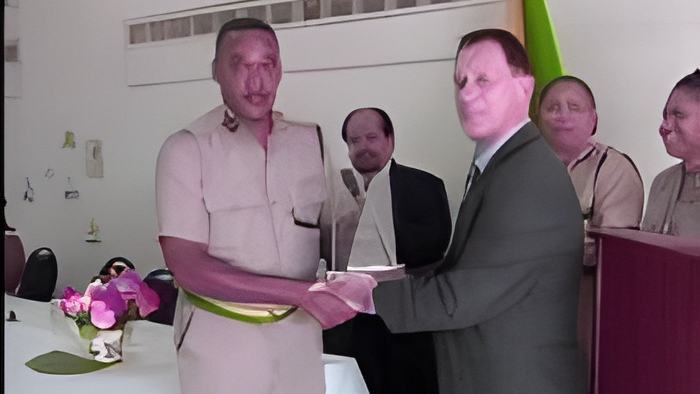
Representatives from the Motorola Communications Company are in the country. They are not here to see how many razor phones Belizeans have bought, in fact it's no phone business at all: they are here to present an award to the Yabra Community Development Project. The program which was formed by a gathering of grieving mothers was presented to the Association of Caribbean Commissioners of Police and because of the excellent results its been having. Now, it has been recognized by the Motorola Company. And if you're asking what does a phone company have to do with Yabra mommas, so were we. Here's more.
Alfonso Noble Reporting,
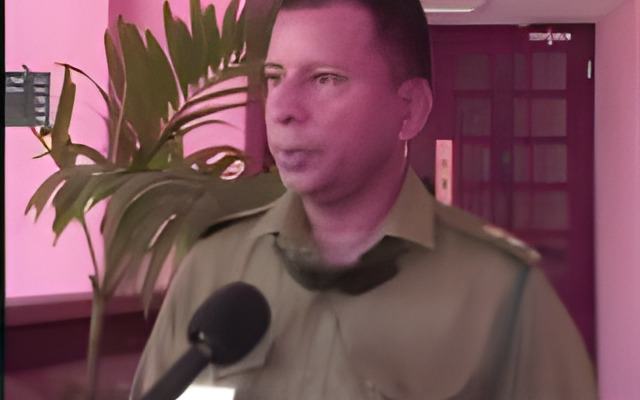
Assistant Commissioner of Police Crispin Jeffries and community activist Elizabeth Longsworth received their recognition and awards today from Motorola for spearheading the Yabra Citizens Development Program which has a community policing aspect to it. Jeffries says the program has been working well despite how he's perceived.
Crispin Jeffries Sr., Assistant Commissioner of Police
"I've been doing this a long time. It is just something that people have not seen me doing. They have seen the other side, that side that the media would want to highlight. I come from this community, my grandchildren live in here, my house is here. I was born and raised on the southside of this city. Everybody in this community have known for a long time. They know what I am about, they know what I do but they also know me as a family person and as a person that they can approach. I have worked with many people that you see here today and I continue to work with people in the other parts of Belize City and they have absolutely no problem. So there is a media perception of Crispin Jeffries and then there is the community who know me, who know me differently.
The idea of community policing is a good one. We believe today what we are doing in the Yabra area is a module that we would want to replicate in other parts of the city and the country. Unfortunate for us, we are getting off the ground slow. It is a very burning issue but it is also impacting on the high crime and incidents of violent crimes in this area. So the program that we are doing right now is working but there are other initiatives and groups we are working with that are copying what we are doing and it is spreading slowly."
And no matter how slowly, Jeffries says the program is working.
Crispin Jeffries Sr.,
"Statistical figures that you see are usually what the media would measure and the public would measure crime but the behavior of the community, the attitude, of those who are involved in violent issues are now behaving differently, we are talking, and we see statistical reduction. Any analysis will tell you that there is nothing that you can do to measure prevention. You can only measure incidents so traditional policing requires that you look at statistics to say you are reducing crime or you are impacting on crime. But community policing is getting people to change attitudes. It is a long time effort to impact on the behavior. It is the build the relationship not only with the police but with the community members, police and the community. So it is a bridge building effort. Incidents among young people, if we look at the statistical information, as well as the day to day incidents, we see that the young persons who are having rivalry are in fact young male adults that are unattached, they are not a part of a school or an organization and they keep on having some of the same problems that they consider what they call old beef and it is for us to have our officers intervene, find out what are the problems and then we have them come in and we dialogue so there are methods of intervening and dealing with this problem. There are a number of approaches we are using and most of them are working."
And it's working because of the community support that the program is receiving and Longsworth says that while the violence is down, there is still another component that needs to be added.
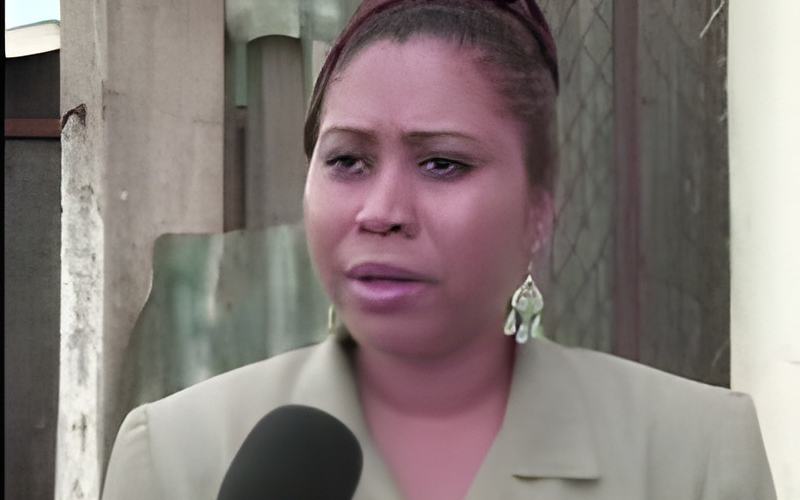
Elizabeth Longsworth,
"I like that the community is calm and quiet and the people in the community show me a little respect that we could work together, keep the community calm and cool. You don't know see a lot of them out here but I know that they are supporting this thing we are doing. I am giving this thing because I am doing my part, the politicians are now to come out and do their part or the business people because as I said, crime is all our business, it is not only the poor community's business; it is business people, politicians---it is everybody's business so it is time for the people out there who need to take up the reign to deal with their part of the business."
That call has been heard and Motorola's John Magee says maybe they can help.
John Magee,
"Traditionally we have worked with the police in providing equipment and communications equipment to basically respond to crimes or to serious incidents and while those tools are important, we also recongise that a lot of the result of those incidents come from a community and it is not functioning properly and we have traditionally now for many years taken the approach that you have to be a good corporate citizen and give something back to the community as well. We have an obligation to be good corporate citizen as well; wherever we live, wherever we work, wherever we do business and it has been kind of bred into our culture for many many years at our corporation that we have to give back, not only do business with countries or with police or with other agencies, we also have to give of ourselves, give of our time, and recognize that are all part of this problem that we have to solve together. We are looking at certainly some ways to help the Belize police be able to have better tools to be able to respond to the community more so we will be looking at some of those initiatives. Clearly we want to look at what we can do as a cooperation through out foundations to maybe fund programs that are more educational and developmental programs in communities. Maybe instead of just doing an award, doing something more tangible, like setting up a computer center or provide scholarships and so we're looking at all those initiatives as well through our foundations and our corporate headquarters as well."
Now, activists in the Yabra community may well be looking at that opportunity.
The Yabra Community Development Project is hoping to open a computer lab where neighborhood youths can come in and have access to computers. Jeffries says that while there are many offers for assistance to the project they can't come too soon.