
And from drugs to dairy - the hot topic in the local food world for the past few weeks have been imported milks and cheeses versus the local one. Most people have their reasons for not shopping local - reasons that are rational for any consumer. It comes down to the quality, price and shelf life of the product.
Last week, we took you on a tour of the factory of one local dairy product manufacturer, Western Dairies. Well, the day before our tour, the Belize Culinary Association had their own. During this tour, they learnt how the products were made, and also got the chance to speak with the management about their concerns.
Today, Courtney Menzies spoke with three of the chefs and got three takes on local cheese.
If you were upset when you heard the news of restrictions that will be imposed on imported milks and cheeses, then you can probably begin to imagine the turmoil of restaurant chefs. Plenty of them choose imported products over local ones because, to put it plainly, the local ones just don't compare.
And in renowned restaurants, that could be the difference between a 1 star and a 5 star review.
But one professional Belizean chef, Sean Kuylen says local cheese can do wonders if it is given a chance.
Sean Kuylen, Belizean Chef

"I don't really use the cheese a lot, I'm sure you can find some pizza chefs, because if you know me, I dah Belizean cuisine, and the last time I check Belizean cuisine noh use a lot of cheese, you know. So our problem is that we are trying to compare a product to an imported product and we want to say, see! We want it be exact. If I close your eyes and I give you a cola brand, and it's not the brand name Coca-Cola, you will have a certain expectation and then you will say, but it doesn't taste like Coke but you are trying to judge it against a brand name."
Courtney Menzies:
"You personally don't use a lot of cheese, but for those who do, their major problem has to do with the quality of the cheese, Western Dairies, the quality doesn't match up to the stuff that's imported. So right there, we have an issue, but we can fix the issue."
Sean Kuylen, Belizean Chef
"Don't complain about the cheese, help me man! Make it better because then we're feeding Mr Thiessan. There's a young man named Antonio, he goes and he milks the cow with his grandfather, 12 years old, it carries us, it sustains us. It's the same old cliché, buy Belize, build Belize."
And he says the solution to the problem is not difficult if the resources are allocated.
Sean Kuylen, Belizean Chef
"There's this guy Danny, Danny is the cheesemaker there, he's been there for 19 years, he's a Belizean. He went to Honduras to a university to learn how to make the cheese. All we have to do is, Danny again now, is probably send him somewhere else or bring a consultant and let's tweak the acidity, the rennet. Because the milk is beautiful, it's just how to manipulate it now, fi make it stretch lee bit like the Italian brand and this brand."
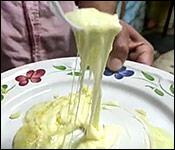
And to prove it, Chef Kuylen brought some Western Dairies mozzarella and melted it here in studio. And while it looked good at first, we observed the texture changing after only a few minutes.
And that's the same problem other chefs have been reporting. The mozzarella needs tweaking - which is exactly what they told the company's management during their own tour last week.

La Dolce Vita is an Italian restaurant based in Placencia, and Chef Simone De Angelis says he is willing to use the local products if the quality improves.
Simone De Angelis, Chef, La Dolce Vita
"The cheese I use most is the mozzarella cheese, we prefer to use the imported one for reasons. The first reason is the price which is about 30% cheaper than what is the price for the local cheese. Then the texture is kinda plastic texture, the flavor is very acid, and the cheese don't really melt that good. We tried to use local produce as much as we can, as long as the quality of the product is up to standard."
"We don't say that the facility is not clean or up to standards, they are, unfortunately the product is not up to standard. If you imagine that the tourist that coming into Belize, they spend 30-40 percent more than to go to another country. Belize is way more expensive than any other country in Central America. So they expect from us high standard in products in what we sell."
"If they offer me a product which is competitively priced and quality, then we would use that. We already do that with lots of products. I don't even look at imported one because the local are good."
Chef Enrique Awe from the Artisan in San Ignacio shares the same sentiments.
Enrique Awe, Chef, The Artisan
"With Western Dairies I use their milk, I use some of their cheeses, but their mozzarella is just not up to par to the imported one. They still need some work to do with it."
Courtney Menzies:
"So what are the kinds of cheeses that you do use from them?"


Enrique Awe, Chef, The Artisan
"I use the sharp cheddar from them, I sometimes use their queso fresco, that's about it, I haven't really tried the other ones. I just found out when we did the tour last week that they make some other kinds that I haven't tried so I'm looking forward to try them."
"In my restaurant, I do a lot of pizza and when I cook a pizza with the mozzarella from Western Dairies after like 15, 20 minutes it starts becoming like a plastic-y texture so if someone would want to save their pizza overnight and try to reheat it, it definitely can't work, it becomes like plastic."
Now the chefs are hoping that Western Dairies will take their concern into consideration so they can use the local cheese in their dishes.
Most of the chefs did not have an issue with the quality of the local milk - just the price.