It's been six years in the making and now the African and Maya history program will be implemented at all levels in the primary and secondary school system and come 2007 it will be introduced at the tertiary level. The program seeks to change what every child has been thought in the social studies classes. As the curriculum developers explained, the identity and self-image of these students are at stake.
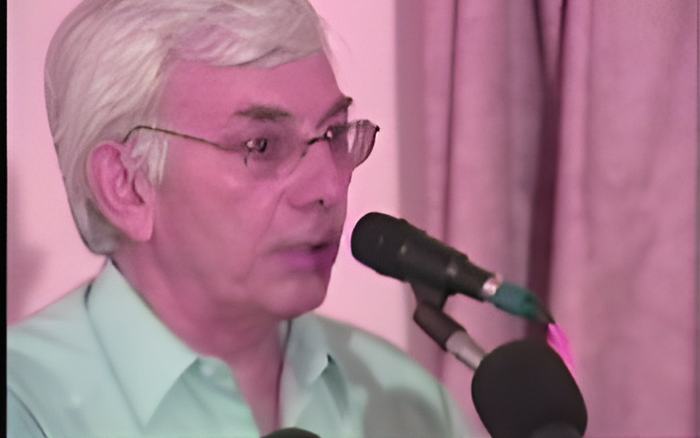
Dr. Joseph Iyo,
"The past by itself has no meaning except if you put meaning into that past."
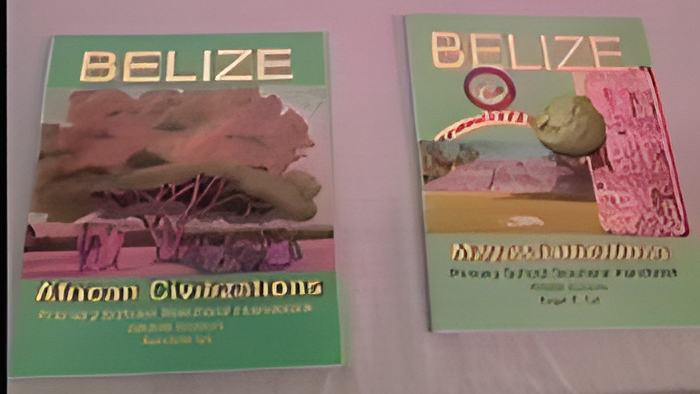
That's the view that the African and Maya History Project has adopted to make the past relevant in today's Belizean society. They've come up with maps, a series of handbooks as well as other teaching aids to undo hundreds of years of colonial indoctrination in the social studies school setting.
Dr. Joseph Iyo,
"When we looked in the social studies curriculum we found out that only slavery and colonialism is being taught. With Mayan we found elements of Mayan civilization and history together with culture being taught but it was in a haphazard ordered for the Mayas. It was episodic and not tied to real human begins. It was purely about sites. There was no connection with the modern Mayas. So we tried to see how we could put life into that past to make it more meaningful for Belize. There is a need to provide a better background understanding of the African experience in Belize and by extension the modern day Creole and Garifunas ethnic group and by extension many of the Mestizo and Mayas which are of multicultural heritage."
And Iyo says, that will be done by giving students ownership of their history.
Dr. Joseph Iyo,
"We are very comfortable with western civilization, what occurred in western civilization. But mainly of us don't even want to acknowledge that before western civilization, before Roman civilization, there was Egyptian civilization and there was Indian civilization and there is a need to articulate equal contributions of these civilization to what we refer to today as western civilization and the children in Belize have to own up to a part of that civilization which their ancestors have contributed to what we call modern Belize.
Today many of us do not acknowledge our Mayaness and do not acknowledge our Africanness. Why? Because of we have been taught only the history of humiliation of the Mayans after Columbus but the Mayans were 2000 years before Columbus or African trade and slavery but Africans existed many centuries before intervention of colonialists. We need to connect to the good things and also to the bad things of these civilizations so that these children can see that their ancestors equally contributed a lot in the making of world civilization."
It's a noble look at education and the implementers hope that this will center Belizean students, giving them a past which they can be proud of: one which will look far beyond slaves being brought into the new world in shackles and take away Columbus' glory. But challenging long held beliefs is never easy and this is already facing resistance.
Dr. Joseph Iyo,
"The biggest problem you have is teachers who have a mindset and juvenile behavior who are being told to teach in as new way. First we are having a monumental task of convincing the teachers to shift from memorization, all they do is memorize things and so what---we are saying unless you link it concretely to what value is that to us, resistant to something that is going to impact your life negatively, of what value is that. We are saying that this will in a way be found in the subject areas. The whole educational system has to accept that there is a fundamental flaw and I have told people that ex-colonial state in the Commonwealth that have studied what we call the constructive colonial history, colonial education. Because remember the colonialists show they came in, they designed the education to do the same thing for them, for exploitation of natural and human resources for the benefit of Britain and France.
We have gotten flag independence, how have do we change that attitude where people still regard government priority as something that is not connected to the men though they pay taxes. Our educational system has reoriented us to a new idea that it is not no longer a distant government, it is us. We are independent and we can do everything right here and it will benefit the country. We haven't reached at that level. We are hoping this will jumpstart the whole discussion."
Yasser Musa, NICH President
"The overall social studies curriculum in primary school needs a clearer and more work being done there because I have taken a look at what is preened and I really believe that there are certain contradictions as to what is there and what is here. We have taken the responsibility and we will try to work closely with the ministry to see how we can address social studies curriculum."
And that look will see the integration of African and Mayan histories which up to now had never been told.
All the material that will be used in the teaching of the African and Maya History was produced locally. Training workshops will be held over the summer to equip more teachers with the skills to teach the program.