
2007 marks the 200th anniversary of the abolition of the slave trade and while slavery may have been abolished, the public debate over its legacy continues. Now the Institute of Social and Cultural Research is engaging tertiary level students in that debate. This morning, they staged just such an event at the Bliss and NICH President Yasser Musa says that it's about illuminating the dark corners of Belize's history.
Yasser Musa, NICH President
"Much has been kept in the dark and we need to put light on our history so that we can understand the present situation."
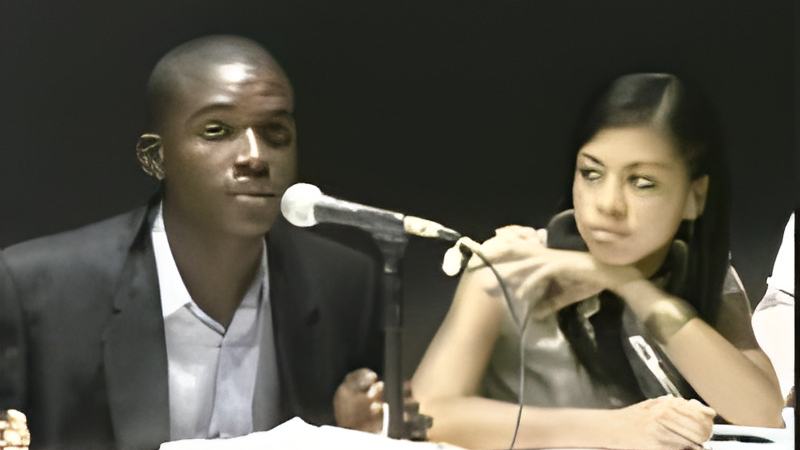
And it's in that spirit of academic inquiry that NICH's Institute of Social and Cultural Research organized a debate between three junior colleges: Ecumenical, University of Belize, and SJC. The debated three proposals on the subject of slavery, including the role of the religious, economic and political institutions in the slave trade.
Ted McKoy, Ecumenical College
"The system of complicity has always been that people look after their best interest. The system of slavery was a system where those that had money, those that have opportunity and access to money tried to get more at the expense of the masses."
Natasha Montock, University of Belize
"Capitalism without slavery leads to anarchy and slavery allows a stable capitalist economy to flourish. When labor is free, then labor conflicts with capital. When labor is not free but is owned outright in the form of slavery, conflict disappears."
And while the structure and spirit of debate forced the students to play devils advocate and embrace positions that they may be politically incorrect, it also encouraged them to do major research - this one on slave revolts.
Desiree Nicasio, Ecumenical College
"There were several rebellions that sparked or could have led to emancipation. However we do not have time to review all of them so we will focus on the three major revolts that had a direct link in the 19th century to the abolitionist movement. These are the Barbados revolt of 1816 which was led by Busa and Washington Franklin, the revolt of 1823 that was led by John Smith, the Jamaica revolt of 1831 led by Samuel Sharpe."
Stacey Martinez, St. John's College Junior College
"First of all I'd like to rebut the many rebellions that my opponent named, the 1816 Barbados revolt, the 1823 revolt, and the 1838 Christmas revolt or Jamaican revolt. Yes these rebellions did existed but none of them were successful. The only successful revolt was Haiti so these planters saw these revolts as merely disturbances and not as a reason to abolish slavery."
Enlightened debate and architect of the Mayan and African Studies Project - Joe Iyo says this kind of informed debate illuminates the path of self acceptance.
Dr. Joe Iyo,
"To me these topics are to stimulate for discussions introspections, look into yourselves. As I tell many people, go look into the mirror, see if you like what you see. These three topics are essentially asking you to go again and look in the mirror in the morning when you haven't taken a shower and when you haven't brushed. If you like what you see, the impact of slave trade and slavery has not left a mark on you."
Yasser Musa,
"The psychological issues, the anxiety of people today, the whole misidentification of who we are speaks to this issue and we all, the promoters of white supremacy, will always say yes it is in the past, it is over, get over it but I contend that we cannot accept even, I want to say this to the young people, we cannot accept that what we are learning in school taught as history is the correct or appropriate way. We have to investigate further."
At the end, the judges decided that SJC Junior College had earned first place, with UB second and Ecumenical third.