

We all know what entrepreneurs are - in fact, they're all the rage in the business and self-help worlds, with the conventional wisdom being that their path is the only path to success and financial freedom.
But this morning we spoke to Entrepreneur, artist, political activist, and wearer of many other hats Stephen Okeke. He's written a guide for the Intraprenuer, a word he's coined to mean, employed person.
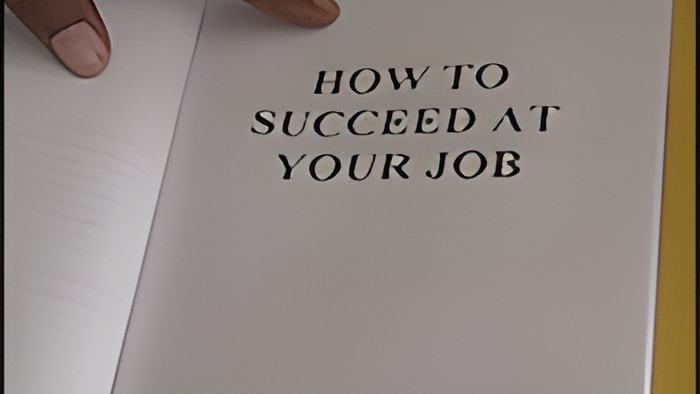
Okeke's newest social psychology text is aptly called how to succeed at your job and this morning he stopped by our studio to share some of his top tips for intrapreneurial success.
Cherisse Halsall:
"Let's talk about some of the etiquette of doing well at your job, you say that if you show up to your 8 a.m. job you're already late, why is that?"
Stephen Okeke, Author, How to succeed at your job
"When you come to work at 8:00 for a job that's supposed to start at 8:00 or an *;00 o'clock job you are very late already. When you come 5 minutes to 8 you are late, the latest you should be there should be 7:45 because you are paid for the hours you work at the workplace. So if you come at 8'oclock you'll need a few seconds or a few minutes to adjust yourself before the work starts, some people even pick up a little breakfast before the work starts. The one hour you're paid for it's not a block of time you know, one hour constitutes elements of time so you have seconds, you have minutes that make up the hour. So if you're paid by the hour even if it is one dollar for the hour it is divided into minute payment and seconds payment, so for every second or minute you waste company time, you're not supposed to be paid because that is a misuse of company resources."

"Even if you are in a place you won't be for so long it is still to your benefit that you commit yourself to work, unfortunately, because we don't understand this concept we keep hearing the word slavery mentality and people mistake commitment to work for slavery. When you are employed somebody is giving you an opportunity to make a living. Nobody forced you, you can always walk away. Somebody sweated, some organization, some company, some group of people sweated and built an infrastructure and giving you an opportunity it's not a right, an opportunity to make a living and to learn."
Cherisse Halsall:
"Getting fired because it's something that I think most people will experience in their lifetime and it tends to make them very upset in that moment when they get fired but you say, that even when you lose your job you should be gracious in defeat."
Stephen Okeke, Author, How to succeed at your job
"Sometimes when people lose their jobs the first thing you hear them say is I told them like it is, I told them off. You can't afford to burn your bridges, you will likely need them again somewhere, somehow but even if you will not need it again."
"You should not be emotionally involved with your job. You should not come to love your job personally in an emotional way, you should not be friends with your employer, you should not fall in love with your job, it's a technical relationship. If you understand that your commitment to work will not be in order to gain favor, it should be first of all in order to fulfill your obligation, your responsibility to the work."
"If your employer finds out you are not fulfilling those obligations it is important you should get fired for some operations, for some companies, they give you a little warning and a little training but at the end of the day you should get fired, an employer should not have emotions attached to it and you should not be emotionally attached to your job so that when you find a benefit, when you find another opportunity better than what you're having there, you should be able to approach your employer and say it's a great time having been here, it's a great privilege you gave to me but it's now time for me to move on."