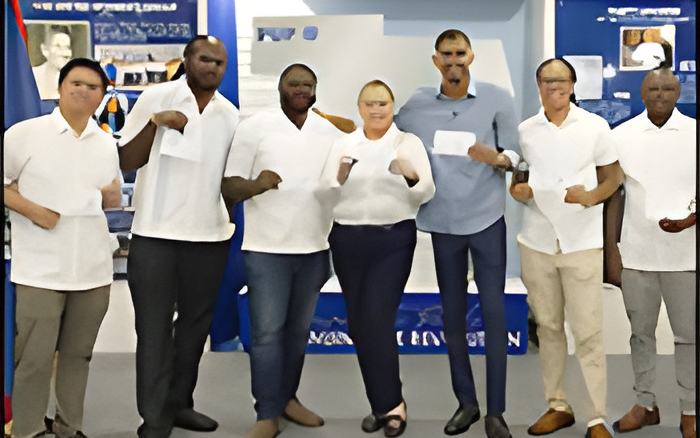

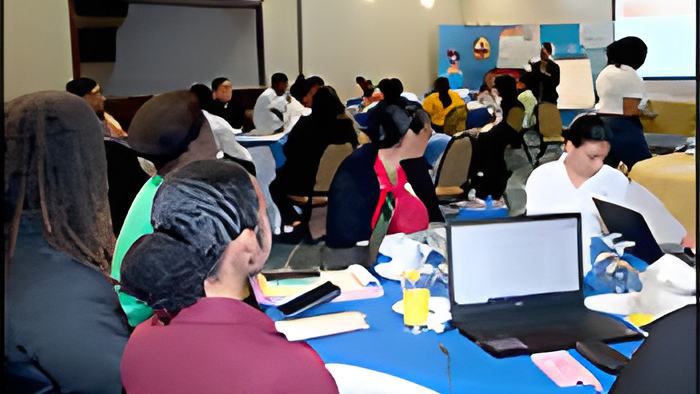
Efforts to reform Belize's juvenile justice system took a critical step forward today. The National Commission for Families and Children, alongside UNICEF, convened a validation session with more than a dozen key stakeholders to finalize new guidelines for youth in conflict with the law. The initiative aims to strengthen legal protections and improve outcomes for minors navigating the justice system. Our reporter, Jomarie Lanza, attended the session this morning and has this report.
UNICEF and the National Commission for Families and Children are collaborating to strengthen Belize's juvenile justice system through the establishment of new Child Justice Guidelines. Designed to standardize protocol when minors encounter the legal system, the guidelines are being finalized today during a validation session with key stakeholders. NCFC's Shakira Sutherland outlined the scope and objectives of these ongoing consultations.
Shakira Sutherland, Executive Director, National Commission for Families & Children

"So today, the National Commission for Families and Children, in collaboration with UNICEF and our Ministry of Human Development, Families, Inclusion and Gender Affairs, is conducting the final validation session for the Child Justice Guidelines. And so we want to highlight that we have been doing consultation throughout the country in regards to ensuring that we have the stakeholders, children, parents' feedback in regards to this Child Justice Guideline that we are discussing today."
"And so it is important to know that the National Commission for Families and Children, we have been working tremendously looking at the parenting aspect, looking at the child justice and child protection aspect of policies that need to be implemented or created from out stand point. And so it is important to know that we have recently had the launch of the merger for the Child Justice and Child Protection Committees, and also to know that because of the merger, we are having the validation. And so this Child Justice Guideline validation looks at children: how do we protect and support children in terms of children who have been victimized, children who are claimants, children who have been in conflict or in contact with the law, and how do we put children and child protection at the center of these policies."
One of the key facilitators in this process is the Department of Human Services. The director highlighted critical gaps in coordination across departments, identifying key areas where agency cooperation falls short of protecting a child's best interest.
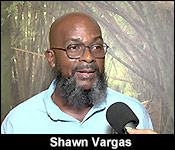
Shawn Vargas, Director, Department of Human Services
"The Department of Human Services carries the mandate for child protection, and we are one of the biggest departments within the Ministry of Human Development looking at the role of children in the justice system. We play a very important role because we have from intake to termination-it is part of the services that we provide. So whether the children come into care for protection purposes, or for the justice system, or just regular support, the department plays an important role in meeting the needs of the children."
"While we have a system that is opened for a lot of interpretation, but it is all... this will bring us together in terms of the coordination with especially the Medical Department, the Ministry of Education, and bring immigration into the fore. Because the reality is that child protection is just looked at in terms of just Human Services and the Police Department, when it is bigger than just these two government departments. It includes the justice system, the Health Department, Police, immigration as I mentioned, because we are seeing a lot of unaccompanied minors, and those children require protection also and require some level of support. So that is why it is important to have everyone here on the table to look at the coordinated effort."
UNICEF's Child Protection officer further explained why it is important to ensure these mechanisms are in place when children come into contact with the justice system, often as perpetrators of a crime and sometimes witnesses.
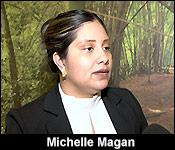
Michelle Magan, Child Protection Officer, UNICEF Belize
"There was coordination, but in many instances it was varying and fragmented. In 2023, we did a child protection system evaluation, and the results from that evaluation informed us that a lot of the interagency coordination was missing. Some agencies work together, but it could be stronger, it could be coordinated, and it is not all the relevant actors in one space. And so we are definitely trying to strengthen the Child Protection and Justice Steering Committee by merging those two groups to be able to work together in the best interest of children."
"A lot of the children who come in conflict with the law as perpetrators are for petty offenses like riding a bicycle up stop, for instance. They are not serious crimes. And those who commit serious crimes are being recruited by older gang figures to commit armed violence and other types of crimes. That is one thing we will be looking at today; we are looking at that from a standpoint of trafficking children for the purpose of committing these criminal offenses, because children are afforded safeguards under the CRC, under Belizean legislation, because they are fundamentally different from adults. Their evolving capacities, their age, their developmental status means that they should be afforded special protections. And so that is taken advantage of not only in Belize but in other Caribbean countries, around the world-globally, it is a trend that they are recruited to commit these violent offenses."