It is the second largest cave system in Belize – thousands of tourists go there every year and so do an even greater number of Belizeans. But yesterday the Audubon Society closed down the St. Herman’s Cave. The reason is that two 500 pound formations within the 1,000 acre cave are crumbling. An Audubon release says it poses an imminent threat to visitors and staff. 7NEWS went inside the cave yesterday looking for answers.
Keith Swift Reporting,
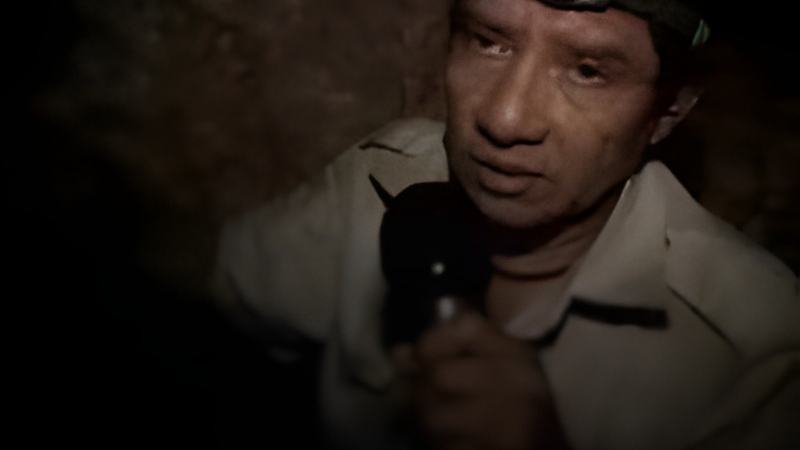
No entry was allowed pass the 300 yard line inside St. Herman’s Cave today but the Park’s Director Israel Manzanero took 7NEWS’ videographer Alex Ellis inside. They climbed steep stairs and rapelled using ropes, deep inside the impressive thousand acre cave – rich at every turn with Mayan history.
But the journey into the cave was to see crumbling rock formations. This first one is about 400 yards in and he says it is simply unsafe.
Israel Manzanero, Director – St. Herman’s Cave Park
“The way I came up here and I saw it, I said this was very dangerous and you guys came and looked at it. I brought archaeologists also and they said it is something serious.”
That’s crack number one - but even more pressing than the first – is the second. It is 450 yard into the cave and its crumble may be imminent.
Israel Manzanero,
“This one here is really cracked up so this needs to be looked at seriously. At the other edge over there you can see that this is just hanging and then you will be coming from underneath that area.”
And that is why the Felicia Leal from the Belize Audubon Society says they made a decision to close down the park.
Felicia Leal, Belize Audubon Society
“We immediately closed it so that there is no safety issue that we would then have to address. From the recommendation of the Institute of Archaeology, we decided to close St. Herman’s Cave to address the safety concerns. We are currently liaising with them so that we can get some one to immediately get some work done within the cave to secure these rocks.”
Keith Swift,
You have a timeline as to when that will be done?
Felicia Leal,
“Well right now I am working with them and it is going to take approximately three weeks to get the job completed where the rocks will be secured and it should be safe again.”
Israel Manzanero,
“We can’t remove it. What we can do is just build up rocks all around it.”
Alex Ellis,
Why can’t you remove it?
Israel Manzanero,
“Because it is a big rock and there are also other rocks that are up there. We could do in this area here is just build up a column to hold this big huge rock. That could help it to avoid not coming on this side where the others are cracking. It would be kind of hard to do this because the materials are not around in this area. The way I see it, the material it has now is different than the one of the first rock. This material is very ‘brucky brucky’ – this is very serious.”
Keith Swift,
What will they do repair it and how hard will it be?
Felicia Leal,
“Well that is what we are currently working along with them to see how it can be done because again we want to maintain the integrity of this cave and maintain its natural beauty and the Institute of Archaeology have the experts in these areas, they’ve done work within cave systems so that is the purpose of their assistance and they are going to be helping us a lot in monitoring the work that will be done to ensure that it is done properly and it again maintains that natural beauty.”
Leal says they aren’t sure what caused the cracks – but it believes it is a combination of stress from humans and a bit of nature.
Felicia Leal,
“I would just say perhaps movements, movements in the cave formations. From what it seems, it seems like some of the rocks had collapsed and where the boulders were simply leaning on one another and the boulders that are resting on the top, they don’t have much support from the ceiling, and because they are very heavy – eventually the weight starts pushing them forward. So that leads to it, seeming that it would fall.”
Keith Swift,
You believe in anyway human activity may have been a contributing factor?
Felicia Leal,
“It may be a contributing factor as I said its heavily accessed with tours coming in but I cannot speak directly to say yes I know that is definitely the reason for the situation right now.”
Repairs should take three weeks – although no one really knows how it will be done. The St. Herman’s National Park remains open – and visitors can still access the inland blue hole.