
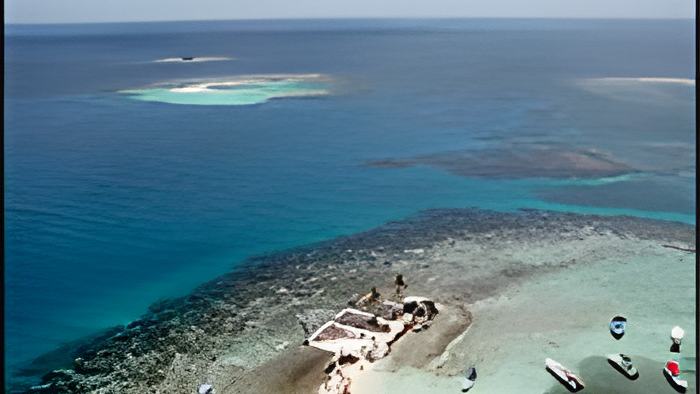
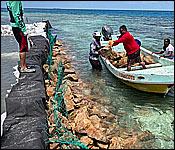
Last week, Coastal erosion was on the minds of Belizeans after a community effort from the Stann Creek District was launched, without the support of the relevant government agencies, to rescue Silk Caye.
The main organizers were at risk of criminal sanctions because they rushed into remedial works without the necessary environmental clearance. That matter has been resolved amicably, but the erosion problems are happing all along Belize's Coast.
It was the focus of a workshop today, which was organized by the Government of Belize, and our news team was there. Daniel Ortiz has that story:
Last week, Silk Caye became the flashpoint of the ongoing degradation of coastal communities due to erosion.
Residents of Stann Creek were willing to risk criminal sanctions to take immediate remedial actions. They wanted to reverse the damage to ensure that rising sea levels don't swallow up national patrimony like this tourist destination.
File: May 3, 2022
Jules Vasquez
"They say you are breaking the law."

Eworth Garbutt - Tour Guide
"When a state of emergency that my life and lifeline is on the line, I am willing to go as far as it goes."
But, the unfortunate truth is that Silk Caye isn't the only territory along the length of Belize's coast that suffers from erosion. Monkey River, which 7News has regularly checked in on, has been reduced significantly in size. The sea has claimed -" or is claiming -" land that used to belong to homeowners.
Several months ago, studies were done to track the effects in Dangriga and Hopkins. Residents of the Placencia Peninsula have alerted us to erosion's effects on their beachfront communities.
It is more likely that if you live near the coast in any part of Belize, land in your community is at a very high risk of being lost to the sea.
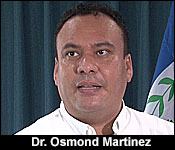
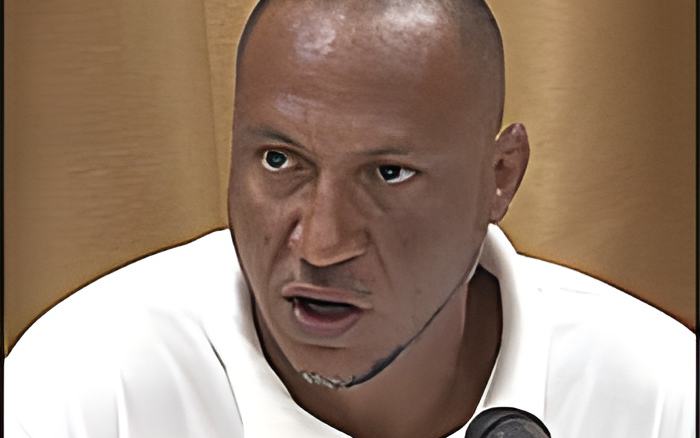
Dr. Osmond Martinez - CEO, Ministry of Economic Development
"When we look at villages that almost used to be towns in the past like Monkey River, they're disappearing. There is no time to waste. We have other coastal erosion problems in Corozal, Punta Gorda, areas like Barranco, but also Dangriga, and Hopkins. Almost from north to south, is being affected. So we need to, one, find a way to mitigate and two, to solve those problems. If not, where will we be in 50 or 70 years from now and what will our kids and grand kids inherit?"
That's why the Government, through the Ministry of Blue Economy, in collaboration with the Food and Agriculture Organization of the United Nations Representative for Jamaica, the Bahamas, and Belize, and Belize's National Designated Authority to the Green Climate Fund (GCF) has organized a Green Climate Fund Stakeholder Engagement Workshop for the Coastal Zone and Fisheries Sector of Belize.
The organizers want all stakeholders to pool their knowledge and expertise to develop an effective and environmentally sound plan to address it.
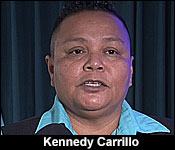
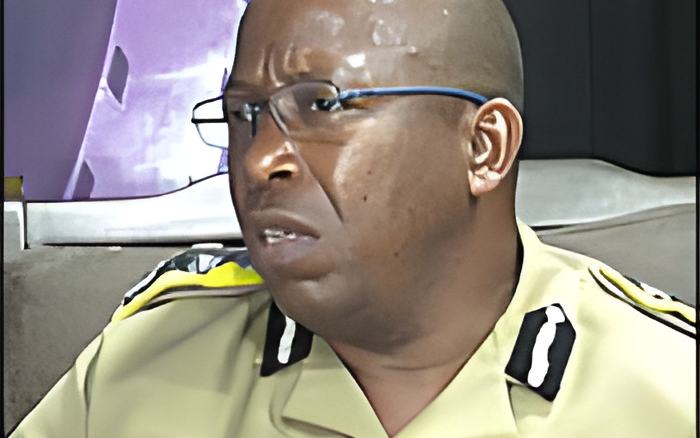
Kennedy Carrillo - CEO, Ministry of Blue Economy & Civil Aviation
"This particular meeting here, this workshop, brings together the different communities: the fisheries community, the coastal communities, as well as our NGO partners. And other government agencies that have responsibility. So I think one of the key themes is especially that, looking at how do communities play their role in safeguarding what we have and also how do we now come together with communities, NGOs, and government to work together? What we expect to leave this session with is a clear understanding of the role and responsibilities within this project. But overall, of all the different sectors, all the players."
Although the residents are living the coastal erosion crisis every day, the authorities want to address the problem with science. That's why just under 1 million dollars is being initially allocated for studies.
Dr. Osmond Martinez
"The size of this first phase is just about $900,000 dollars, which will start to look at -" identify the problems that we have. This one is actually looking at the coastal zone erosion, identifying all the problems, see where we can find a source of mitigation for right now. But this is just the first phase more is to come."
And while the officials want to navigate the complex problem with prudence, community frustration about "analysis paralysis" is already very high.
File: May 3, 2022
Eworth Garbutt
"They will study until we die, that's all they will do, study, and nothing will come out of their study. It's just while they study; we are dying."
Dr. Martinez says that patience can lead to access to significant funding to address the problem.
Dr. Osmond Martinez
"Absolutely. I totally agree with the cry of our citizens in saying that the government has failed them. When you look at what was done between 2010 and 2013, [there] was absolutely nothing. You know, I know within a year and a half, I have -"especially my ministry, along with the Ministry of Economic Development, we said we have to get this project going. And in addition, these are grants that we are getting here, but we are hoping that we can tap into 125 million U.S. dollars that were approved back in October by GCF for coral protection. And that grant also has a component of sustainable fishing, erosion -" to deal with the erosion problems, coral reef protection."
Another uncomfortable truth is that risky behaviors from residents of Belize have caused damage that has accelerated coastal erosion. The clearing of vegetation along the coast in the name of development or the fantasy of that beautiful beachfront get-away has had detrimental effects.

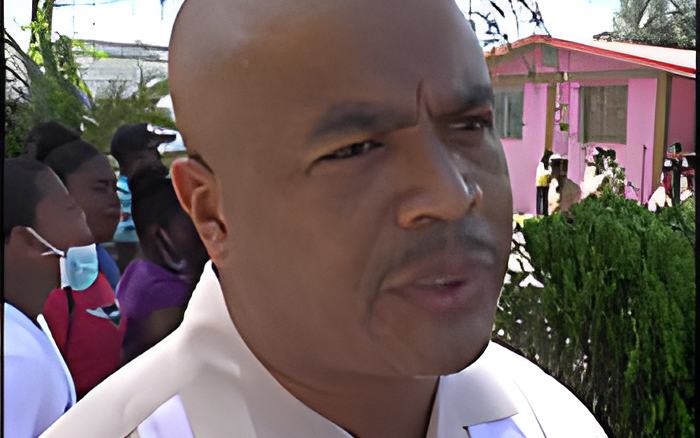
Dr. Lennox Gladden - Chief Climate Change Officer, Nat'l Climate Change Office
"When you look at the clearing of vegetation along the coastline. This in itself causes a problem because the whole rationale for it to grow in that particular area is to retain. And removing that, naturally, is going to speed up the effects of coastal erosion."
Kennedy Carrillo
"Make noise. That's what we say. Tell the communities, if you have no -" and we always have this, if something is happening and you see it in your area, some Caye that you visited and you see something that doesn't look right, make noise. Don't be afraid to come to the media. I mean, the media is an important partner with us. We do not see the media as our opposition, but rather our partners get it out there. Then, definitely, we will do everything that we can with our other regulatory bodies, you know, to do what is right."