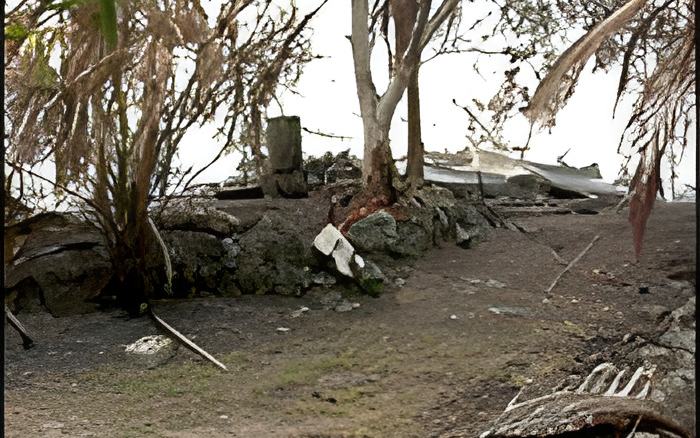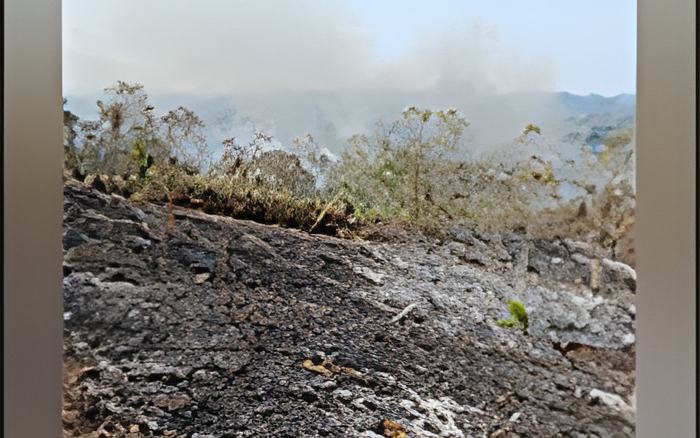
And if you've been traveling along the Western or Southern Highways over the past couple of months, you'll notice that bush and forest fires have become a lot more frequent - with major smoke output.
And this is normal during the intense dry in April and May. Station supervisor at the National Fire Service, Kenneth Mortis, says he believes the hot weather started a lot earlier this year, and while there aren't as many house fires, their phones have still been ringing off the hook.
Kenneth Mortis, Station Supervisor, NFS
"When the bushfire calls have increased it also puts a threat to structures surrounding these open vegetation, these rural areas that always proves as a setback, so to speak, for the fire department in terms of respond time we're at how many trucks do we have available at these stations versus your location and you all know as much as I do what the fire service internal fighting setup is all about. You all know the amount of trucks that we have at each location. It's a continuous effort that we know like I keep saying, we know the job that we sign up for and we know what it entails. It's something that it just pushes you to keep pushing. It's not something that we overlook. It's unfortunate because somebody calls comes in and we directly can't respond to them because we are busy most of the times. It has become a common practice for calls coming out of Maxsboro especially you're looking at the eight miles community and these are areas that as close as they may be they are yet far away because we are we also need to be prepared for the event of a structural fire, the event of an RTA and our resources is extremely limited, but we keep doing the best with what we have."
Reporter
"Apart from the heat wave starting earlier as you mentioned do you notice that there is a more frequent out of control fires?"
Kenneth Mortis, Station Supervisor, NFS
"Quite a bit. You know it is at this point where some of the calls have even reached my phone directly."
"Actually, calls of this magnitude have reached most of our senior management level. The one that I draw a huge amount of caution to are those ones that comes in in the evening hours we get. Those calls are around 8-8:30pm. You know, there's a bushfire over this location. Once we respond and that fire is out, then that means our visibility becomes next to nil. We literally then have to deal with whatever wildlife that comes out of this bushfire."
He added that if you see a fire in the morning, you should alert the Fire Department as soon as possible, rather than wait until night-time.