
Belize is emerging from its power crisis - but just barely. And San Pedro continues to hover at maximum capacity almost daily. In fact, the tourist capital of the country often seems like its one blow dryer away from plunging into another blackout.
And while all the talk has been about the return of the diesel powered gas turbine at Westlake, and another big diesel unit that's being commissioned San Pedro - any expert on renewable energy will tell you that when it comes to power supply, Belize is like a man dying of thirst in the heart of a wetland.
That's because Belize has abundant solar energy which can be harnessed at homes and businesses - and pushed back into the national grid to act as a viable and stabilizing power source. But today a group called the Belize Solar Industry Alliance says a new law pushed out by the PUC is standing in the way of a solar solution and Belize's energy independence. Jules Vasquez has more:
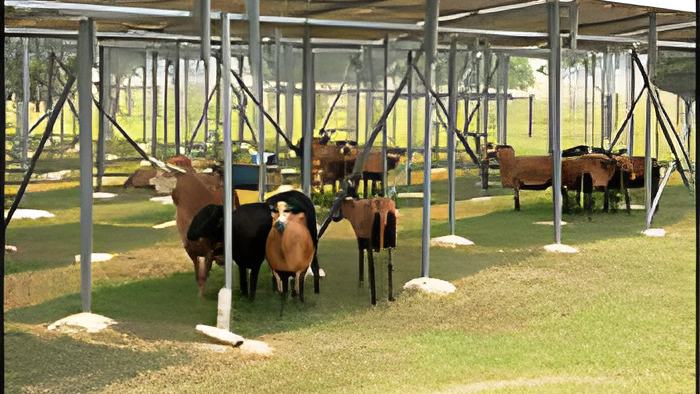
Here at Running W Meats on the George Price Highway, the goats may seem like they're taking some shade, but look closer and you'll see a 180 kilowatt solar array.
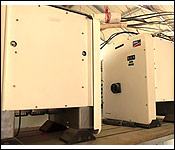
It's a part of the company's sustainable energy plan - and works with these grid tied inverters to manage the operation's energy needs - seamlessly switching between solar energy - when it is available, and BEL's power supply when it is not.
A systems like this costs upwards of half a million dollars - and the man who designed this one, Jeremiah Allen says - with the present regulatory framework recently enacted by the PUC - he's not sure he would encourage any business owner to make such an investment:
Jeremiah Allen, BELIZE SOLAR INDUSTRY ALLIANCE

"So the legislation as it exists right now, it discourages future solar development. And those who have already invested in solar are not going to experience as good of returns as they they would like to."
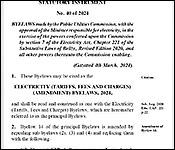
The main problem - as a group called the Solar Industry Alliance sees it - is what's called a demand charge which BEL will assess on solar energy producers - even at the household level.
Jeremiah Allen, BELIZE SOLAR INDUSTRY ALLIANCE
"They are going to assess and attribute a fee on your monthly bill that is almost impossible to predict. Many households, it could easily be between $150 to $300, some even higher. Even month by month by month. It will be impossible to predict what that's going to be on your monthly bill."
So, here's how it works at the micro level: you set up your solar panels - a basic 10 kilowatt array will cost you about 25 thousand dollars. With an inverter like this you tie it into BEL's grid - and during the day when the solar is producing you can sell them energy at 13 cents per kilowatt hour. At night you buy from them at 35 cents per kilowatt hour. At the end of the month you net off what you sold them against what they sold you. But the transaction doesn't end there:
Jeremiah Allen, BELIZE SOLAR INDUSTRY ALLIANCE
"But then there's that demand fee on top of that. And I think in many cases, for the average homeowner wanting to put solar in their home, it's going to net a increase in their monthly bill rather than a decrease."
Jules Vasquez
"It's going to end up costing you more?"
Jeremiah Allen, BELIZE SOLAR INDUSTRY ALLIANCE
"In many cases, it will."
"So if a homeowner were to install ten kilowatts, which is roughly capable of producing somewhere in the range of $400 worth of electricity per month, so to reduce your bill by $400, now that's during sunny hours."
"However, with the demand fee that comes in the evening, those $400 of savings could easily get squished down to $100. And if you spend $25,000.00 on a system like that, approximately the going rate for a ten kilowatt system, divide that by $100. You're talking about 250 months return on investment. In that particular example."
Jules Vasquez
"250 months is 20 years."
Jeremiah Allen, BELIZE SOLAR INDUSTRY ALLIANCE
"Over 20 years."
Jules Vasquez
"That makes no sense."
Jeremiah Allen, BELIZE SOLAR INDUSTRY ALLIANCE
"It doesn't make any sense."
And that's why the Solar Industry Alliance put out this press release and sent a petition to the PUC to try and have the regulations structured in a way that does not disincentive solar production:
Jeremiah Allen, BELIZE SOLAR INDUSTRY ALLIANCE
"And what I'm what I'm saying is that in many cases, it's not going to make sense. And I have already advised some of my clients to put their plans on hold because I can't honestly tell them this is a good idea for you."
And for those who have already invested in solar panels like this one - with the current regulations - it's cheaper for them not to sell power into the grid.
Jeremiah Allen, BELIZE SOLAR INDUSTRY ALLIANCE
"So most solar systems that you see installed around the country, including the one right behind me, have capability to produce excess and feed that excess into the grids to support the Belize National Grid. However, up until this point, they have been penalized for pushing power back into the grid."
"And so all of them have current blockers to prevent that power from going back into that grid."
"I have 12 different companies signed on with Belize Solar Industry Alliance who are part of the signers of this petition who are saying we can go flip a switch and we can provide power for up to about 250 homes around Belize right now with the existing installed base."
Jules Vasquez
"So right now with this grid behind us, if they said, man, our country's in crisis, please let me share this excess, it would end up costing them more."
Jeremiah Allen, BELIZE SOLAR INDUSTRY ALLIANCE
"That's correct."
And so, right now for this developer at least, solar is mostly a dead end street - even in an abundantly sunny environment:
Jeremiah Allen, BELIZE SOLAR INDUSTRY ALLIANCE
"I believe Belize has such ample access to sunshine. We have such an amazing opportunity to be independent, to be self-sustaining. As a nation, we shouldn't be relying on imported energy."
Jules Vasquez
"It's amazing to me that what is being proffered as a solution and everybody should say hallelujah and indeed we're all grateful because the load setting was killing us, is that we are bringing dirty diesel power fully back on line, in a country of such abundant resources. This is really a regressive way of thinking."
Jeremiah Allen, BELIZE SOLAR INDUSTRY ALLIANCE
"It's a shame, really, if if we would have been more proactive in putting in place a proper regulatory environment and a legislation ten years ago this this country would already be covered in solar."