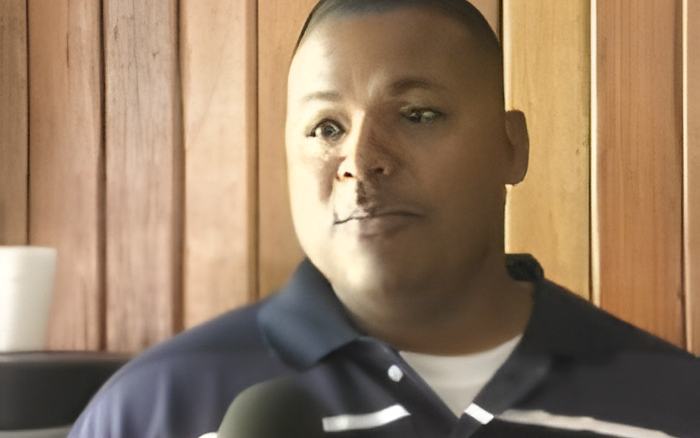
There are three hundred families living in the Port Loyola division who don't have septic tanks. You can say it is the area's dirty little secret. Well now, Area Representative Anthony "Boots" Martinez is putting it out in the open because he wants to put an end to the bucket brigade. He launched the Port Loyola Community Septic Tank Project this afternoon in the heart of his division.
Keith Swift Reporting,
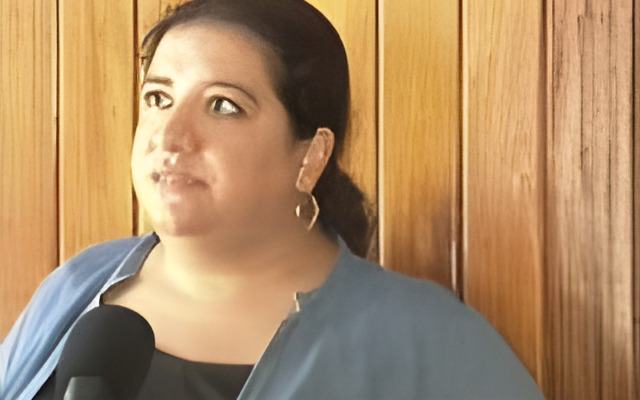
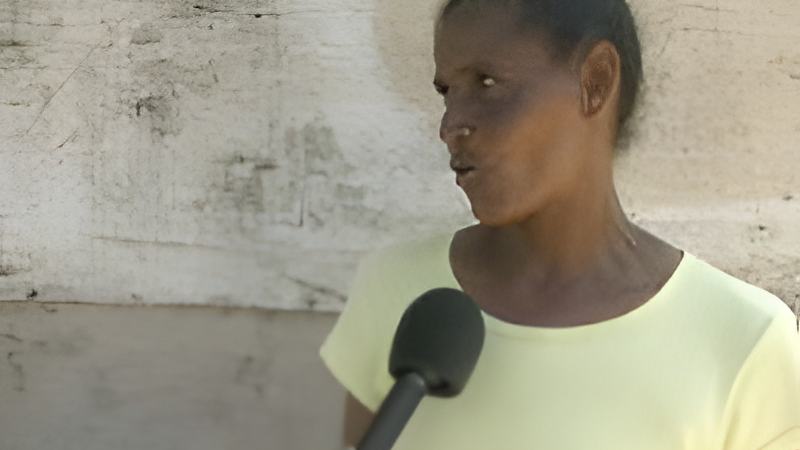
Sharon Connor along with her husband and their 7 children are one of about 3 hundred families in the Port Loyola Division living without a septic tank.
Sharon Connor, Jane Usher Blvd. Resident
"I need one and I don't really have the sources to do it as quick as I would want to do it and it is something I need because I have seven children and that is a part of, how would you call it, that is a part of a family. You know you really need that."
Keith Swift,
What do you use now as a septic tank? How do you get rid of your waste?
Sharon Connor,
"I use bucket like the old time days. I use buckets and I just take it to the back, to a swamp they have at the back there. That is what I do back here."
And now Sharon's area representative Boots Martinez wants her family and all the other families without a septic tank to kick the bucket. This afternoon under a tent on the basketball court behind Jane Usher Boulevard, Martinez launched a community septic tank project - a program to build septic tanks for needy residents.
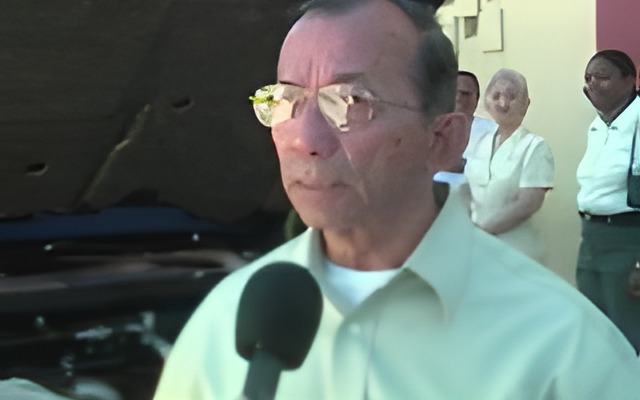
Hon. Anthony 'Boots' Martinez, Port Loyola Area Rep.
"We don't need to wait until there is a problem and then we start to want to solve the problem. I think the time is now and I have forged the partnership
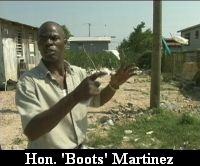
between the community, the private sector, and the public sector so we can get ready to go forward."
Boots Martinez says the septic tanks will be available to any resident in his division free of cost. But it won't be completely free. Boots says that residents will have to provide sweat equity - meaning that with the assistance of the business community he'll provide the material and some of the technical labor for construction, but participating families will have to do their share of the work. It starts with digging the holes.
Hon. Anthony 'Boots' Martinez,
"Definitely it comes with a cost because they need to do their labor input. So in terms of financial cost, none. But everything has a cost. It has to be a community project, it is a community project so in other words, like I explained to you, you dig your hole, we come and give you the sand and gravel, we provide the steel, put the steel in the hole for you, we put down the first row of blocks, meanwhile you help us cast. We find the technical labor to lay the blocks and plaster the tank in and out. You find the manual labor to cavity fill and we find the technical labor to set up the top of the tank and you find the labor to cast the top of the tank."
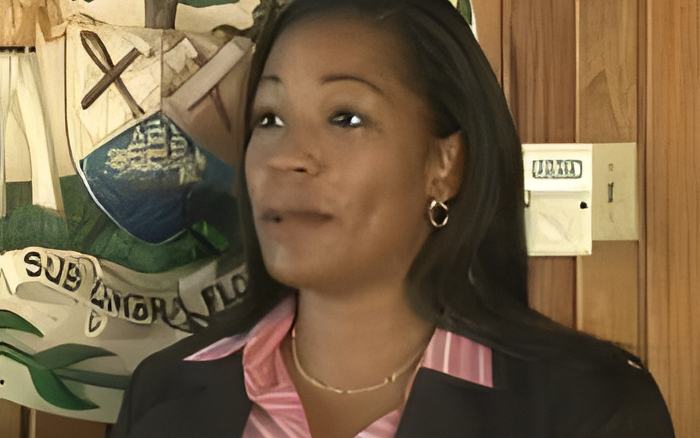
And that's fine by these families. Sharon Connor says she'll start digging the hole for her septic tank tomorrow while Janice Coleman has already dug her hole. Coleman was recently relocated to the area from Jane Usher Boulevard and priority number one for her was her septic tank.
Janice Coleman, Jane Usher Blvd. Resident
"My husband dug our own hole and he put it there so when Boots came
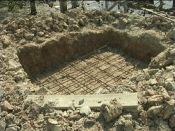
we showed him the Sunday and he said we already have our hole."
Keith Swift,
Did you have a septic tank over where you used to live on Jane Usher Boulevard?
Janice Coleman,
"Didn't have any septic tank over that side. We didn't have any before."
Keith Swift,
How did you use to get rid of your waste?
Janice Coleman,
"Well the canal was right there because the water used to go up and down so that is a swamp over there."
Keith Swift,
But you knew that wasn't healthy right?
Janice Coleman,
"That wasn't healthy to us so we moved from there."
Keith Swift,
You excited about getting your septic tank?
Janice Coleman,
"Oh I am proud of it because I worked on it too."
Keith Swift,
You feel good that you put in some work?
Janice Coleman,
"Yes because I need it. Me and my husband worked and we did it and I appreciate Mr. Boots for what he is doing for us back here."
So how much is this going to cost? Well the materials and labor add up to about $150,000. The cost is being met by businesses in the area who have donated materials and funding. Interested residents in the Port Loyola Division can fill out an application form which you can pick up from Boots' Office at 6573 Boots Crescent.