If you have been keeping a close eye on the daily COVID-19 reports prepared by the Ministry of Health and Wellness, you would have certainly picked up on the recent spike in positive cases in the Belize District, and Belize City specifically.
Over the past 2 weeks, the daily heat maps have been demonstrating that a worrisome number of new COVID patients are being identified in this central district. On the majority of those last 14 days, the Belize District and Belize City accounted for most of the total cases countrywide. Tonight, representatives of the Ministry of Health and Wellness are identifying it as a community spread of the highly contagious delta variant - or one of the more aggressive mutations of the deadly virus.
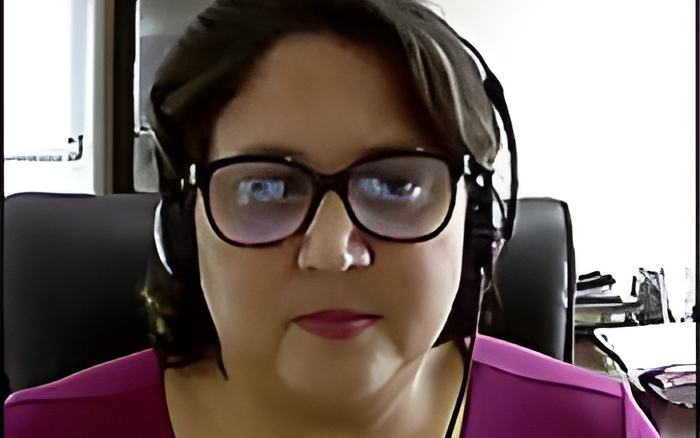
This morning, we spoke via Zoom with Dr. Melissa Diaz, the Deputy Regional Manager of the Central Health Region. We asked her about the Health Ministry's monitoring of the COVID situation in the Belize District:

Dr. Melissa Diaz - Deputy Regional Manager, Central Health Region
"What has changed now is that we're dealing with a variant strain, so more than likely, from the evidence that we have received, we know that Delta is one of the predominant strains that's circulating in Belize at this point. And a slight difference from last year is that we're looking now at the Belize District, having the significant outbreak. I don't know if you remember, in parts of last year, we were looking at the northern districts that had a lot of the cases. Now, this has shifted, and we know that the delta variant has infiltrated Belize City. So, we're looking at community transmission, continuously, daily. The numbers tell us. Every day for the Belize District, we have between 60 and 90 cases a day. So, we do know for a fact that yes, it's a fact that it is the delta that's spreading. Secondly, delta is 100% more contagious than the original strain."
Reporter
"Are there any plans to try to mitigate? Obviously, the regulations and best practices that we're all urged to follow are not enough for Belize City specifically - or the Belize District, specifically."
Dr. Melissa Diaz
"Well, of course, we know that reduction of movement reduces spread. We have always said that, and everybody knows that reduction of movement reduces spread. The virus spreads from person to person through speaking, sneezing, coughing, singing, sharing food, etc. We know that the virus spreads through your nose and mouth primarily. Of course, we also advise that you cover your eyes, as well, if you're dealing with cases on a regular basis. We do know that social distancing works. Definitely, for us at the Ministry of Health and Wellness, we would want to stricter measures be put in place because we know that public health measures will help us to control the spread of this point. But, if we can strike the balance and have certain measures there, and we also have the help from each person, each individual, each employer, if you take the responsibility for your household, and your family members, and start to make changes, for instance, not having people over who are not in your household, like I mentioned the workplace, you keep your measures up. You keep your measures up; you keep your mask on at all times. In that way, we can try as best as possible to break this continuous transmission that's occurring. But everybody has to be on the same page. And another important thing that we are urging people to do, and I can't stress and reiterate [enough] the importance of vaccines. In Belize, we have a wonderful opportunity at this point."
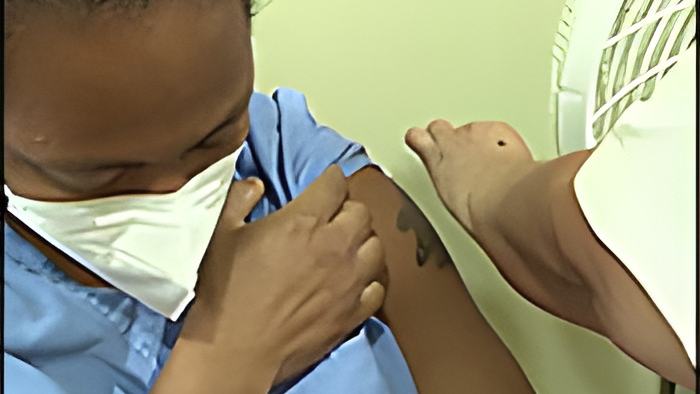
"We have options available for us, and we do know that these vaccines have saved lives. They reduce the severity of symptoms. Get vaccinated as soon as possible. We can't stress that [enough]. If we can get more people fully vaccinated, we will also be able to control the number of admissions we have at the hospitals at this time."