
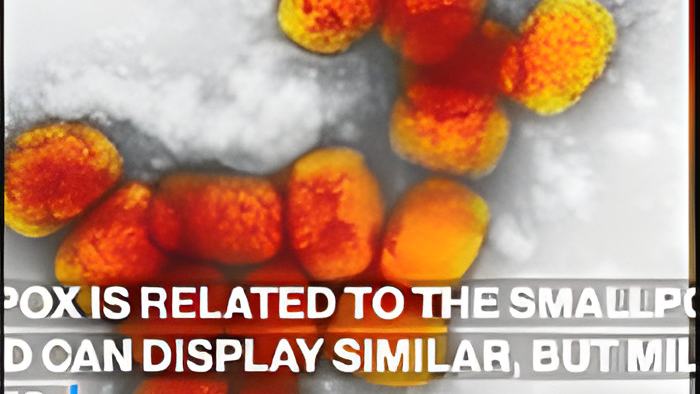
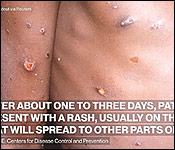
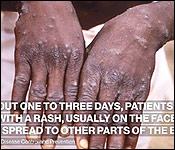
And in health news, social media got a scare when an image of what seemed like a patient with a rash started circulating. Immediately, many were afraid that this would signal the first case of monkeypox in Belize.
But the Director of Public Health and Wellness, Dr Melissa Diaz, explained that so far, they can report that there are still no cases of the virus confirmed in the country. However, she told us that they've been strengthening their surveillance and testing samples regardless if the patient fits the profile for someone with monkeypox.
She explained more today:
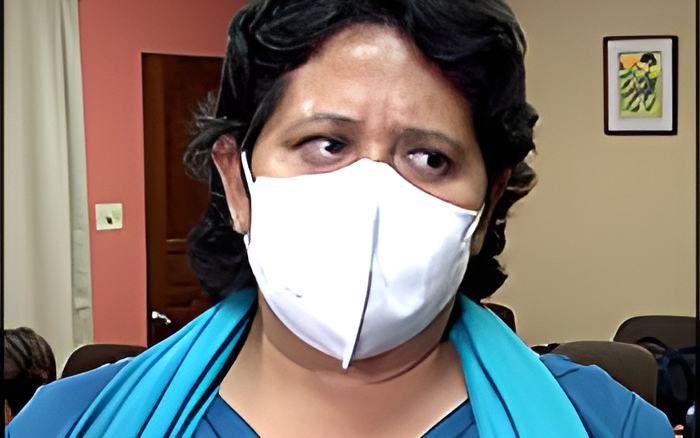
Dr Melissa Diaz, Director, Public Health and Wellness
"As was mentioned from I think early June and end of May, when the discussion started in regard to Monkeypox, Belize, we have done preparatory work, we have done our sensitization and enhanced our surveillance at all our facilities. So what we are seeing now is that whenever somebody comes in, they may not fit the exact criteria or the epidemiological profile to be diagnosed as a suspected case of monkeypox but in order for us to enhance this surveillance, we are testing more often, I think today we have tested three persons so far that have come back negative and every week we're doing our testing, I think we have four or five other persons as well that we're currently testing. These persons do not, as I said, meet the exact criteria to say that are a suspect case but because we have enhance our surveillance and we want to ensure that we pick up even if persons don't immediately meet that criteria, we're picking up cases fast, isolating quickly, and managing as quickly as possible."
"We don't suspect it is already here, I think if the person is here they would present to a health facility especially because of the way that it presents, you may have fatigue, you may have joint pains and fever, and people would access care."
"As I've mentioned earlier, we don't think that a case would come through the borders, more than likely, someone would present to one of our health facilities because of the way that it spreads and mainly because you don't have a rapid test or something to detect monkeypox at PGIA or at any of the border points and it's unlikely that somebody with a widespread rash would be traveling and it wouldn't be picked up by our surveillance officers so we're doing training continuously in our health facilities including our community health workers who are out on the ground in many villages and rural areas as well, they have been trained to identify, to detect, and to ensure that they communicate to the correct person if they do see a case in any of the villages or rural areas as well."
In a press release from the ministry, they mentioned they are still awaiting the results of the other four cases, which they are monitoring closely. They are also asking those with a fever, fatigue, lesions or a rash, to contact the nearest health facility.