


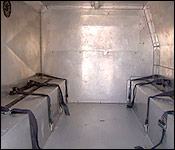
And perhaps what makes the grief harder to bear for the Uh family is knowing that Derrick Uh suffered immensely in his final moments. His postmortem said that he died of a heatstroke while being locked up in a sweltering van with no air circulation for almost 14 hours.
A heatstroke is caused when the body can no longer control its temperature. Its sweating mechanism fails and it cannot cool itself down.
So as Uh's body started to react to the intense heat and lack of oxygen, he might have lived less than ten of those hours.
In fact, according to internist, Dr Fernando Cuellar, after the fifth hour, he might have already been close to unconsciousness. And Dr Cuellar also explained that there were multiple things happening in his body at the same time - most affecting his brain, heart, and lungs.
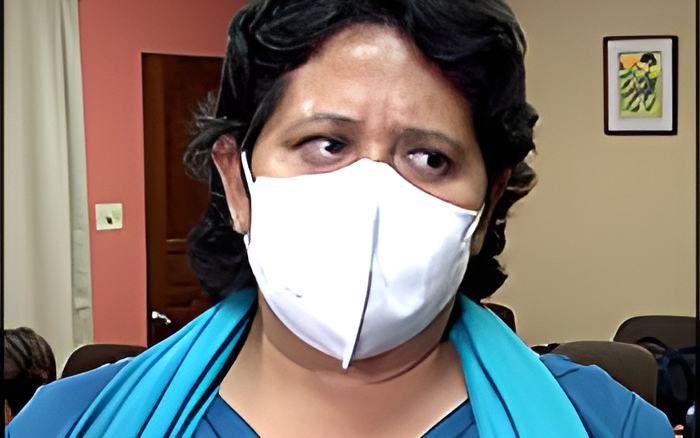
Today via Zoom, he told us more of how exactly a heatstroke could turn fatal.
Dr Fernando Cuellar, Internist

"A heatstroke is the end point, at the end of the spectrum, what we usually would call heat injuries because I'm sure you've heard of terms like heat exhaustion, heat cramps and that kind of thing, but heatstroke is the ultimate end point of these injuries to the body caused by excessive heat, excessive, prolonged heat. Usually, in our terminology, 103 degrees Fahrenheit and above sustained, and when I say sustained, it's hard to determine that it would only take two hours or an hour, three hours, because each body will react differently but for sure my practical expectation that anybody who is exposed to these types of heat for more than 4 hours, 5 hours, will run into some serious difficulty. And pretty much to try to keep it as simple as possible, the two organs that would most suffer would be your brain and your heart because the heat would definitely within the first hours make you excessive sweat so you become dehydrated rapidly and that also would deplete you of fluids and very important elements that we call electrolytes, sodium and potassium, which also helps with the proper functioning of your brain and your heart so that would be, you can develop heart arrhythmia, like irregular heart beats, your brain can be effected by its functioning so that can happen to you and definitely I would think that you have to maybe put your lungs as being affected because of the excessive heat and the lessening of the oxygen levels in that very enclosed area and so the oxygen level would drop and you start to go through what is called carbon monoxide poisoning or even carbon dioxide so it's an agonizing death. You will of course in the end part lose consciousness and then your breathing and your heart would stop and you would pass on but my take is that it is definitely not, I can't say there is a nice way to die, but it's a very inhumane way."
Dr Cuellar noted that the oxygen in the van may have only lasted an hour or two before it became difficult to breathe.
He also added that while in Belize, heat related injuries are not uncommon, it's rare when heatstroke is a cause of death.