

But while the rage over women's reproductive rights was loud on Facebook, Dr Diaz didn't see it that way. She emphasized that regarding contraceptives no longer being over the counter, the ministry is not trying to take away anyone's rights but is allowing women to have what they call "informed consent."
But still, is this policy - that is supposedly centered around helping women - actually hurting them? Dr Diaz spoke to us at length via Zoom and Courtney Menzies has this story.
It's been four days since the Ministry of Health and Wellness issued a Facebook statement announcing that contraceptives will now require a prescription. Over that time, the outcry continued, with many criticizing the ministry for violating women's reproductive rights and bodily autonomy.
After a weekend of uncertainty, the Director Of Health And Wellness, Dr Melissa Diaz, said she doesn't know how that conclusion was drawn.
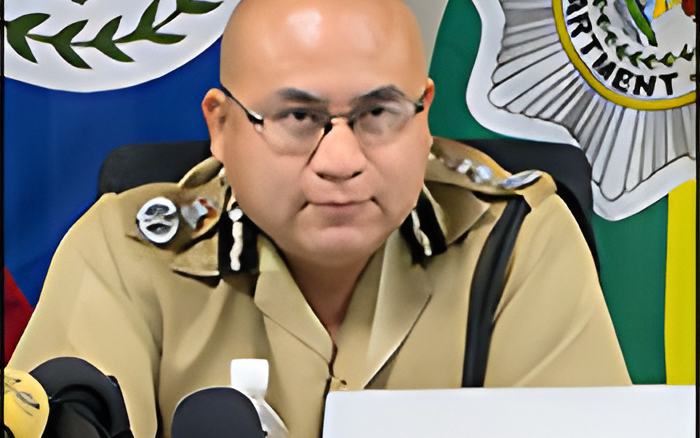
Dr. Melissa Diaz, Director of Health and Wellness, MOHW

"First of all, it is important for me to clarify here today and to the public that we have not introduced any new regulation. We have not introduced any new law and a new rule regarding medicines. And I am uncertain where the many views on social media over the last week regarding women's rights have surfaced from, and why there is a perception that asking for a prescription equates to the violation of a woman's right. to the contrary, the request for a prescription for contraceptives after having a proper doctor and nurses consultation, ensures that your rights have been fully exercised as you have determined the safest, the most effective and the best birth control method for you, along with your doctor, you are now an informed and consenting woman. We are exercising that right for you."
Dr Diaz further explained that this enforcement is for the safety of women who want to take contraceptives.
Dr Melissa Diaz, Director of Health and Wellness, MOHW
"They want to walk into a pharmacy and buy the contraceptive that they want, because perhaps a friend told them that works for them, or their mother might have been on the contraceptive. But how do you really know? And I don't want to lament or to discuss in great detail about side effects of contraceptives. It's more than just a paper or a prescription. It's about what's best suited for you, because a side effect could be, for example, heavy bleeding. When you start your contraceptive bleeding for about six months. If you're on certain progesterone contraceptives, you cannot see a period for a year. If you're on certain contraceptives, contraceptives might be different in terms of some women explained to me that they have they feel severe anxiety. They feel depressed on certain contraceptives. And once we change it to another one, that feeling has changed. So what worked for your friend does not necessarily mean it will work for you."
And while the ministry insists safety is their number one priority, they have not provided data as to how many women face adverse side effects, or how many are misusing contraceptives. But Dr Diaz explained that it's more about having informed consent.
Reporter:
"I would want to hear what is the data that you have where you are linking side effects to the actual misuse of contraceptives?"
Dr Melissa Diaz, Director of Health and Wellness, MOHW
"I think when I originally started the talk, I spoke about, not wanting to delve on the reason for a prescription is severe side effects. The reason for the prescription is that you have been consulted and you're informed and consenting woman when it comes to the choice of contraceptive that you utilize."
"So in terms of side effects, I won't say that there are not significant side effects."
And MOHW isn't considering the enforcement of this regulation a barrier to access, despite the fact that it will now be more difficult for women - particularly those living in poverty, in abusive household, or in rural areas - to get contraceptives. But when asked, Dr Diaz said she believes the ministry has provided additional access to healthcare services.
Courtney Menzies:
"You mentioned in the beginning of your statement that you don't know how people can say that, you know, it's a violation of rights. And maybe that's a stretch, but you do create a barrier when people have to get a bus or pay any extra funds to get something that they were getting for $10 in an easier fashion."
Dr Melissa Diaz, Director of Health and Wellness, MOHW
"We know about the gaps and we know about the challenges. But as well, you cannot have a a hospital in every single village. You cannot have a health center in every single village. And that's why I spoke to you earlier about it has to be a mutual collaboration. It has to be that the patients, the personnel out there understand the importance and prioritize health as well, and take the time to go in to see their health care providers."
Reporter:
"Do you feel that you've adequately addressed concerns about long wait times, the rural distance, and clinic hours? So a woman who does not get time off during the week at work, how do you help someone like that?"
Dr Melissa Diaz, Director of Health and Wellness, MOHW
"I want to go back to say that I have addressed access and of course, in all our facilities, we have 24 hour, doctors and nurses for urgencies or emergencies."
"I think I have addressed it and as I said, we will be talking more with you all as the weeks go on."
But Dr Diaz also added that the ministry will continue to discuss these enforcements to better increase access to contraceptives.
Dr Melissa Diaz, Director of Health and Wellness, MOHW
"So we will engage in that discussion that might take a little time, but hopefully we'll be able to get there because we do want patients to be able to access their contraceptive, effectively."
And in response to a post on social media, Dr Diaz issued a statement emphasizing that, quote, "The Ministry is not exercising anybody's rights but helping women to be empowered to exercise those rights. Decisions about contraceptives are personal choices made by individuals in consultation with their healthcare providers. Our role is to support-not decide for anyone." End quote. She said that the statement was taken out of context.