
The IMF has released its report after its most recent Article IV consultations in Belize - and it is grim. The Fund is forecasting a very rough road to recovery for the country's economy over the next 10 years. They are suggesting that if the ballooning public debt is not brought under control, there is a very real risk of devaluation. Here's how they put it:
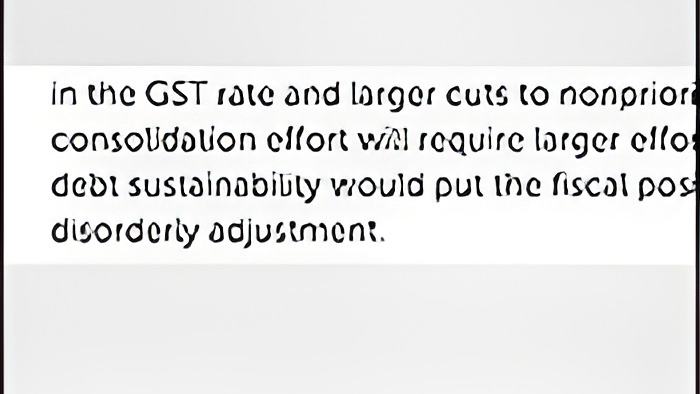
"...failure to restore debt sustainability would put the fiscal position and the currency peg at risk of disorderly adjustment." End quote. In case you missed it, "disorderly adjustment" is a euphemism for devaluation.
The report - published on the IMF website - states that the COVID induced economic slowdown hurt all commercial sectors that are contact sensitive, which resulted in a GDP contraction of 14.1%.
The increase in government spending to get the virus under control and the sharp fall in revenues led to an increase in the primary deficit from 1.4% of GDP in the financial year 2019/2020 to 8.3% in the financial year 2020/2021.
The IMF says that there was a rise in public debt from 98% of GDP in 2019 to 126% in 2020, and there are projections that it will increase to around 133% this year. The current account deficit has narrowed due to a sharp contraction of imports, and lower repatriation of profits from foreign-owned businesses.
And, the IMF team is projecting that recovery from the pandemic, back to pre-COVID levels in 2019, won't happen until the year 2025. Tourist arrivals are expected to remain low for this year given the high level of COVID in Belize's main trading partners. Tourist arrivals are expected to pick up in 2022, when vaccines are more widely available in the rest of the world. The IMF team thinks that real GDP is expected to grow by 1.9% in 2021, and then 6.4% in 2022. Potential growth of 2% will return over the medium term.
And then, the IMF team alludes to the dreaded "D" for devaluation.
That part of the statement says, quote, "The key policy imperative for Belize is to restore public debt sustainability and strengthen the currency peg. This will require a fine balancing act involving ambitious, yet realistic, fiscal consolidation, growth-enhancing structural reforms, and debt restructuring, all aimed at targeting [a] reduction of public debt to 60 percent of GDP by 2031. Such strategy would also improve reserve adequacy and strengthen the currency peg." End quote.
The IMF team mentions that the Briceno Government is strongly committed to strengthening the currency peg, and there is even a mention of the wage bill. As viewers are aware, that topic is a current sore point for teachers and public officers who are resisting the Government's proposal of a 10% pay cut and an increment freeze for savings of 80 million. The concluding statement says that GOB is, quote, "appropriately focusing on reducing the wage bill and purchases of goods and services" End quote.