

The US Embassy and the judiciary members are already reporting major success in addressing the case backlog in Belize's courtrooms.
Since 2016, the two sides have been collaborating on efficiency programs such as the Court to Prison Video Live Link, the formation of a strict list of Criminal Procedure Rules for the Magistracy, and the implementation of an electronic case management system. Those initiatives are now paying significant dividends, so much so that in only a few short months, the list of pending criminal cases has been reduced from around 40 thousand to a little over 20 thousand. The authorities tell us that the total reduction in the backlog is about 42%.
The Embassy congratulated the judiciary for working diligently to turn things around in such a short period:
Leyla Moses-Ones - Charge d Affaires, US Embassy
"The focus of this year's justice sector programming has been on reducing the criminal case backlog and improving efficiencies by streamlining court processes. And so incredibly, in just six months, from March to September of 2022, we have seen a 42% reduction countrywide in the backlog of criminal cases. That's 42%. We know it's possible to continue that kind of great progress."
Georgia Belizaire - INL Justice Sector Program Specialist, US Embassy

"When we started, the system was doing something like 49,000 cases. We're down to 19,000 to 20000+, which is quite incredible. And it was a lot of effort from the court to do that. Success can only come if the government wants that success, and obviously, they want it."
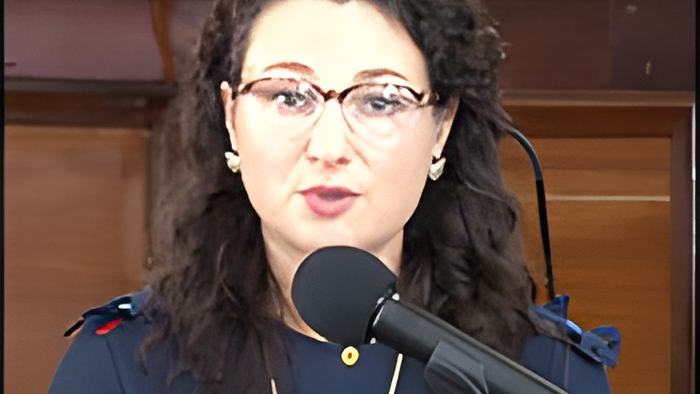
Chief Magistrate Sharon Frazer was at the donation ceremony today. We asked her how she, the magistrates, and criminal judges achieved that 42% reduction in the backlog of cases.
You'll remember that in April, a little over five months ago, the Magistracy was the subject of a report and assessment of the Canadian Government-funded project known as Improved Access to Justice in the Caribbean.
The experts who investigated the Magistracy concluded quote, "…The weak edifice, deficient "engine room" and persistent neglect of the Magistracy through successive governments substantially impact the quality and delivery of justice received by court users, manifested in many adjournments, long delays, and frustrated litigants and users." End quote.
Here's what the Chief Magistrate had to say about the changes they've made in the lower courts to increase their efficiency:
Sharon Frazer - Chief Magistrate

"It's a combination of a lot of things because what is on the system is not necessarily a true reflection of the actual backlog. You have some cases that are showing active when, in fact, they have been concluded. So, it actually would have meant doing something like a desk audit - so we would have been doing some reconciliation. So, we have been working with Prosecution Branch and the prosecutors to look at what they have and compare it with what we have. This new case management system also gave the magistrates an opportunity to go in on the system themselves - which we didn't have before. So, in doing that, it would have meant that you're going and say, 'Oh, this case is ten years old; I need to do something about this.' So, magistrates have been they've been buying into the whole process and looking at it and say, well, I need to change this. I need to - my courtroom is saying I have so many matters. So, I need to address those matters. So getting that buy-in was one of the ways that we dealt with [it] - with the cooperation of the Prosecution Branch. Right. It also meant that we had to look at -I will tell you, with COVID, we had a number of cases - as you all know. Media took pictures of all those people who lined up out here on a daily basis during the COVID pandemic. So, we've also been addressing those COVID-related matters as well, with a view to getting them out of the system the best way we can. So, that has also helped in bringing down the numbers: the reconciliation and also the magistrate's active participation with the cooperation of members from the Prosecution Branch."
Daniel Ortiz
"Explain to us the level of oversight it provides to you, as the administrator, to make interventions when you see things aren't going the way you would want them to, as the leader."
Sharon Frazer
"Okay, so with this new case management system now, I have large viewing access. So I can see all the cases countrywide. I can even see cases that are attached to the Family Court since, in the districts, we double as a family court as well. It also means on a daily basis, and I can go in, check all the matters in the individual courts, look and see the age of the matters and say, 'Okay. So Magistrate X, tell me why this matter was not dealt with.' I have that oversight that I did not have before. It would have meant I would have had to go manually. Now, I'm able to, in the morning, go into the system - or the day before - go into it, look at the cases, look at the age of the cases, and highlight to the court that, well, I noticed that these many matters that are really old. How are we going to address them?"
The Chief Magistrate asserted that she and her other Magistrates are sticking strictly to the Criminal Procedure Rules, especially the guidelines on the reduction of adjournments. She said that attorneys had been put on notice that the bench of the lower court will not be so willing to accept excuses to adjourn cases.