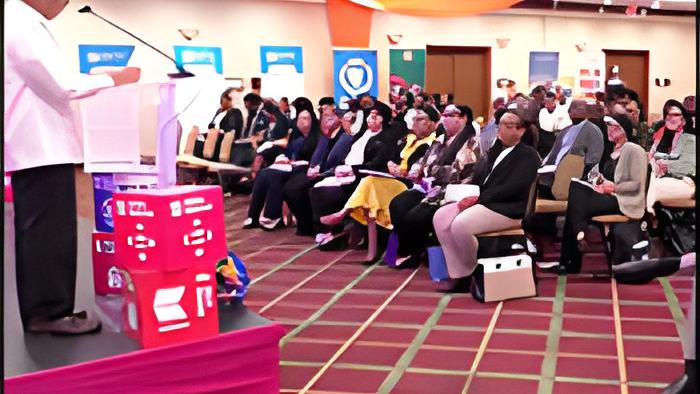
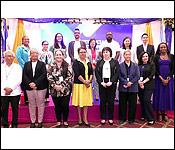
GOB in partnership with UNICEF, and other international and local stakeholders are taking an active approach towards mitigating poverty levels in Belize through the implementation of a National Social Protection Policy. It seeks to improve the accessibility to healthcare, education, housing and employment for marginalized children and families. Today they hosted a summit at the Biltmore to further discuss the development of this policy. Jomarie Lanza reports
October 17th is recognized globally as The International Day for the Eradication of Poverty to promote understanding and dialogue between people living in poverty and the wider society. To mark this event GOB along with UNICEF and other key stakeholders held a Social Protection Summit, under the theme "Protection for All" to further discuss and share ideas towards the development of National Social Protection Framework and Strategy for Belize. The Minister told us more this morning at the summit.
Dolores Balderamos Garcia, Minister of Human Development
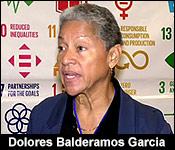
"Our Ministry Of Human Development, Families And Indigenous Peoples Affairs we kind of spearhead the whole issue of what we call social protection because we are sort of like the people ministry. However, as to the point that i made in my remarks a little bit earlier, the ministry of human development is not the only entity that is responsible for the whole broad section and sector of social protection. We need Education, we need health we need economic development."
"We need labor, we need local government, we need all the various ministries plus our civil society partners, our UN partners and everyone. So when we talk about social protection its not just maybe like a social safety net it is the whole issue of what we do to make sure that we protect our people from poverty. We make sure they have jobs, we make sure there is adequate housing, healthcare, education, shelter, all of those things. Social protection is a very broad spectrum of what we need to do to help our people and reduce the poverty level and help our people to come up in terms of development."
UNICEF's Social Policy Specialist broke down the numbers that they have been looking at over the past few years, and how this has motivated them to support and educate stakeholders on the importance of social protection.
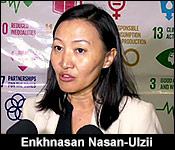
Enkhnasan Nasan-Ulzii, UNICEF, Social Policy Specialist
"So today is actually the international day of the eradication of poverty and I'm very happy that this event is coinciding with this day because its very meaningful I think because social protection is there to address poverty. In Belize according to the statistical institute of Belize data as of 2019 more than 50% of people were living in poverty and it was especially high for children, around 60% of children age 0-14 were living in poverty at this time. And also statistical institute of belize has conducted a multi dimensional poverty index in 2022 and according to this people in Belize including children are deprived in many aspects such as access to education access to health, access to housing or living standards and access to employment so there are a lot of high level and poverty and deprivation in Belize therefore social protection is very important in addressing poverty and deprivation in Belize."
HelpAge Belize is one of those stakeholders who can benefit from the implementation of a Social protection framework. One of their biggest concerns has to do with accessibility to healthcare and pension.
Evan Dakers, Chairman, HelpAge Belize
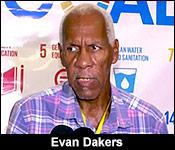
"I think a summit like this definitely is very important for an organization such as our some of the challenges we just mentioned one or two. The first one that comes to mind is of course income insecurity. We have a number of elderly persons who for no fault of their own aren't getting any type of pension as you know for you to qualify for most of the social security benefits you have to had been working. Now some of these people have not been able to get the benefits because their employers did not contribute towards the social security scheme and in some cases maybe at the time when they were working there wasn't any scheme so you know you can look at it from that angle and then of course we also have health issues a major major challenge that we face and as we get older we have a number of medical issues and most of it is what they call non communicable diseases, diabetes, hypertension and these illnesses are extremely expensive in terms of the medication that you may need to take right so what we are looking at is a situation where because we don't have the wherewithal to assist the elderly in particular those people who cannot access their pension or support from other sources we have a quite a number of them who end up as people who the government in some cases has to take over."
"So in terms of what's taking place here over the next couple days we are hoping that the partnership, because it's a partnership between the government and the NGO sector, that we can come up with workable solutions that hopefully can be properly planned and most importantly financed. Because we can come up with all these beautiful plans and programmes but if they are not financed it is of no use."