As we told you earlier, government had to get the House's approval today to pass a motion for the $78 million debt rollover at the International Bank of Miami. The government also used the opportunity to present a motion for what's called a private placement debt offering, which is really just a bond, or a loan for US$136 million. 7NEWS first reported on this a month ago after obtaining confidential details of what until then had been a secret offering. Well today it was laid bare. The total is US$136.6 million, but government will only get $93 million of that with the rest over US$40 million used in a costly insurance package that has to be purchased at a premium price because government is not considered creditworthy in international circles and institutional investors need the confidence that if government cannot pay, at least the insurance will. The Prime Minister explained what the money will be used for and the Opposition responded with fiery disapproval.
Said Musa, Prime Minister
"The net proceeds amounting to approximately US$93.6 million will be utilized as follows: some US$42.5 million will be earmarked for debt service over the 12 months while some US$51.1 will be earmarked to build the foreign currency reserves of the country. The current external debt to be serviced specifically on the proceeds of the notes include a portion of the Solomon Smith Barney notes, approximately US$20 million, due in June of 2005, and a portion of the re-profiled notes, US$22 million, which will be paid shortly after receipt of the debt proceeds. This new borrowing will increase our outstanding external public debt stock, in the short run, by about 13% of GDP, but at the same time it will also increase official international reserves by the same extent. The proceeds will enable Belize to extend the maturity profile of its debt and at the same time increase its official reserves to almost 3 months of import cover."
John Saldivar, UDP Cayo South Representative
"We're no longer borrowing money to build highways or borrowing money to build schools, borrowing money to build hospitals. We're now at a stage where we're borrowing to pay off what we borrowed last year and this seems as if we're going to continue like this until we're able to remove this government. This is a very expensive loan, US$19 million alone Madam Speaker in what is termed insurance premiums. It means Madam Speaker that the people on the other side, the members on the other side, this government has taken our creditworthiness to such low levels that now in order for us to get money from anybody we have to now start paying insurance premiums, US$19 million worth Madam Speaker; this is indeed a very expensive loan. Out of a US$136 million Madam Speaker all we are getting, the net proceeds, is $93.5 million."
Dean Barrow,
"From any conceivable point of view, this is a bad transaction, it is the worst transaction ever. At least the initial two bonds for a $100 (million) and $125 million were not subject to these onerous terms, the rate of interest was lower, there was not this 30 or 40% discount off the top, it merely means
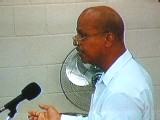
Madam Speaker that we are in such a terrible position. That's where our name is internationally, a government at risk for almost immediate sovereign default. That's why we have to go to all sorts of byways and back alleys and have to pay all these expenses Madam Speaker so that even the Prime Minister conceded that of the $136 million all he will get is $90 million or so off the top, absolutely horrible."
Both motions were put through their three readings. At the end, the Opposition asked for a division where each member had to state their vote. Both Mark Espat and Cordel Hyde who voted against the budget in January today voted in favor of both debt motions.
And while the politics of it is one thing, the reality is that because Prosser did not pay the US$57 million for the Carlisle shares that has been tacked on to government's debt and those with some experience in investment circles say that could somewhat sour this bond offering on the international market. Of note is that while the motion listed the debt offering at 10.58%, when all charges are tabulated, it comes in at over 12%.