
And while Belize will have done major work for Venezuela and against Guatemala, where does that leave us with the Americans. The fact is that because this country is listed as a tier three human trafficker, it opens Belize to U.S. sanctions and those can come in many forms. Belize has been given 60 days to do its work on that front and the Prime Minister indicated that his government must do what it can to court the favor of the United States and avoid sanctions.
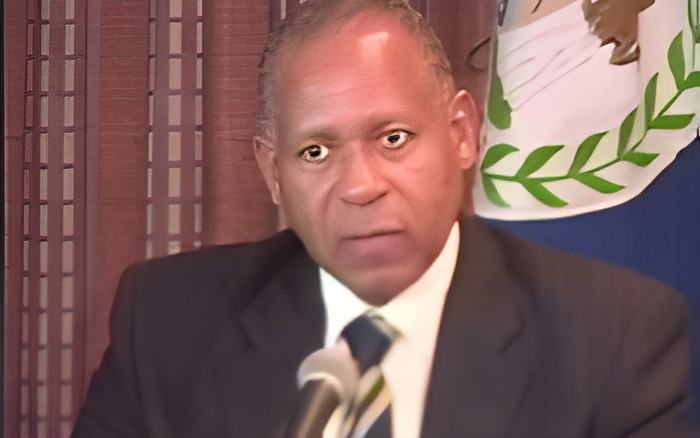
Rt. Hon. Said Musa,
"On the human trafficking issue, clearly it is a matter of serious concern to us that the United States administration would put us on a tier three, judge us in that way, and then the implication being that they can apply sanctions. I think we have to understand that. And the sanctions could come in many forms. Other than humanitarian assistance, all such assistance can be withheld. The United States government sits on multilateral institutions, including financial institutions abroad. It's a serious matter that we are taking very seriously. As I mentioned earlier, we are going to do our best to work to meet this plan of action within the next sixty days."
But even as Belize tries to adjust its internal operations to appease Uncle Sam's big stick diplomacy, the Prime Minister today said that any proposition involving Guatemala would be more palatable if that country would move to remove the illegal settlement of Santa Rosa from Belizean soil.
Rt. Hon. Said Musa,
"We would like to see obviously relations improve significantly with our neighbor. Guatemala is not going to go away. We are working assiduously in fact in try and resolve our problem with Guatemala and one of the areas we feel that they can show good faith, that they too want to resolve this, is for them to act on what has been agreed upon; take steps to remove this illegal settlement of Santa Rosa in the Toledo District. I think that will be a first step and then Belize can then evaluate its position."
The population of Santa Rosa has steadily declined since its peak at over 100 in 2002 but there are still about 50 persons, all Guatemalan living there.