3 weeks ago, we told you about Oceana Belize's lawsuit against the Government of Belize, in which it was contesting several of the oil contracts which the Ministry of National Resources issued between 2005 and 2007.
The contracts which Oceana Belize wants GOB to void includes the ones issued to Island Oil Belize Limited, Tropical Energy Limited, PetroBelize Company Limited, Princess Petroleum Limited, Providence Energy Belize Limited and Sol Oil Belize Limited.
Today, Attorney Godfrey Smith, who is representing Oceana Belize, and Crown Counsel Herbert Panton, who is representing GOB, appeared before Justice Legall to present arguments on an application by COLA and the Coalition to Save Our Natural Heritage. These 2 organizations wanted to join Oceana Belize as co-claimants against the GOB.
Instead of dealing with that application, the court was greeted with an application by Panton to strike the matter out completely. Panton submitted that the court should hear this strike out application first because if it was successful, then whether or not these NGO's can join Oceana then becomes a non-issue.
Justice Legall, at Smith's urging, decided to grant the application for the NGO's to join the litigation. He also ruled that the court will give Smith and the claimants enough time to properly respond Panton's strike-out application.
Outside of court, we spoke to both sides about the significance of the Justice Legall's decisions:
Here's what they told us:
Audrey Matura-Shepherd - VP, Oceana
"We really came to court today to hear the legal arguments as to whether or not COLA and the Coalition should be joined in a case that had already been started by Oceana. That case is one in which we are challenging the legality and the validity of the offshore oil contracts given under the petroleum act, which we are saying was violated. When we came to hear those arguments, one of the things that we had to deal with was that there was a new application asking that the matter be struck out. So, the court had to decide how to deal with this. Of course, the government crown counsel was asking the judge to deal with the strike out because once everything was struck out, everything else becomes a nullity, however the court ruled that it would not deal with the strike out, for two reasons. They're saying that the other side needs time to go and look at the grounds for which you're asking for the strike out, but the other reason is that we really came here today to hear the arguments as to the joining. The government was given an opportunity to say what were the grounds why these people should not join. The court didn't find that they were any valid grounds why they should not be joined, and gave an order saying that COLA and the Coalition can now be claimants in this matter, joining with Oceana against the Government, challenging the legality of the offshore oil contracts. But at the same time, they're saying that we're to come back now July 5. On July 5, we'll hear arguments as to the joining, so having been joined together, the court will hear the whole decision, or the whole arguments. Should the matter be struck out totally on a technicality, or not? And that's what we'll do on July 5. I think that one of the major significance is that we've always been dubbed as just a vocal minority. And so, bringing other partners on board, who honestly have always been working on this issue, it was just a matter of logistics to get them on board. Having them on board is really just a representation of a wider cross-section. So, we're bringing on board a larger cross-section of the population so that the government understands that this not a vocal minority; this is a huge segment of your population, and we're asking you to take note and listen."
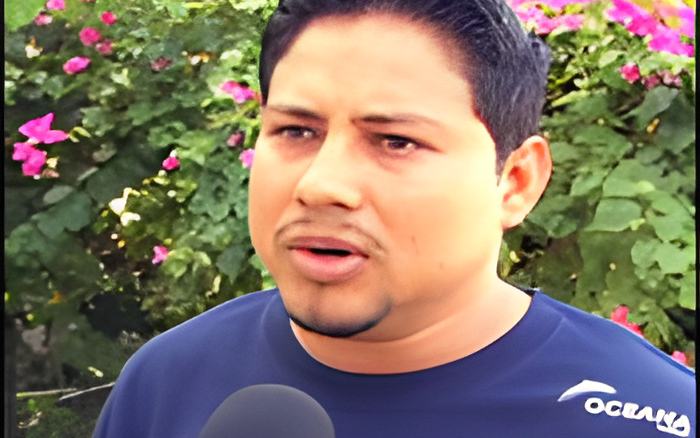
Daniel Ortiz
"The court expressed point of concern where some of the organizations are just organizations, but Oceana in Belize is actually a company, which can absorb the cost should the court rule against application. So, my question then is what will take place, if you would share with us, should the court rule against you as applicants?"
Audrey Matura-Shepherd
"One clarification, COLA is a company because to become an NGO, you first have to incorporated as a company, and then you get NGO status through the Ministry of Human Development, likewise as Oceana. The Coalition right now is just a coalition in the process of being incorporated and becoming an NGO as well. However, I think the question to cost is that although the rule is that when an entity or an individual brings forward a case that deals with a public and national interest, you do not award cost, except - and they gave the exceptions - and one of them would be that it's really vexatious. On the issue of costs, it is always incumbent on the claimant knowing that if that should ever happen that you need to pay costs, you have to obey an order of the court."
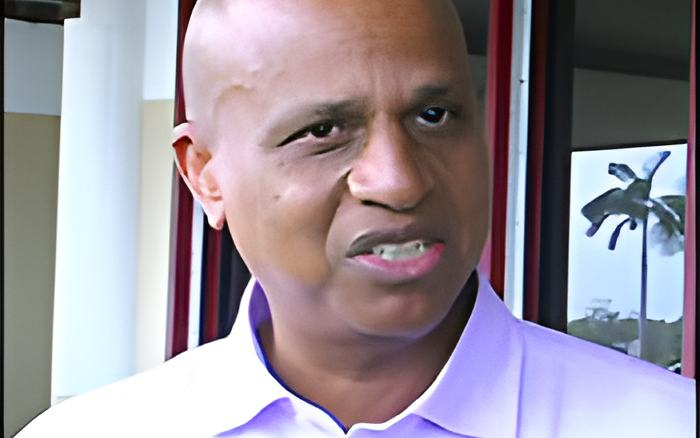
Herbert Panton - Crown Counsel, Attorney General Ministry

"There were 2 matters before the court this morning; there was the matter of the 2 NGO's being joined as co-claimants, as well as our application that the matter be struck out. We had asked the court to hear our application before hearing the application of the 2 claimants being joined because if the application to strike out is to be heard first, that would be the end of the matter, so nobody would need to be joined. The learned judge decided to join those claimants none-the-less, so that we are now - at the 5th of July, when our substantive application will be heard, it is our contention that at that time, the matter will be struck out. If we thought they were substantial, we would not have made an application to strike out, and it is our view that when our application to strike out is heard, that is going to be the end of the matter."
As noted in the interview, the strike-out application will be heard on July 5. If Smith is successful in convincing Justice Legall to refuse it, they will be given 2 weeks to prepare evidence from these new claimants which they can use in the actual hearing of the matter.