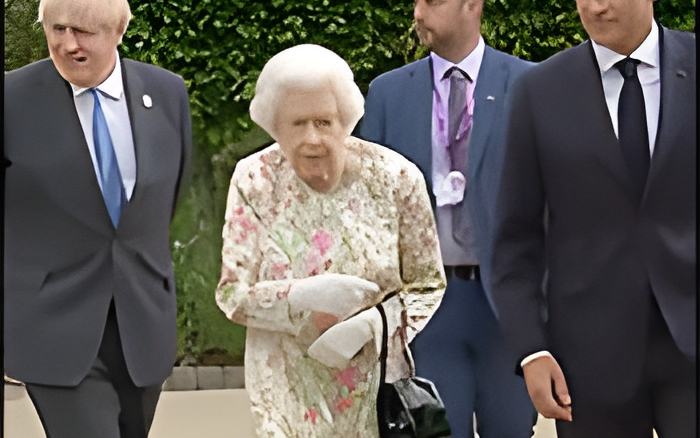


Earlier in the news, you heard the prime minister discuss the death of Queen Elizabeth and what will happen next in Belize's future. But while the PM said that there needs to be consultation before a decision of whether to move towards being a republic is made, there are those who think that those steps should have already been taken.
Delmer Tzib is a History Lecturer at the University of Belize and according to him, this could be a turning point for the country. He told us today via Zoom that this is the opportune time to discover where Belize wants to go as a country.
And as someone who doesn't hold the monarchy in high esteem, we asked for his reaction to the queen's death.
Delmer Tzib, History Lecturer, UB
"First thing's first, it's a human being that is gone, so there has to be some sensitivity that the fact that it's a human being that has passed. However, I took it most importantly as an opportunity for us as a nation to start evaluating where we want to go and what we want to be in the essence of saying what the legacy of the British Monarchy has been in the region and the capacity of how much power the monarchy had to make changes and what changes had happened and what has not because really and truly the queen has passed and there are still areas that need to be decolonized and not to talk about decolonization of the mind and the reparations that need to happen in the region."
"I think that from before the queen had passed and even when, I think it's the prince that came to visit, those were opportunities for us to start discussing about where we want to go. You will always have people that will try to stay with the system that we have, Fanon would call cognitive dissonance in the sense of saying that when facts are shown that are different than to what you had preconceived, it shocks you, it moves you a bit. However, I think that it is time for us to move towards reparations, it is time for us to move towards evaluating where we want to go as a nation and as a region really, not just Belize in isolation but the whole Caribbean region, where we want to go. I think the trend has been countries are moving away from the crown and to me it is positive."
But as you heard yesterday, many Belizeans believe see the queen as sort of a mother figure - a protector, rather than a conqueror… or a colonizer.
But as Belize approaches its 41st year, it's a reminder that the queen was already 55 by the time we got our Independence - and that at the time of her death, she was the head of state in 13 other commonwealth nations.
And Tzib says, that even after Independence, these countries are still suffering today from the effects of colonization
Delmer Tzib, History Lecturer, UB
"I think that during the period of decolonization in the region, this is post world war two, there were instances where the monarchy was entertaining the idea of a federation, not precisely for a safe road towards Independence, but rather to keep the colonial governments in control or to an extent almost connected to the empire in another way. So there were ways where the queen and the monarchy by extension were trying to maintain control and power but innately, one of the things that we need to outline is that even up to today, the level of inequality that the monarchy has left still exist. If you look at our country, a lot of people tend to think, you're living in the past, you're talking about the past, but one of the things you need to understand is that all of those colonial structures that were there, the legal system, the economic system, the social system, the social stratification that occurred, all of those things had a direct impact on where we are today. The reason we have such an amount of poverty, yes the governments that have been in place have some role to play, but there was also an innate system, a structure that was left there of exploitation. So the crowd, from since the 1600's, has practiced a mercantilist system with the colonies where it is about extracting as much resources as they could for the benefit of the crown, for the benefit of the mother country which in this case would be England, so there was limit to no investment in the colonies per se, but rather it was always about the best interest of the crown."