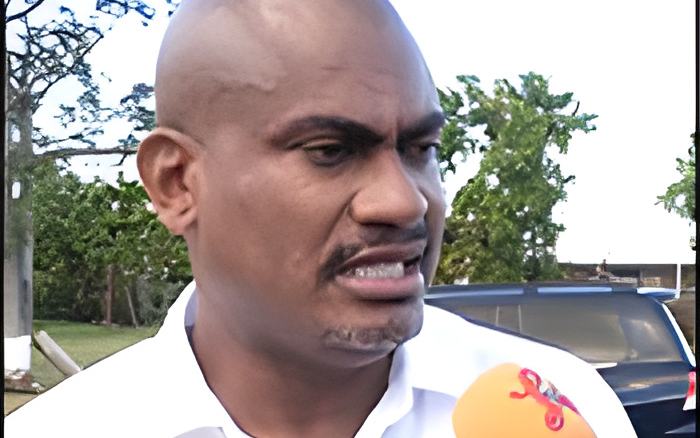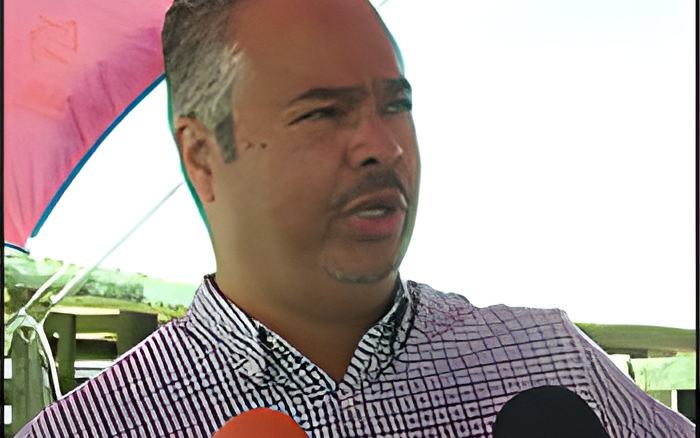
And, the media also asked the veteran politician about the culture of clientelism in politics. He's been singled out as a kind of doyen of this practice with his mobile land clinics where the Minister personally assists with numerous land issues. While some criticize, many others - especially those who benefit from it - applaud the approach of direct service to citizens.
But, while that happens in a controlled setting, many times, politicians, the rare one like Hyde who actually lives in his constituency - has to deal with people who queue up at door asking for assistance and service with urgent personal crises.
Voters do this when they feel they have no other option - but how can a politician end that cycle of desperation? Hyde said today that it's about empowerment:
Cordel Hyde. Minister of Lands
"I think first of all you have to appreciate that when someone goes to a politician most times that issue is the most important for that person. It's not a flimsy issue, it's not an issue where I just want to harass someone or I just want to beg someone. That particular issue is important. Often times that particular issue involves money, because you can't get anything free in this country. You can't get anything free in the world and all over the world the cost of providing services and goods have gone through the roof. So, it's even harder. That's why we have do things like for example raise the minimum wage, so that a person who is working fulltime is not poor, is not in a position where they can't pay their rent, they can't pay their utilities, they can't send their children to school. It's about empowering people. So it starts with something like that where in this instance just this past month 30,000 persons who were just making $3.30 an hour are now making $5.00 an hour. A considerable raise, not a great a raise that we would have like, considering the inflationary times and how difficult it is to get by right now, but its a raise."
"For me, I believe it's about education, it's about making sure our people, particularly those that have been to school, that they go back to school. Make sure that the ones who are in school stay in school. Endure, finish so that you can get your paper, so that you can build yourself so that you can elevate yourself and not have to settle and not have to depend and that continuous cycle where for example if your family never had someone who went to college or never had someone who went to high school, that you just continue in that cycle. You have to break that cycle, you have to break that generation poverty and that what's it's about, it's about making sure that whatever transformational benefits we've gotten from the economic magic that we've seen over the last 2 years that, that benefit goes to the people who really need it so that they become stronger, they become better, they have their jobs, they have their land, their house - they can send their children to school. They can provide basic healthcare for themselves through NHI for example, that kind of stuff. Once we empower our people we will be better off as a country."
Reporter
"So you anticipate that less people will be knocking at your door, sir?"
Cordel Hyde. Minister of Lands
"Well, when that happens means I've been doing my job well, so that's the goal that ultimately we do it so good that people don't need us so much. But in the meantime, we have to work hard and put people first."