
Today the motion for the Safe Third Country agreement between Belize and the US was debated in the Senate. The debate lasted roughly four and a half hours, with each senator rising to share their opinions and express their concerns.
After the motion was introduced by the leader of government business, Anthony Sylvester, who was filling in for Eamon Courtenay, the lead UDP senator, Patrick Faber kicked things off. Similar to many of the other senators, Faber complained about the lack of information and transparency around the agreement. He added that not only was the "information session" they had gotten not very informative, but that they also had to learn of the agreement from the US Embassy.
Patrick Faber, UDP Senator
"While it is the guise is that this would be additional information to help us better understand what this agreement is about, colleagues on this side of the House feel and honest colleagues on that side of the House would be forced to tell you that we are no clearer on what this agreement brings after having listened to testimony by the attorney general who today sits as lead government senator and as well the ambassador Borland who, through no fault of hers, she has her people who she has to listen to, the Foreign Minister is her boss, we are no clearer on what the intricacies, what the details are if you will of this agreement. The agreement, we first heard of it, via, believe it or not, the US Embassy Chargé d' Affaires. It was not even our own government who came to us and said listen, we are engaging with the US in order to try to sign off on this agreement and that was just a few days, in fact if you count the weekend, it was just literally two days or so before the signing of the agreement on October 20th."
"In that Senate committee of the whole, colleagues on this side and from our non-governmental senators over there, they were very adamant in asking the question, what was the rush? And what are we getting, are we being pressured into doing this, was a famous question in that meeting. And rather than the government being up front and clear and honest and transparent and say to us that, yes, there is some pressure coming from the US, which we all know is much more powerful than our tiny nation and in fact the entire set of countries in our region, whether it be Central America or Caricom or them in combination, US is a powerful force to reckon with in this region of our world."
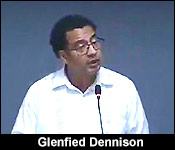
The independent senators expressed similar views and while they did not outright reject the motion, they pointed out that much more information about the agreement is needed.
Glenfied Dennison, Union Senator
"The people of Belize want to know what are you really signing this agreement for? In the absence of the information you will speculate that this is the MCC money. You will guess and come up with your own answers as to why. I will come you leader for government business, this is the first time in my time of the Senate, such an extensive explanation has been offered when any motion has been put to this House."
Kevin Herrera, Business Sector Senator
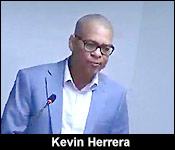
"The meeting of the committee that was held at the Central Bank to me was a briefing session and it was a briefing session simply because an agreement was already signed. Consultations mean that you have a legitimate opportunity to give inputs and those inputs can impact the final outcome or the final product. But when an agreement has been signed, obviously, those inputs cannot have any type of impact on a final product because the agreement was already signed. The second point I'd like to make is that there is a reason why and I believe that you were a part of this process during the first constitutional reform process but there's a reason why the Senate ratifies an agreement and it is to provide a backdrop to backstop I should say for when our leaders have to sign agreements under pressure, perhaps even under duress, that they have to come to the Senate and the Senate must ratify those agreements or they're not enforced."
And of course, the PUP senators supported the motion. To wrap up the debate, Sylvester explained the course of action as it relates to any treaty, and that the agreement needed to be signed to activate the process.
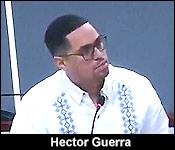
Hector Guerra, PUP Senator
"This is an agreement that's seeking that Belize as a country accepts persons who are facing political, religious, racial persecution that we as a country step up to the plate that we are willing to accept you provided that you can meet what our law requires. We are willing to open the door to you if you are able to show genuinely you need a place of safety, you need a place of refuge, this is what this agreement is about."
Anthony Sylvestre, Leader of Government Business
"What obtains in our constitutional democracy is that after the agreements have been signed, this is where the Senate, the constitutional authority of the Senate becomes triggered. So it is through this process which we have engaged in today which all senators in the discharge of your constitutional duties and obligations, you've indeed had the obligation and the right to scrutinize, to examine the agreement but the point I wish to make is that there has been some conflating of the issues. The agreement is a framework agreement, it's a triggering of the process so that the terms of the agreement, which
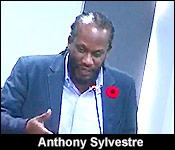
includes the standard operating procedures, those clearly cannot be crafted or they cannot be contemplating unless the Senate authorizes its ratification. If the Senate doesn't authorize the ratification, that's the end of the matter and so as I made the point earlier this morning the Senate will have an opportunity to further examine and review and debate on this matter because there would need to be an amendment to the refugees act."
The Senate Meeting is still ongoing at this time.