
Cycling Association President Gerald Garbutt announced yesterday that the finish line for this year’s Cross Country Cycling Classic will be in front of the Memorial Park. This evening Garbutt showed officials from the Police and City Council Traffic Departments the new finish line. He needs them onboard because with a finish line on a street – the variables increase a hundred fold. Crowds will have to be controlled and contained, intersections blocked, and riders led in because when its on the street and not at a stadium – things can go very wrong. And if you don’t believe us, we’ll take you back to 1994 – the last time the Cross Country finished on a street.
Keith Swift Reporting,
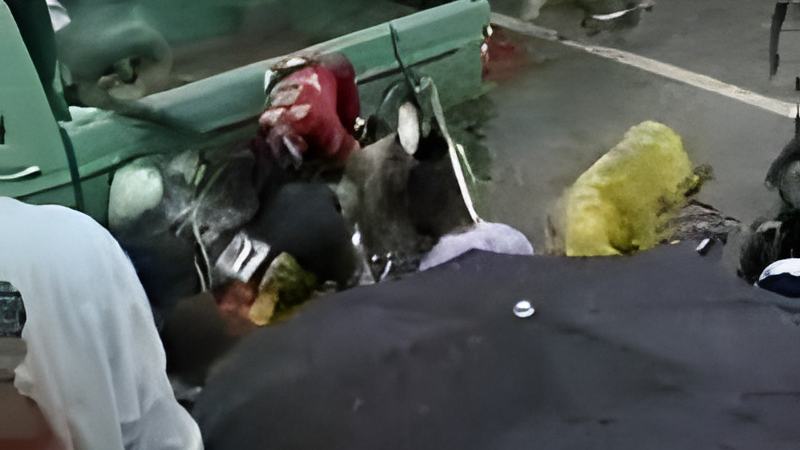
On a wet Holy Saturday in 1994 - Charlie Lewis rode across the finish line on Yabra Road – breaking the road when he finished the race in less than 6 hours - for the first time – ever. American Bobby Lee finished a close second but shortly after – disaster struck.
[Video Footage of Spill]
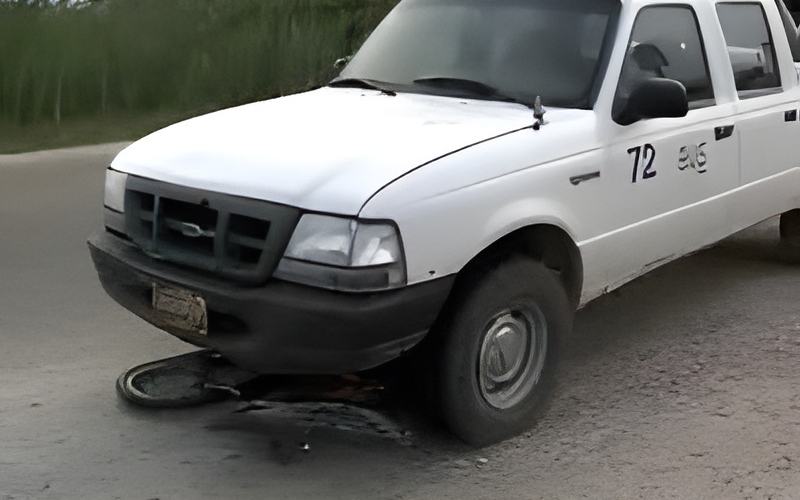
Chaos followed as at least three cyclists were seriously hurt. Roque Matus was one of them.
Roque Matus, Cyclist
“I saw the truck from 20 feet away but I tried to brakes and that affected even my sprint and that affected positioning and everything. So the Association had a very difficult time determining who came in third, fourth, fifth, and sixth after that. I had a fractured ankle and I was just bruised up and scraped up basically. Luckily I didn’t have any other broken bones or anything like that.”
Keith Swift,
I am sure you were mad.
Roque Matus,
“Well very disappointed because you ride 144 miles to come and find out you are going to come and try to sprint into a wall because I saw the truck parked right at the finish line and what can you do -you have the crowd – the truck had its two doors opened and the crowd beside it on both sides.”
And in 1993 – Matus was at the center of another controversial Cross Country finish on a street – this one Newtown Barracks.
Roque Matus,
“In Belize what we had just prior to the race is an election so you had three lines painted on the road. There was a lot of things, like I mentioned
earlier, we lacked ample signage towards the finish line that says 5 kilometer, three kilometer, 2 kilometer and what happened is that when we saw the first line, we all sprinted for that line and I won the first line easily.
When we passed the first line we all noticed there was a second line so we started the sprint again. What happened is that I saw Bunas observing it before the rest of us and he started to go ahead for the line but I had a very quick acceleration and I nipped him at the line. So when I passed the line, the judges out there declared me the winner of the race. But I found out the next morning that they had reversed the situation because they went and looked at a camera which was not in the correct position. It was at the front, not at the side where the camera should be to judge a photo finish and they decided to give him the victory based on that.”
Matus- who has successfully coordinated the Tour of Belize says one way to avoid the heartbreak of 1993 – and the pain of 1994 – is proper planning.
Roque Matus,
“You definitely need crowd control, the cross attracts a lot of people and there needs to be a separation between people and cyclists. But also they need to think it out very very clearly so as to avoid problems at the finish because many obstacles can occur when you are finishing a race in the street at that magnitude.”
Perry Gibson, Manager – Benny’s Megabytes
“The ideal finish would have been the national stadium, the Marion Jones Complex but it is not ready so really the Memorial Park in terms of distance will be more or less the same. And I think that any finish could be made safe with the proper cooperation of the public, the police, and the cycling officials. I think with the use of barriers to cordon off the finish area, I think it should be fairly safe, and I think it is just basically something we have to go with.”
Keith Swift,
But do you think there could be a repeat of 1994?
Perry Gibson,
“With the use of the barriers and the police blocking unnecessary access to the finish line to cause any bottleneck I don’t see that happening again.”
Roque Matus,
“They need to ensure they have their cameras in place, they need to bar off the area, they need to make sure they have a very good communication with the police, that the correct places are blocked off. And the only concern I have right now with the finish is that right before the Memorial Park the road has a small, not a roundabout, but a small jot out that could be a little dangerous to the finish and if a big pelathon comes, it can cause crash or something like that.”
Roque Matus finished 11th in the 1994 cycling classic. Well over one hundred riders have already signed up.