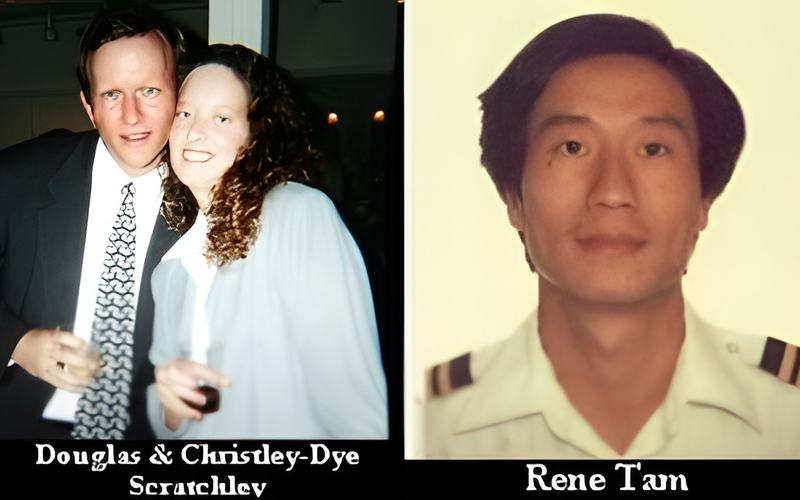
Tam was flying a private plane heading for a private airstrip but should he have been flying in such bad weather in the first place? That's the question that civil aviation authorities had to answer today. The authority fielded a multi agency press conference, including the Director of Civil Aviation, his investigators and police who assisted in the search. Here's what they had to say.
Alfonso Noble Reporting,
In the presence of pilot Rene Tam's wife and his sister, Civil Aviation authorities detailed the last contact that the air traffic control tower had with the Blancaneaux Islander as it flew from the International Airport to Privacion Airstrip in the Mountain Pine Ridge Area.
Jose Contreras,
"It departed at 10:03 in the morning and, as is the procedure, the air traffic control unit provided a service until it was leaving the terminal control area, which is 25 miles radius around a navigational area that we have at the airport. The last report was at La Democracia Village climbing to 2,500 feet. From that point the aircraft is transferred to a frequency that is called the common broadcast frequency. In this particular frequency, the pilots will transmit their position so that other pilots may know the intention of this particular pilot and his position. The estimated time to Blancaneaux was 35 minutes so after that contact with air traffic control, there would be no more contact with the aircraft until it reports returning from his last destination. We knew about the aircraft that had not reached its destination at about 12:50 pm and immediately the air traffic unit started the alerting service, which was a search and rescue."
That search and rescue operation continued from that point on through to Friday when authorities began retracing the possible track the plane may have taken
from the International Airport to Privacion Airstrip. During this search they picked up the signal from an emergency locator transmitter that had them looking in the Middlesex area.
Jose Contreras,
"We were concentrating on that particular area because aircraft were unable to proceed father than Belmopan due to conditions in the mountains. That particular search and. rescue was completed late in the evening and it was continued the next day. The next day the aircraft was located in the area of Privacion Airstrip, about 5 kilometers to the northeast of the airstrip. The exact time when it went down, we cannot determine. We understand that they heard the aircraft circling very low over a village close to Unitedville and also the persons that were in the resort also heard the aircraft flying very low."
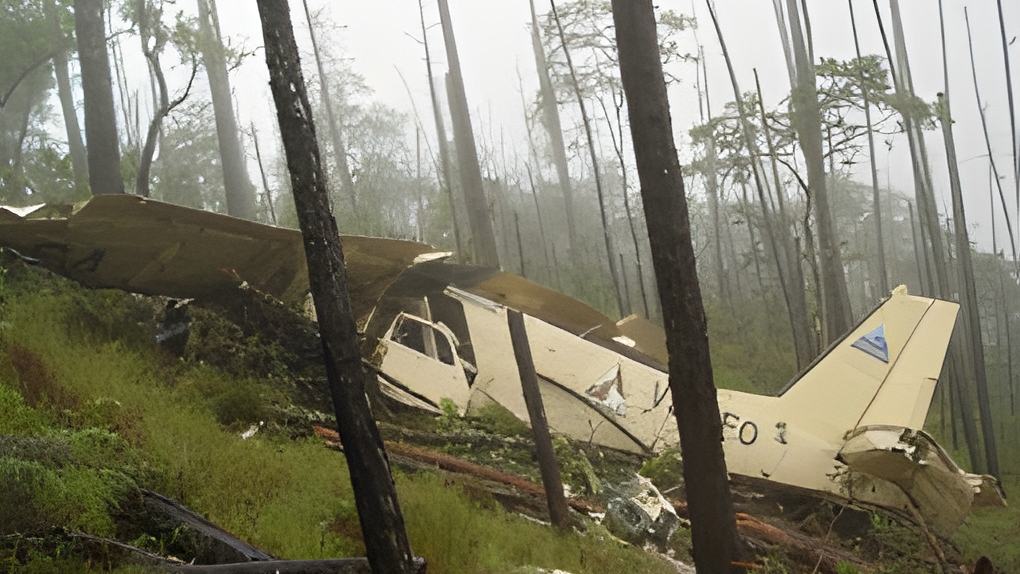
The ELT signal had been off and it was not until a search party from the Hidden Valley Inn came upon the plane's debris some 5 miles north east of the planned landing strip.
Francis Lizama,
"The aircraft was found by workers from the resort, the Hidden Valley resort area."
Jose Contreras,
"The plane was found on a heading of 240 degrees and totally damaged. That was around 12:30 Saturday."
Francis Lizama,
"On the last at the crash site, the plane came imbedded about 50 feet from the top of the hill which, from the ravine, was approximately 50 feet towards into the hill area."
Alfonso Noble,
So it collided into the mountain?
Francis Lizama,
"Yes. The ravine there was about 1800 feet."
Authorities are now investigating the probable cause for the accident and the first thing they are looking at is weather conditions.
Jose Contreras,
"At this present in time we are carrying out an accident investigation, we will be looking for a probable cause. We are looking at the weather, it may be a contributing factor to this accident. The flying into weather conditions and depending on the instrument and flight rules, which I don't want to go into detail because it will take a good amount of time to explain, will be the decision of the pilot. So the pilot looking into weather conditions, it will be his decision to fly into that."
Alfonso Noble,
So you all don't regulate if a plane leaves here into an area that is full of thunderstorms you all can't regulate it, you all can't ground that plane?
Jose Contreras,
"When we say regulate, we will put limitations on departure and arrival of aircrafts at the Phillip Goldson International Airport because that is a controlled airport. The weather at a destination, enroute, or alternate air rounds is the responsibility of the pilot to make sure that the weather at that destination is suitable so that an aircraft can make a safe landing."
Francis Lizama,
"It is the discretion of the pilot to do so. Sometimes in those conditions visibility is very very poor, you sometimes lose land mass, land area, and most of the time pilots will penetrate the area getting to that location or simply return back to their normal base that they came from. That is left on the pilot's discretion, like what the Director just mentioned. So each pilot has his or her own discretion in the air but should follow the rule of the air which is to me, my own opinion, you have to use your common sense when it comes to something like this. It is up to the guy alone for him to actually navigate. If he feels fit, or if he feels confident enough to do so, he will do so. Other pilots will not do that because they are not confident of being in that kind of condition so they return back to base. Normally what you would if possible, what pilots would do, seeing a weather buildup is divert or navigate around a system, to get around a system, and then go under to get in a location. So again discretion is being used there."
While at that this point, that is the only thing that now seems clear, there is still much to be looked at to determine the exact cause for this crash, the only fatal one since 1997.