

The government of Belize is attempting to float a US$565 million bond to cover its burgeoning debt, and while it is yet to be seen if investors will make the swap from the previous bonds to the new super bond offering the country remains in a reformist posture. Today that was evident as the Inter-American Development Bank committed to lending Belize US$25 million. It's a significant figure from a multilateral agency from whom the government has not taken on this type of loan for the past 5 years. At today's loan signing we found out that IDB is helping to bail out a sinking dorey.
Alfonso Noble Reporting,
With the signing of these documents the Inter-American Development Bank committed to lending Belize a 20 year, 5 point 72 percent with a 5 year grace period of US$25 million loan. IDB country representative Rodrigo Mayen explained the loan=s uses.
Rodrigo Mayen, IDB Country Rep.
"The bank hopes that this loan will be of great utility for the government of Belize in its eagerness to obtain a sustainable macroeconomic stability for the country. The granting of this policy based loan allows the bank to support government's ongoing efforts to address serious macroeconomic imbalances and assist in strengthening the country's fiscal position through the implementation of a reform agenda aimed at restoring macroeconomic and financial stability, as well as improve investor climate confidence.
Specifically, the program intends to provide support for an improvement in the fiscal position and debt management to reduce external vulnerability; adoption of an oil tax regime, implementation of the general sales tax, and reform Customs in order to increase revenue collection and reduce the fiscal deficit to sustainable levels, as well as the orderly liquidation to the assets of the DFC."
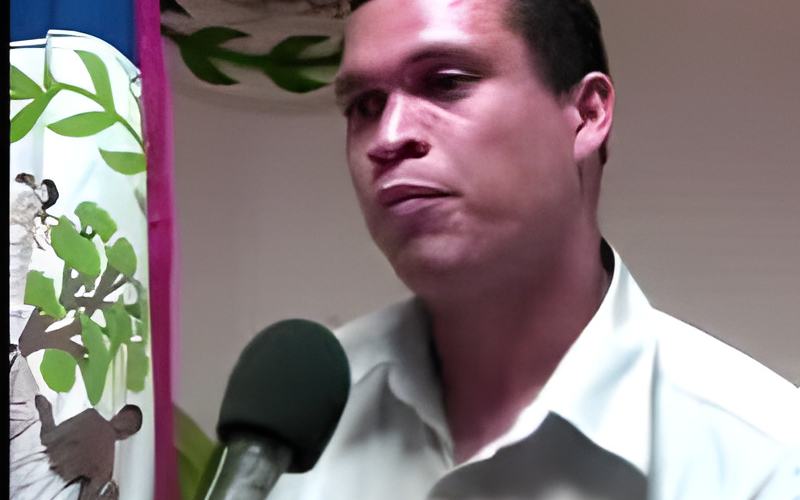
It has been 5 years since the bank has given this type of loan to the government of Belize and point man in the debt restructuring Minister of National Development Mark Espat says that this loan is representative of the multilateral=s confidence on the way things are being done, even if that means having to adhere to strict policies.
Hon. Mark Espat, Minister of National Development
"The policies that support this loan are considered consistent with broad areas our government committed to pursuing two years ago when we changed directions in the management of public finances. This new direction in sourcing concessionary financing for public sector programs, living within our means, supporting the programs that target poverty alleviation, education, healthcare and other priorities for the benefit of the majority of the Belizean people should always be the focus government.
This type of financing, concessionary as the funds are, underscores government's ongoing commitment to sourcing the most affordable financing within our budgetary targets, rather than expensive commercial credit of the past. The basis of the policy based loan is because we wish to underscore not just our past, but our future commitment to this new way of managing public finances.
We wanted to be sure that whatever funding came in, will come to programs that contribute to the health of government's finances, rather than to expanding the debt for example where it was clear that we had reached the outer limits of government's ability to borrow and our debt to GDP ratio at ninety, almost a hundred percent and so those figures had to start heading in the other direction before we were able to add to the loan portfolio."
By Espat's admission the way things were going were simply unsustainable and while government has since adopted a home-grown way of doing things the reality is that in the case of this loan, the IDB a multilateral agency will be dictating the pace.
Hon. Mark Espat,
"We could not continue to borrow on increasingly more expensive terms that we had to change the approach. This loan is at a rate of less than six percent. The weighted average interest on our outstanding commercial debt is at almost twelve percent for example. So it is necessary for government to seek concessionary financing.
It is necessary for government to ensure that we maintain our spending limits to within the realm of what we can afford and of course that means ensuring that we direct precious resources to where they are needed most, to poverty alleviation, to health care, to education, to improving the quality of life of Belizeans, not to projects that have in some instances been wasteful or underwritten, the private sector. That is not what government has been doing and so when we say homegrown, whether it is a facility from the IDB or the CDB or whether it is your loan from the credit union or wherever you borrow, all loans must come with conditions and so we accept those conditions not because of who they are dictated from but because we feel that the conditions are necessary to put public finances on a sustainable path."
The loan will be disbursed in two tranches the first of $10 million will be handed over this year and the second $15 million by mid next year.