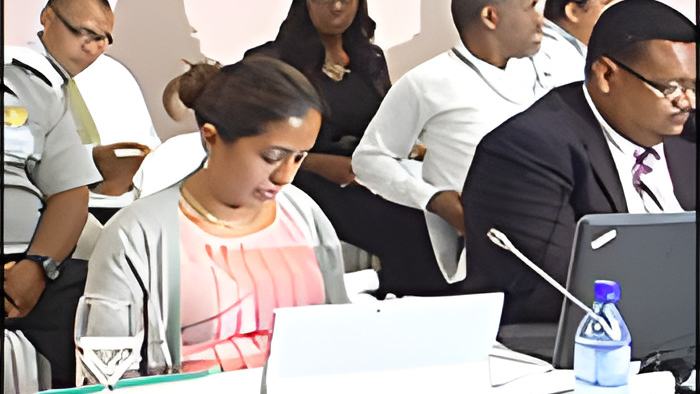
That opportunity to speak with the Trade Ministry's CEO came at a conference held at the Princess Ramada today between the Ministries of Trade from both Belize and Guatemala. They were continuing the discussion on how to formalize trade alliances between both countries, as spelt out in the Partial Scope Agreement, which was signed in 2010.
Right now, the Trade technocrats from both sides have divided themselves up into 3 separate subcommittees to work through the challenges.
CEO Singh discussed the challenges that they are tasked to overcome to move the process forward:
Mike Singh - CEO, Ministry of Trade
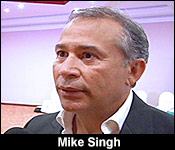
"And this includes committees for example for sanitary issues which is a SBS committee to deal with how does our BAHA personnel deal with the people in Guatemala to make sure that we equate our procedures so that fighter sanitary issues are acceptable in both sides to enable trade. We have other issues relating to tariff issues with Customs, so that our tariff codes can integrate. So when an entry is done with tariff code items from Guatemala coming to Belize or vice versa, that we make sure that we integrate so that there is no issues with understanding how the Customs will work on these issues and of course the major one is the issue of market access, which is a committee to working with our exporters and importers on both sides to put them together and to make sure that their trade can happen and that we can help with the technical issues that may prevent it or the technical issues that can promote it."
Daniel Ortiz
"Sir, for those who pick up on that and look at it as bureaucracy, which the issues at government level, it may appear as though it is impeding the process to free trade between both countries. How important is it?"
Mike Singh - CEO, Ministry of Trade
"That's the whole reason for the commission, is to prevent that bureaucracy and to perhaps cut through whatever that red tape is as they called it and we need to understand what the bureaucracy is. Now as I mentioned in my opening remarks, many of our exporters have figured ways around the red tape and it's not something we condone. We would like to see our exports happen on an official basis. For many reasons, we would like to be able to measures it. We would like to make sure that the exporters that are doing exports get the credit for it and whatever incentives are available for exporters that they benefit. On the other hand, on the imports coming in from Guatemala, they may not be coming through the official route. Government is losing revenue. So we need to make sure that we can measure or we can control. We can make sure that the quality for both consumers on both sides is what it should be, because if you are not going through the process, then we have no way of verifying for instance, if it's a food item, that the item is fit for consumption or that the quality that one country's consumers are buying from another country are up to the level that's acceptable by our standards or their standards."
At today's conference we had an opportunity to meet two Belizean business men who have been utilizing the partial scope agreement to their benefit, to get their goods into Guatemala. These entrepreneurs told us why they want the partial scope agreement to be finalized:
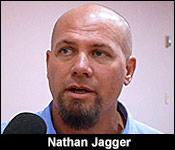
Nathan Jagger - Owner, Banana Bank Agco
"We grow corn, beans, black eye peas - all agricultural stuff and we have been able in the last five years to export a lot of this product into Guatemala and we hope that we are going to be able to do rice and cattle are also on the list, but it needs tweak a little bit to get to the exactly where we want to be. We have been exporting for the last 5 years or so into Guatemala since June 2010, I believe we started and we have taken some and it has grown and grown and we hope to be able to expand more. There is 15 million people that lives over there in Guatemala, maybe 16 million. I am not sure how much. We have 350,000 here in Belize and so we grow more than we can use."
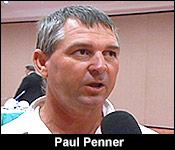
Paul Penner - Owner, BelCar Export & Imports
"The products we produce is corn, beans, we also have the special that makes the corn grits as corn meal and so forth, so we look forward to do business with Guatemala. BelCar Exports has been put as corporative business in the year on 2000 and from there we serve a little in the local market. We are more like an international marketing export company and we became into using the partial scope agreement in 2014. We have shipped corn with the partial scope agreement. We look forward to do a lot more."
Tune in to tomorrow's newscast when we'll show you what the Guatemalan Vice Minister of Trade had to say about the enduring problem of contraband, the illegal cross-border trading which continues to be robust.