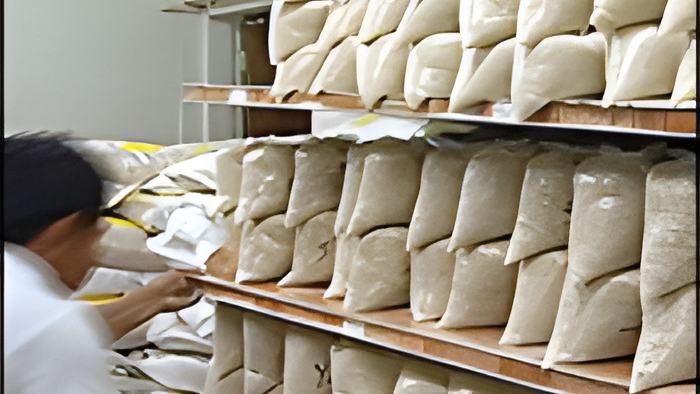
In late March, the price per pound of rice became a very controversial topic when importer Jack Charles challenged the local producers and accused them of gouging consumers. He was pushing to import Guyanese rice, which he says could be cheaper than what is already on the market. The local producers pushed back and pointed out that they were not the ones gouging. It did prompt an intervention from the Government who promised to get the price per pound - which is currently at $1.15 - decreased so that consumers could get it cheaper.
That announcement came on April 1, and the Government said that it would take 1 month for this new price regime to be announced. Since then, it's been been 3 and a half months, and no price change has been finalized. So, when we got the chance today, we asked the CEO in the Ministry of Trade, what's the hold up? Here's what he had to say:
Mike Singh - CEO, Ministry of Trade
"There has been a lot of movement, just not public movement. There has been a committee that was formed which involves our people from the Bureau of Standards, it involves people from Agriculture, from our Ministry and the Consumer Protection Unit. We've gotten so far, where two weeks ago we actually presented what our calculations of government side has been for the cost of production at which we will set the basis for where the price will be set. That has been given to the farmers. They now have a period of time to analyze it and get back to us and we are targeting that no later than I'd say the middle of September we should come to an agreement as to what that number should be and at that point than that number will then be imposed upon the producers."
"The way we are looking at it, is what we called the "basic rice" or the "social rice" - there is many word that's been described. We will form some kind of price protection. However, we will allow the farmers to float the price for the value added rice which will be the higher grades, where if I chose that I want brown rice of a special kind or I want unbroken rice or long rice - then I will pay that market price for that. But there has to be a social rice that is available for those people that may not have that choice. It's very high priority, but you have to understand that for us to enable the price setting on a certain standard, it means that we need to define that standard. It means that we need to define the labeling requirements. It means that we have to make sure that the law is adjusted to put it in force. There is many things that have to happen behind the scenes to ensure that we are not challenge on an issue like this."
"As you know this issue came to the forefront because of a challenge by an importer who felt that he had the right to bring in rice from Guyana and that pressure will continue. Guyana is facing some challenges with Venezuela where their exports of rice is now being cut. Which means that they are now looking for markets to dump their production. We don't want to be the victim of dumping."
As you may remember, the local rice producers - after they were called out for unfair prices - said that they weren't the ones who were driving the price of rice up. They said that the culprits were the grocers at your corner store. According to the growers, the gouging continues to happen because Consumer Protection, which is an enforcement arm of the Government, was not doing enough to stop them. Today, Singh told us that there are proposed changes in the way rice is delivered from the wholesalers to the retailers, which should help to curb that type of activity:
Mike Singh - CEO, Ministry of Trade
"The price controls exists also at the retail end and also quality control. Some of the things we are looking at doing is to discontinue for instance, the casual repacking by grocers. That's a process again that we have to make sure we do right. We need to ensure that when somebody is buying a pound of rice that it's not one once less than a pound, that it is a pound. We need to make sure that all the nutrition details are put on the package. Those are some of the issues that we are putting in place, whereby the prepacking of retail should happen at the factory and not at the vendor. If we can achieve that I think we will address a lot of the issues you are talking about, where at that point we will then rely on the public to give us the kind of intel for us to act on. There is a consumer hotline and I will tell you, it's completely underutilized. We get very few calls on that hotline. So the only way we can react to a violation has to be through a report from the public. If the public is not reporting to us, we can't act."
The Consumer Protection Hotline is 0-800-283-5587.