Last night, we told you that the Supreme Court has ruled that the Government of Belize must pay the former importers of Liquefied Petroleum Gas a total sum of just under 10.9 million dollars.
These Central American-based companies, Gas Tomza Ltd., Western Gas Co. Ltd, Southern Choice Butane Ltd., and Belize Western Energy Ltd, went to the Supreme Court. They brought a lawsuit against GOB to complain that the former Barrow Government violated their constitutional rights when that administration passed the National Liquefied Petroleum Gas Project Act in September 2019.
With the stroke of the pen, the government made a significant regime shift in the cooking gas industry. They legislated specific regulations which gave exclusivity to the National Gas Company as the sole importer of LPG into Belize. It is a lucrative multi-million-dollar industry, and it is estimated that the country consumes approximately 12 to 13 million gallons of LPG every year.
The Briceno Government was obliged to defend against the lawsuit, which began before they were elected to office. The presiding judge, Justice Michelle Arana, distilled the dispute into five main points of contention.
After hearing the arguments from the attorneys on both sides, the judge struck down four of the five grounds of argument brought by the former importers. But, on the 5th, she ruled in their favor. That's the dispute over whether or not the government owed them for basically acquiring their import businesses for the public purposes of consumer protection and stability in the industry. The judge ruled that the government cannot make a compulsory acquisition of a litigant's property without properly compensating them for it.
On that issue, the judge said, quote, "there can be no doubt that the direct effect of the Original, as well as the Amended Act, is that the NGC abruptly seized the clients and customer base of all five of these Claimant companies that they had established in Belize over the past thirty years, without compensation, thereby violating the Claimants' constitutional right to property."
And based on the evidence provided, she awarded the former importers with almost 11 million dollars in compensation.
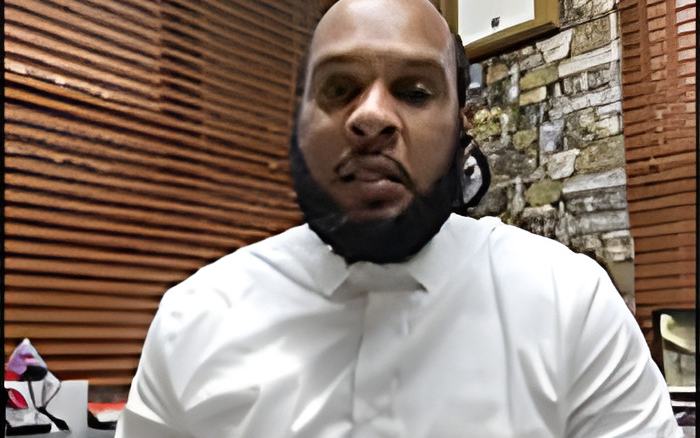
This afternoon, we got an opportunity to discuss the case with Audrey Matura, one of the attorneys representing the claimants noted that if the Briceno Administration did not quickly amend the law to remove the importation exclusivity given to the National Gas Company, the former importers would have had a sweeping victory. She outlined the judgement:

Audrey Matura, Attorney for the Claimants
"Where we are now? The decision is basically saying that on our five constitutional points, we only won one constitutional point. And that one constitutional point is that their property was taken away. Now, the property is not only something physical, it's not only your vehicles or money or so. Your property is something that you benefit from, and in this case, their goodwill, their customers, all of that. It's that intangible aspect, but it's something from which you make money. And so the court held that that was violated. And as such, we won on that point. But people will want to know what the other points that we're dealing with on. So, we asked first that the act be declared unconstitutional. They held no. We were just saying generally based on the Constitution that it violated all those provisions and said. We also ask that they find that they are right to work as importers were being violated. We didn't win that point. We ask that the freedom of association that you decide between you want to do business be violated. They said we didn't win on that one. And we also asked for equal treatment under the law, saying that the same way you made a special law for them, you should make a special law for us as well. We didn't win on that point. The only one we won was under Section 17, which is their right to property. However, I want to read a section of the decision. On page 42, the judge says, 'In my respectful view, if the original had remained unamended, the claimants would have succeeded on all the issues raised in this claim because the monopoly created by the original act clearly violated all the claimant's constitutional rights as they had ever averred."
We turn now to Matura's breakdown of the nearly 11 million dollars that the Supreme Court has ordered the Government - and Belizean taxpayers by extension - to pay to the former importers. She made the point that the sum awarded to the claimants does not cover the many months of financial losses they suffered, which drove one company out of business:
Audrey Matura, Attorney for the Claimants
"What the court is saying is because your rights were violated under Section 17 of the Constitution, we're going to give you compensation. And the compensation is settled at page 37 to 38. It's a breakdown. So it among about $10,900,000 to round it off. But it gives a breakdown. Different companies got different things. And if you will notice that since the decision - or before this- one of the claimants has gone bankrupt because their main business was to import. And at this point, we would have thought that the court would have then - once finding in our favor - ask that we submit the most latest damages, meaning that when we did this case, there was a cutoff point when you filed a document. But since then, the loss continues even up to today. So we would have thought that we would have gotten an opportunity to submit them mostly this amount, especially the company that went bankrupt and has had to close down. They have lost the most. They not only lost the goodwill and everything, but they totally lost their business. And 10 million doesn't compensate for that."
Daniel Ortiz
"So. Is that how you are going to - are you are considering an appeal on those issues?"
Audrey Matura, Attorney for the Claimants
"Well, honestly, professionally, my opinion would be that, yes, we should appeal, but it's not a decision for me. My clients got a decision yesterday. If I told them that they have to till tomorrow to read it, then I will have a meeting with all of them. Remember, it's four clients. Two might decide. 'I want to appeal, and two might say I won't appeal. So, I literally have to get instructions as to what the clients want in terms of appeal."
Matura also thinks that this case should serve as a warning to investors. She made the point that the Government is continuing a trend of depriving private sector interests of their constitutional rights, with the justification that the course of action is necessary to protect the public interest:
Audrey Matura, Attorney for the Claimants
"For those in any private sector industry, you have to be careful because this is a terrible precedent that the previous government has set. That precedent is saying that right now. For example, in the bus industry right now, the government could decide to create its own company and say, I am regulating for the best interests of the industry, and I am taking over, and I'm creating one company that will do it. And if this case remains as a precedent, then that is dangerous. Or let's think about another industry, the taxi industry. This they say, okay, from now on we are creating we own company named 'Taximen,' and we are going to say all private industries, all those in the private sector, we are not going to give you a license to name one taxi only. This government entity, which is partly owned by the government and the private sector, will do it. You all need to see it for the bigger picture. So, in terms of what this case means, it means a lot for the policies of this country. It means a lot for the laws of this country, and it means a lot to the constitutionality of the conduct of government. So the judge found that the government can legislate, but our position is that that legislation cannot be unconstitutional. And so the mere fact that you found that it was wrong to take away these people's business because that's what Section 17 is seeing, and that's what the decision we won on is saying. You didn't have the right to just take away these people's property, their goodwill, their, you know, their whole business. We're saying 1, you don't have that right. And if you do, it has to be that you compensate them for it. We are saying that one, you don't have the right, and compensation could never suffice."
In this lawsuit, the Government was represented by Senior Counsel Andrew Marshalleck and Crown Counsel Agassi Finnegan. The Central-American-based companies were represented by Audrey Matura, Jose Alpuche, and Senior Counsel Douglas Mendez. As viewers are aware, Mendez has been retained by the Briceno Government for major, technically complex lawsuits. But in this particular case, he was one of the Government's lead adversaries.