
Last week, we told you about that strongly-worded letter that the Belize Sugar Cane Farmers Association sent to Prime Minister John Briceno. They were putting him on notice that after listening to his comments to the press about the impasse in the sugar industry, they interpreted his remarks to mean that he was siding with Belize Sugar Industries Limited and their multinational owner, ASR Group.
As we told you, the BSCFA and its members, which supply about half of the sugar cane delivered annually, cannot reach a signed commercial agreement. From the farmers' perspective, the overhead costs that BSI/ASR has been charging them for the last few years have diminished their take-home revenues. They don't trust the current calculations that the company has been using, which is known as the Net Strip Value. So, they have proposed a new profit-sharing formula.
Of course, the millers have insisted to the press that they have closely studied that formula from the BSCFA, and concluded that if they agreed to it, they would have to give up 20 million dollars in value to the farmers, which would drive them out of business.
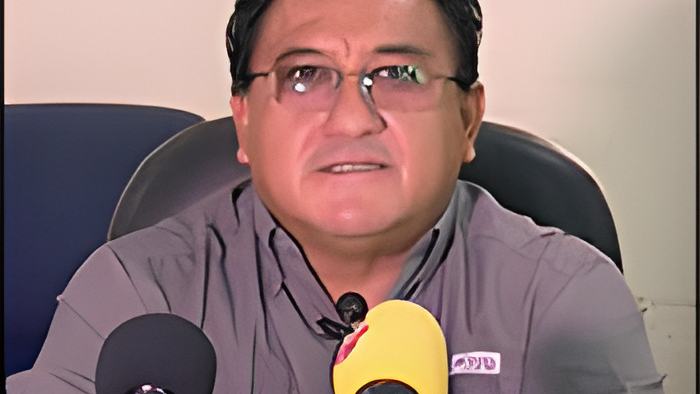
Unfazed by those views, the Belize Sugar Cane Farmers Association called a press conference today to justify why they think their new formula is perfectly reasonable.
Here's how the BSCFA's Javier Keme explained their proposal to split the gross revenues of sugar sales in a ratio of 60% to farmers and 40% to the millers:
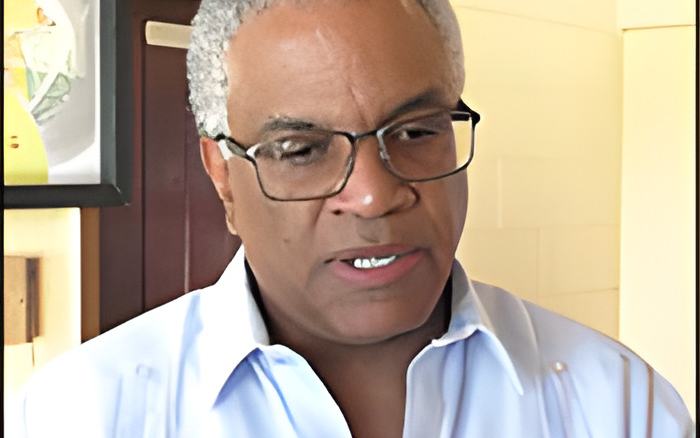
Javier Keme - Chairman, BSCFA Finance Committee
"The proposal of the BSCFA, we call it a straight split from the gross revenues of 60% for the producers and 40% for the mill. I want to start by saying that this is not a formula that just came to our minds or that we're just establishing it for the first time. This is a model that is being used in other parts of the world, and it works perfectly well. The percentages per se vary in each location. For example, in Mauritius, there is 78% for the producers and 22% for the mill from the gross revenues. In the case of Costa Rica, there is 65.5% for the producers and the rest of the mill. In Mexico, there is a straight split of 57% for the producers and 43% for the mills. In Guatemala, it's 56:44. And here in Santander, we have a split of 54:46, but there is an additional benefit that the farmer gets on top of the 46% from the payment of sugar, which is a $3 for the use of bagasse, per ton for the sale of electricity to the national grid. So, if you compound the percentage being paid as bagasse to 46%, it's a higher average on the total gross revenues. So, this is the foundation of our proposal, to come up with a simpler formula - a transparent formula - which will remove the distrust that there is on both sides -well, more on our side, as producers."
So, what about the overhead costs, such as transportation, shipping, and freight? And who would bear those? Here's how Keme answered that inquiry:
Javier Keme - Chairman, BSCFA Finance Committee
"All the costs would be under the 40% that we are allowing the mill. The 40% - the deductions that they have been doing with the current model of the NSV become irrelevant for us. There is only one thing to establish, which is gross revenues itself, accordingly for each marketed sugar, the volumes, and then we have a gross revenue to establish. You divide it by the amount of tonnes that is being produced, and then you just apply the quality formula for each test group that we have. Then, each test group gets its own cane payment per ton of cane. So, it's a very simple formula, and it has advantages. I think the biggest advantage is that the harmony between both entities would be increasing. It would increase because there would be any more distrust in getting information. On one side, they claim it's a private entity, that their income, their revenues; it's their private right to have it confidential. But, the issue there is that in those deductions, we pay - as farmers - 65% of those millions, which amount to - in this year - to an average of 33% of the total gross revenues. So, that is why we claim we have a right to know how this amount of millions come to be deducted."
From our discussion with representatives of BSI/ASR, they insist that it's not fair to ask that the millers bear all the manufacturing and transportation costs.
We turn now to another critical element of the dispute: transparency and accountability. That's what the farmers say is severely lacking with the reports on net strip value, which the company provides to them as part of the payment for sugar cane deliveries.
The Prime Minister told the press last week that a breakthrough between the two sides is a right being provided to the farmers to audit the charges and services the millers are charging. Today, BSCFA's Oscar Alonzo insisted to the press that they have never asked for such an audit. Instead, they say they want detailed, documentary proof from the company about each service charge, such as a bill of lading. Here's that part of the press conference from today:
Oscar Alonzo - CEO, BSCFA

"We have never asked for an independent audit. We've never asked for that. All we're simply saying is that as business partners, you're buying my cane. You're selling it as sugar. All I want you to show me is exactly - if you're charging me so much, deducting so much from the price of the sugar, in order to pay me, I want to be able to verify what it is that you're deducting, not only by one sheet of paper, which you send me every year as the NSV, but having me have access to the different documents like invoices, bills of ladings - a whole heap of other documents that support it, and your procurement practices that would indicate that you got the best price for that service, and not try to do it as an internal transaction. That's the basic - and we have the in-house capacity that can analyze those transactions. We don't need to go outside and hire a particular independent firm or so on. So, we're not interested in audited [statements]. That is their operations. We not asking for the auditing of their operations. All we are asking for is documentation, detailed documentation that will enable us to verify the costs that they are deducting from the gross revenues of the sales of sugar and molasses for us to determine if we're getting a fair payment for our sugar cane."
We'll keep following the latest developments in this dispute, which could again negatively impact the start of the next sugar crop season.