
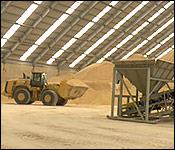
Two days ago, we took you to Orange Walk for an information-sharing session that ASR/BSI hosted for the press. They were attempting to make their case that, over the last few years, they have made substantial investments in the country's sugar sector.
They insist that they have been incurring losses for several years as a business partner to the four cane farming associations in the north. However, they make the point that those losses have not caused them to go agitating for any increases in their share of the revenues from the sale of sugar.
Tonight, we take a close look at a few of the pricy upgrades that have been implemented at the mill to make it more modern and globally competitive - despite what they say are their financial hardships:
From the perspective of the upper management of BSI, and their majority shareholder, ASR Group, they have been on the grind to help advance Belize's Sugar Industry - their namesake.
In order to contribute meaningfully to that reform process, they have made significant investments to upgrade their infrastructure and sugar-making equipment and technologies.
They declared as much a little over five months ago when they opened their multi-million dollar logistics terminal at the Port of Big Creek, unlocking a bottleneck in shipping and exportation that had plagued the industry for many years.
File: June 8, 2022
Mac McLachlan
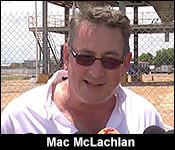
"In the future, if you look at an efficient business, every aspect of that business has to be efficient: the farm, the factory, and, of course, the logistics system that takes that sugar out. If you're going to be a globally competitive and modern industry, all of those pieces need to work effectively and properly."
The Tower Hill Facility was built between 1964 and 1967, before the country's independence, and it was even opened by National Hero George Price back when he was the country's "Premier" and not its "Prime Minister." As such, some of the equipment at the facility today are relics of that era.
So, they are gradually shedding that old skin and implementing better sugar-making equipment; the millers began an upgrade process in 2019.
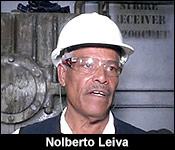
Nolberto Leiva - Production Superintendent, ASR/BSI
"Where we are standing now is part of the first phase of the expansion. We went through two phases of expansion. First, we did this first phase in both this area of the processing plant and also in the conditioning and packaging plant. We started in 2020/2019."
Those upgrades are now an even higher priority because the mill wants to keep increasing the quantity of direct consumption sugars it produces annually. Those cost more to make, but they also fetch a higher price as compared to raw sugar.
But, direct consumption sugar production also comes with a demand for higher health and safety standards.
Shawn Chavarria, Director Finance, BSI/ASR

"We're selling in international markets: the US, Canada, the Caribbean, and Europe, and the standards are extremely high. One mistake can really tarnish your reputation, and that's why it's very important what do here is done to a very high stand = -kk?kard, that meets international customer requirements, and that is a big part of the investment that occurred."
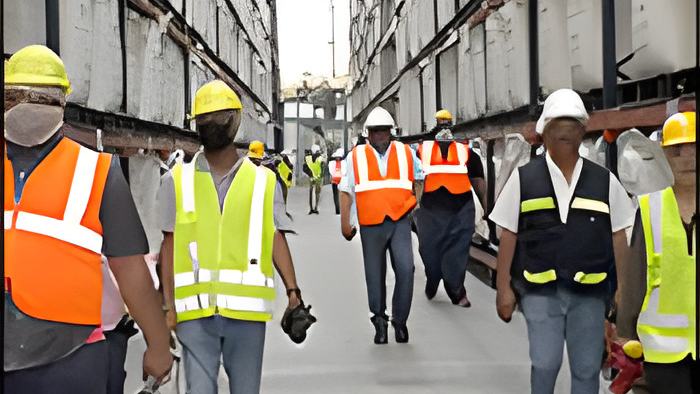
On Wednesday, the company's employees led the press on a tour of their Tower Hill compound. Deep in the bowels of their factory's production areas, they pointed out significant portions of their equipment, which have been replaced with stainless steel versions.
For direct consumption sugars, the company has to work hard to protect against contamination in all the different phases of production.
Nolberto Leiva
"What we will normally do when we will start the production of direct consumption sugar we have to ensure that the entire system is clean. So, what we do [is] we start first with raw sugar, which will take you more or less about three days, before we start producing direct consumption sugars, just to ensure that we have the system clean."
"We are on the centrifugal floor, and this is part of the expansion for the production of direct consumption sugar. What this does is, as a centrifugal, the separation of sugar crystals from what we call molasses. These centrifugals and components are all stainless steel."
"We are on the third floor of the boiling house, and in this area, we have much of the equipment that was installed for the production of direct consumption sugar. We have receivers, storage tanks, conveying systems, and syrup clarifiers."
Daniel Ortiz
"Are all of these made of stainless steel?"
Nolberto Leiva
"All of these are made of stainless steel. We are on the fourth floor of the boiling house, and to my right and behind me, we have the various equipment that was installed for the production of direct consumption sugar. We have grain receivers and vacuum pans - where the crystallization process takes place, which is the conversion of sucrose from liquid form to crystal form. To my left, we have some of the old vacuum pans, but they are still part of the direct consumption process stream, where we continue to do improvements in some of the components of these old systems."
"The reason for that is to try and capture as much metal that may come with the [raw] materials."
Eventually, the entire factory will get this stainless steel facelift because the company reasons that they have to focus on contamination control, even in the production of raw sugar, which will eventually become direct consumption sugar.
Nolberto Leiva
"The improvements in the other areas where we do the raw sugar, or raw materials to convert it into raw sugar, we still have to do improvements there because we have the stream, the raw materials comes to produce the direct consumption sugar comes from the raw source. So, that's the reason why we still have to continue doing improvements in the raw sugar area."
After the direct consumption sugar is produced, it is carefully packaged using equipment that affords batch processing.
Nolberto Leiva
"What we have here is the packaging plant. Once the sugar is conditioned, for approximately, three to four hours, and then it is conveyed to the packaging unit. We can package from 1 ton to my right, and then, we have three packaging areas for the packing of fifty kg and twenty-five kg, and we also have a line where we will start the packaging of one, two, and five kilograms."
After the packaging of the sugar, the company stores it in a massive warehouse that comes with a raft of health and safety regulations.
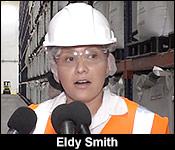
Eldy Smith - Supply Chain Manager, BSI/ASR
"We're standing right now in a twenty thousand metric tons warehouse, and these are all 1-ton bags that we have here. The designations that we have, particularly for this sugar, are going to Europe. We also have another warehouse, which is thirty-five thosund metric tonnes, and most of our market there is the CARICOM and local market as well. This past fiscal year, we managed to export 2,400 containers to different destinations."
The millers insist that the benefits of all of these investments are equally shared with farmers, who have no risk, but who are reaping the reward of a higher payment for their cane.
File: November 16, 2022
Malcolm "Mac" McLachlan, VP, International Relations, ASR/BSI
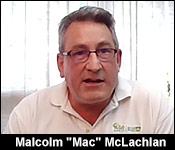
"We made those investments for and on behalf of the entire industry. We invested, but everybody would share that benefit through the value-share agreement."
Those investments over the last four years have been reported to be collectively worth over one hundred and ten million dollars.