And from mangroves being flattened to an ascendant seaweed seaweed industry...
Seaweed is in its nascent stages of becoming a booming industry for the south and hopefully other areas of Belize in the near future.
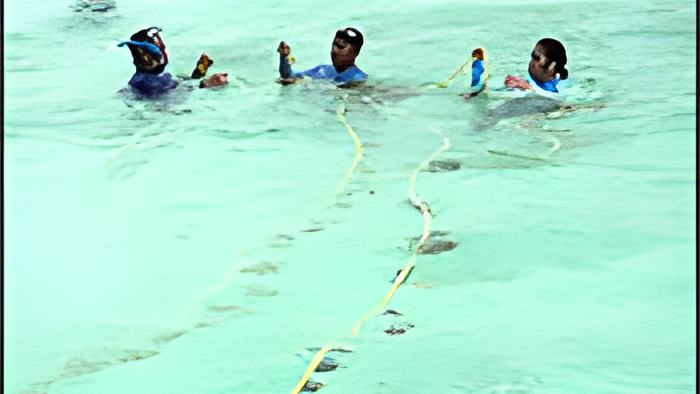
For the past four days in Placencia The Belize Women's Seaweed Farmers Association, in partnership with The Nature Conservancy have been hosting a series of training sessions for a group of entrepreneurs, conservations and stakeholders who are interested in Seaweed farming. This morning the group got a chance to go out to the BWSFA's Seaweed farm, just off the coast of Ray Caye to gain further insight as to how they can set up their own seaweed farms.
Seleem Chan, TNC, Mariculture specialist
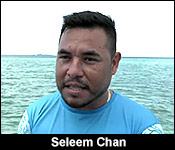
"As the training, the name of it "Seaweed Mariculture training" the lessons learnt really is to develop a seaweed farm so looking at the work being done in establishing the industry on the first day how to identify a farm site how to do it in an ecologically friendly manner in an effort for us not to have an negative effect on the environment. We also taught them how to create a 50X50 submerged structure which is the forked cultivation design that's being promoted how to create that structure from the different sizes ropes the cultivation line that they are working with today and learning how to attach the seed onto the farm so that is important there are key knots that they need to learn and if they don't do it right eventually the seed can loosen from the Rafia and we don't want that to happen."
Melissa Cabral, Director, BWSFA
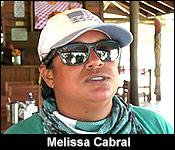
"The people that we trained today are going to now go into the world or waters and create their own farm. And right now in Belize we are building the industry the seaweed industry and we would like them to help us build regulations and rules for us to get permits to start having our own farms so in training them to do a good job and to do it the right way then maybe they would give us our permits."
"Just to create this association legally we had to get all our paper together and all our documents together but also we created it so people could not harvest from the wild. Because the stuff growing in the wild is very important to us it's like a habit for many marine life so by putting it on a cultivation line it's better if you just farm your own seaweed and harvest it than to go in the wild and take it from where it's putting back CO2 for the fish and for the different marine life so that is why and also for alternative livelihoods as you know to alleviate too much fishing and also it helps the water for sustainability."
Our team was out on the water all day, and on Monday, we'll have a deeper look at the training and how the association is working to formalize the Seaweed industry.