
And while the power company is going through difficulties, the sugar industry is having its worst year in more than a decade.
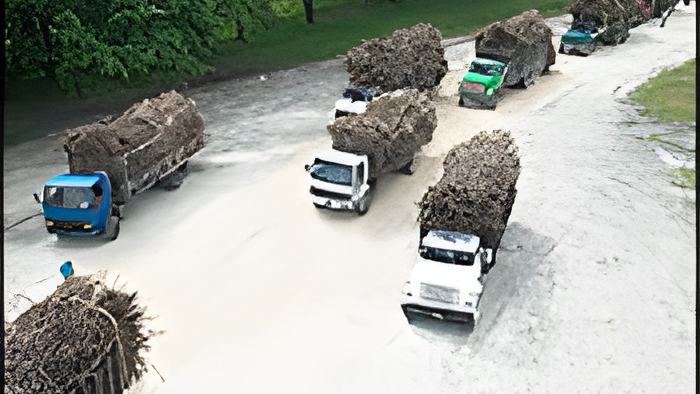
Last night we told you about the dire projections for the upcoming sugar cane season. And how the Minister of Agriculture has stepped up to the plate. Even though he had been stripped of the sugar portfolio at the start of the government's second term, at a sugar symposium today, he addressed the cane farmers with the truth: the sugar season will be scary. He explained to our colleagues at CTV3 what they're faced with.
Jose Mai, Minister of Agriculture

"We have to be very sincere with the farmers, stakeholders, as to where we are in the sugar industry and we're not in a very good place, we're in a very sad state right now, such a state that we don't know the outcome of next year. The crop is winding down, if you look at the weather, I think we have two days of rainfall and that's it for the crop, it's over. So we will end up with 825, maybe 835, maybe the most 840,000 tons of sugar cane, which is a drop of 120,000 million tons compared to last year. We will be short of 23,000 tons of sugar. We will be short of 53 million dollars this year and so it is not a good place to be. Now what does this mean? People say it's only numbers. These numbers have serious implications. Take into consideration that the price of sugar has gone down, the last estimate to farmers is at $54 compared to last year, it was $87 which is already a significant drop in the price so what does this mean? Well, if you look at the fields out there and you have a very keen eye you will note that 60 or 70% of the cane fields are yellowing, showing signs chlorosis, or chlorotic leaf as the technicians refer to it. It means that these fields are infected with the fusarium fungus already. And during the rainy weather since it's a fungus and it spreads by spores, rainfall will spread the fungus even further to fields that do not have it right now. Those that have it right now will yield less next year and those that don't have it right now will have the fungus by the time the crop is ready to open. So if we are at 830,000 tons today which is a drop of 12,000 tons. Next year, we may have a drop of 200,000 tons so we may end up somewhere between 560 and 600,000 tons of sugar cane."
But Mai says they will not let the sugar industry go the way of the citrus industry. He explained there is some funding - not much - but enough to chart a way forward.
Jose Mai, Minister of Agriculture
"The Ministry has acted proactively and we have made allocations through the World Bank's CRSAP project, 2 million dollars, we have another $500,000 from capital 2 which we have which we will make available for the program recommended by SIRDI. Now it's not a lot of money but it's a start. We hope to get more resources in the near future and we also received another $100,000 from IICA and we also have an additional fund that we will use to obtain seeds of resistant varieties so we're working with biological control to control the fungus. We're also working at doing sustainable practices with the $500,000 and we have another set amount for seeds, multiplying seeds that are known to be tolerant or resistant to the disease."
"There are 5,000 cane farmers, that's 5,000 families. So that's what, if you have 5,000 cane farmers and they have their wives and families, you're talking about 20,000 people plus the workers and those who depend, you're talking about 35,000 people. We cannot allow this industry to go down. If you look at the mill, the mill employs 300 people, that's 300 families. And so we take this very seriously."
"If there are those who believe that the mill can survive without the cane farmers, they're mistaken, and the cane farmers cannot survive without the mill. We are joined at the hip and so everything we do from this day onward has to be in the right, positive direction."