
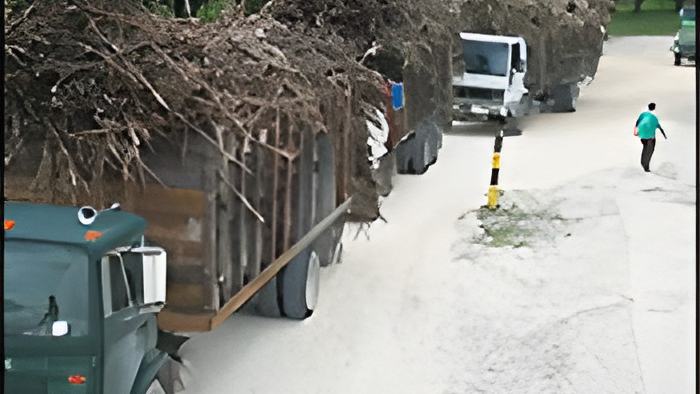

And, turning now to other news, the 2026 sugar crop season has officially opened, bringing a spark of optimism to an industry that has been facing severe challenges due to fusarium disease, climate change, and declining production. Jaleeza Roberts has more:
Six months ago, uncertainty hung over Belize's sugar industry. After the close of the 2025 harvest, farmers, associations, and mill operators questioned whether another crop season was even possible.
For years the start of the sugar season has been met with riots, demonstrations and industry wide anxiety, but this year, perhaps in an alliance of the desperate, it was all hands on the plow.
Delisted this, the General Manager of BSI explained that despite the optimism, the sugar industry is still not where it needs to be.
Mac McLachlan, BSI General Manager

"And beyond that, we saw cane developing and growing again, but we're expecting more cane this year than we had last year. Last year was a low, we had 900,000 tons. This mill has milled 1.3 million tons in the past, and that's where we want to get back to. But we're reckoning we'll be perhaps a shade over a million tons this year. So that is an improvement on last year, but not nearly where we need to get to."
Belize caters to various varieties but in the new crop year as a means of expansion, they will be introducing new plantlets.
Mac McLachlan, BSI General Manager
"BSI has been working now for the last 10 years on new varieties, developing new varieties, and I'm delighted that soon, by March, we'll be able to introduce into the industry the 750,000 plantlets that have been developed from tissue culture in Florida, which are all for new varieties that we'll be propagating as clean seed to be pushing out into the cane farm, generally across the northern Belizean cane farm."
"And that will improve the pollen of the cane, the amount of sugar in it, it will improve its durability and its resilience to climate change, and it will also, we hope, become a lot more of a stable variety for the industry moving forward."
The sugar crops saw fusarium take over and killed a large portion of the crops, but with resources from the Ministry of Agriculture, it's more or less under control:

Dr. Osmond Martinez, Minister of State for Foreign Trade
"Government invested $500,000 through the Ministry of Agriculture to do a pilot test to see if it will work in terms of arresting fusarium. It worked, and then the PM presented to cabinet a further $2.5 million to continue to arrest fusarium. It was approved, but then the most effective way to arrest the pathogen was to do a growing application. But then the rain started, and we were faced with a new challenge. And there was very little literature to see if we can adapt a new methodology such as aerial application. And we took the risk, with God's help and grace, the aerial application worked. In addition to that, a combination of good weather, good climate, have also assisted in terms of reducing. We practically, I won't say we have managed to arrest fusarium at 100%, but at a satisfactory level, there is still a lot of work that needs to be done."
Even with fusarium being addressed, challenges remain. From climate change to aging cane fields, the focus is now on quality, technology, and resilience to ensure the long-term sustainability of the industry.
John Briceno, Prime Minister

"Part of the the labor the whole roadmap is to be able to modernize the industry so that our farmers can be able to adapt come up with new varieties of sugar cane that can withstand some of these pests and funguses that we're meeting and then to be able to improve productivity and the quality of cane so the better the quality the better the cane the more sugar it produces because it's not about producing quantity but quality you want sugar cane stocks that have a lot of sugar so that is the whole trust of what we're doing but of course we have to be able to help them with the science and the technology and the financing and so the whole plan is working around that and also to be able to take the sugar act and to make certain amendments to be able to modernize that act and to ensure that the the stakeholders are the ones that are in fully control."
Jaleeza Roberts, 7 News.
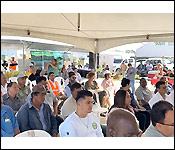
This is the second time in history that a Prime Minister has attended the opening of season ceremony. In this case, the PM is also the Minister of Agriculture.