

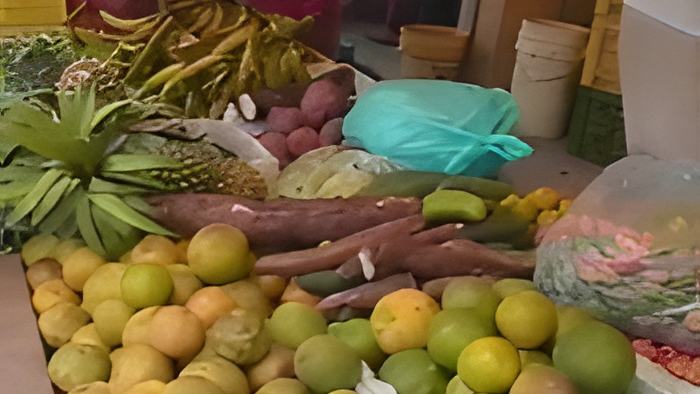
The problem of contraband, especially in northern Belize seems to have no easy solution. The experts say, it is endemic, meaning that trading in contraband has become a part of the culture. And that's how it is in Orange Walk where BAHA personnel was trying to stop the trade in contraband-ed fresh vegetables. But the law is one thing, and common practice is another, and produce vendors who had their goods confiscated were none too pleased. Here is the story as captured by our affiliates at Northern Cable Network.
Alfonso Noble Reporting,
This was the scene this morning at the Orange Walk Town market as quarantine personnel from the Belize Agricultural Health Authority (BAHA) conducted routine inspections and confiscation of illegal produce. One man who had a sack of onions taken from him says it makes no sense to him because the produce he is selling is far superior to those available locally.
Vendor,
"Why is BAHA coming to deal with this market because Belize produces small tomatoes and even the Ministers don't want to buy those type of tomatoes. We need pretty things to sell in the market and that is what the people want, they don't want tomatoes which are ugly. We want pretty things in our market to sell. The second point is that the Belizean farmers want a bucket for $50 to $60 and so how much will I sell it to the people for? Nobody will buy it because the price will be too high. When I go to Mexico it is about $15 a box for tomatoes and so I can sell it for cheaper here."
Vendor #2,
"BAHA and the police came to confiscate contraband vegetables and they come to ask the owner if he has any contraband. He said he didn't have anything but they still searched the place and they found some ripe onions which was supposedly Mexican onion and they confiscated it."
To those who lost produce in today's operation it would seem like an unfair practice but Technical Director of quarantine at BAHA Margarito Garcia says this kind of sting or quarantine surveillance is a regular occurrence and it is necessary to protect the country's agricultural health.
Margarito Garcia, BAHA
"It's a regular activity that we do to monitor illegal entry of quarantine goods. It could be foods, vegetables, or meat or anything that has to do with agriculture that is imported illegally. It is one of our objectives, main objectives, to try to protect our agriculture health, mainly, and our human health in that sense. What happens is that people who are involved in the illegal entry of these commodities don't know that these products can bring a pest or a disease. Its not visible with the eye but you can bring in a larvae for a virus or bacteria in a fruit or a meat and then you somehow introduce it into the country. People purchase it from you, it's a fruit, they eat what they need to eat, they discard the rest and a larvae hatch into a fly. It could be an exotic fly like the medfly and once that medfly comes in here it costs us thousands of dollars to eradicate, especially in the north. We have been losing approximately, only in papaya exports, about $18 million annually that is not being exported. That is foreign exchange we are losing as a country. So we try to control and regulate these things from coming in. We have this ongoing, it could be daily, weekly, and sometimes we get information that a commodity has been spotted coming in illegally. We would react to that and try to investigate and intercept it and charge or fine those people that are involved those activities because as I mentioned, a pest or a disease can really ruin our economy."
And to protect the local economy, Garcia says there are ways to import produce legally and with minimal risk.
Margarito Garcia,
"Permits is a way of monitoring it at the ports of entry. You come in legally and through the permit system we can monitor what you are bringing in, how you bring it, and we do inspection to clear it so its safe to come in to Belize. But if you bring it in illegally, we don't know how you get it, how contaminated it is, and once its contaminated with a pest or disease we don't have no control over that. We inform people not to bring in these products but people are involved in illegal entry of these commodities."
And today that meant that two vegetable vendors were targeted. But today's operation netted less than a drop in the bucket in a thriving illegal trade that pits BAHA policy against a way of life.
Garcia says that those who are caught they have the choice to either pay a small fine on the spot of be taken to court. Both vendors chose the first option today and paid fines of $100 and $200.
7NEWS produced for broadcast by News Director Jules Vasquez
Edited and Prepared for the internet by Keith Swift