Ministry of Health statistics from 2004 to mid 2006 show that domestic violence is a serious and increasing problem. Those cases that are reported go to the Women's Department and the police and they occur most frequently in the Belize District followed by the Orange Walk, Cayo and Corozal districts. Those most affected are working women between the ages of 20 to 44 years. By the middle of last year there were 487 cases reported, a small number of them involving male victims.
The figures point to an alarming problem that over the past three weeks has been highlighted not through advocacy campaigns rather by the reality that cases of abuse ultimately end up in death. Today we take a closer look at domestic violence and its effects.
Alfonso Noble Reporting,
Candle light vigils, torch runs, posters and activists. There is even a documentary about it complete with poster women; remember Lorna Wade who was beaten by her former common law husband to within heartbeats of death- she=s a survivor. But the past three weeks has shown that while some women make it out alive albeit with lifetime scars, the issue of domestic violence continues to plague the society at every level. This despite every effort being made to raise awareness and as the poster says break the silence.
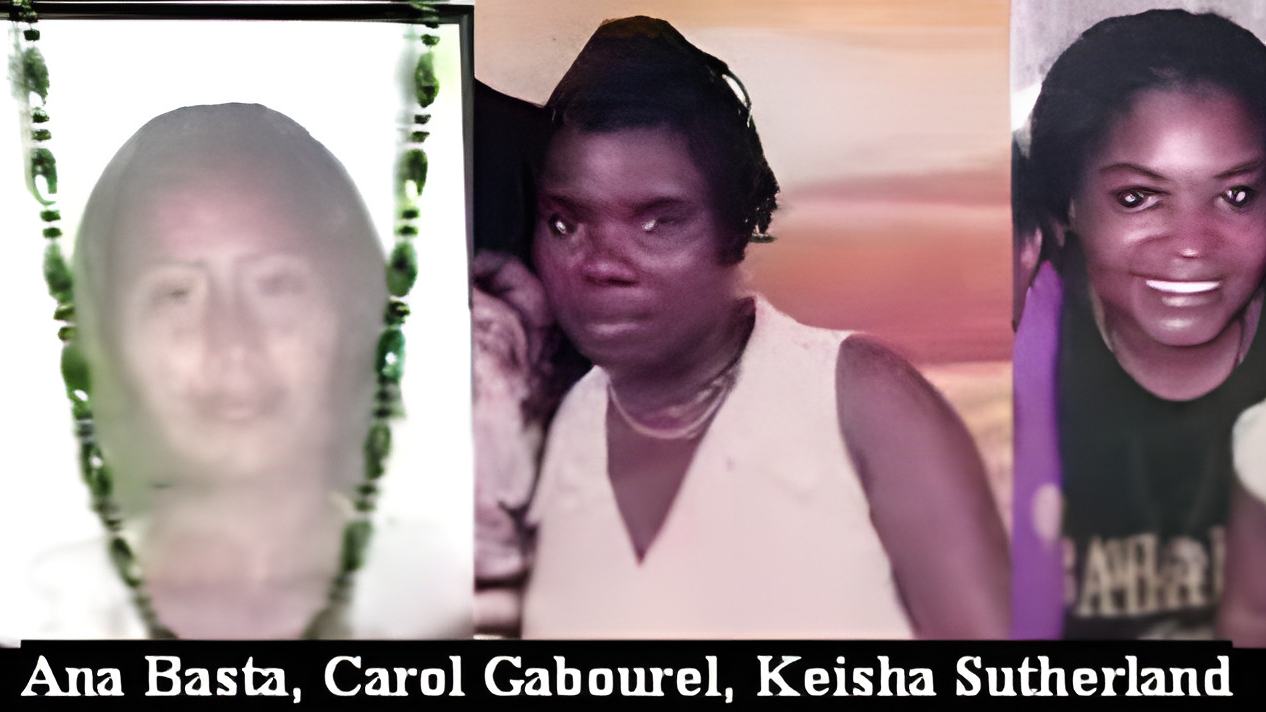
On December 16th 37-year-old nurse Ana Maria Magdalena Basto was allegedly killed by her husband. He stabbed her 36 times with a screwdriver and slit her throat with a surgical blade. While she was killed there is every indication that this death could have been prevented.
Nurse Tillet, Co-Worker
"All the nursing staff here knew what she was going through and all of us advised her, to give one two three, but it was up to her to make her last decision. We can advise but she is going out and she makes the last decision. It is not Nurse Basto, to tell you the truth - a lot of nurses here are going through the same violence and this has to stop. We are going to see Nurse Basto as the martyr here because I guess something real bad had to happen for all of us to open our eyes."
Martha Cho, Co-Worker
"She probably spoke with other colleagues but maybe not willingly and we weren't able to really see what she was going through and it hurts; it hurts a lot."
Case two is that of 32-year-old Carol Gabourel. She too was allegedly stabbed by her husband on December 25th of last year. Again there were tell-tale signs.
Rosalyn Ogaldez, Sister
"She used to tell us that he used to threaten her and said she would kill him and thing, especially when he was drinking and she would want to go take her walk and thing. When he came home and once he is under liquor, he would threaten her."
Then on Wednesday January 3rd 28-year-old Keisha Sutherland was killed allegedly by her common law husband.
Patrina Copious, Sister of Deceased
"The other day I saw blood in her eyes and I did not know what went on but I knew it was from him."
All these cases of women dying at the hand of their husbands have a number of things in common and could collectively or in isolation be case studies of domestic violence and its final and irreversible end. Dr. Carol Fonseca is the Director of the Women=s Department. She says the three cases in the past three weeks have her office redoubling efforts.
Carol Fonseca, Director of Women's Department
"What it has done really is to further motivate us and make us realize that it is certainly very important for us to get more agencies and more organizations involved in helping us to solve this problem. This is a society problem."
And while it may be a societal problem, it's one that Fonseca says lacks the support of some key players in society including men and families and even neighbors.
Carol Fonseca,
"As a society often times we look upon people very critically and negatively when they speak about the fact that their husband or their partner is abusing them. We still have not gotten to that point in our society where people feel very comfortably and open about just simply saying that my husband is beating up on me. Families have to take on an integral role and a critical role in terms of prevent domestic violence. From so many cases that we've heard, and especially in these three recent cases, we have heard that family members were very much aware of the fact that abuse was taking place, that threats were made. And it is almost after the fact then that we begin to realize that there are services and there are certain options that you can take. But the fact remains that if people are not accessing these services, and they are not using what is in place, then little can be done.
If you know that your neighbor is in a abusive relationship, if you know your sister, your mother, whoever it is in an abusive relationship, do not look at it as a private matter because for too long in our society we continue to tolerate so many of these things. The fact remains that we have to realize that we have to take it upon ourselves to make sure that we reach out for help for those people who might not necessarily be able to help themselves.
Men in our society have not taken a very active role in coming out and condemning the whole issue of domestic violence and that is one of the things that we are certainly going to be working on in 2007, to ensure that men are standing up and being very vocal."
And they need to be vocal because the Domestic Violence Act of 1992 makes this kind of violence a crime.
Carol Fonseca,
"Domestic violence is a crime. As a government we have worked very hard to make sure that you have the Domestic Violence Act. And so as a result of that, it makes domestic violence a crime and that is what people have to realize, that this is a crime and it is punishable under the law. Often times as well it comes down to not getting support. Often times family members, we have had many women who have come in here and said that they have spoken to their family members to get support and they would tell them that they should go back and try again and this is a mentality. So it really comes down to attitudes, it comes down to behavioral change, and making people realize that even after that first slap, that first hit, that that is the time to come out. From the very onset when abuse takes place, from that first hit, that that is a message that is being sent to you that you need to get out of that relationship or you need to get help."
Invariably, that help is sought at the Police Department where a special division, the Family Violence Unit handles domestic abuse cases. Sgt. Marcia Moody is the officer in charge. She says that when cases end up here what happens next is always left to the victim.
Sgt. Marcia Moody, Domestic Violence Unit
"When it comes to domestic issues, the police will respond to the domestic problem. But we will have to bear in mind that the complainants are the victims and that is the person who will tell the police what he or she wants from the police, or want the police to do. We can only do so much as the complainant is requesting. We cannot say or tell the complainant what to do, they will know or they should know what they want from the police and based on what they want, that is what the police will do to facilitate their needs. They make the final call, not the police. If the person wants to stay then that is a call for her to make."
It's a call that many women are unable to make. Moody says that on average her unit responds to approximately 80 calls of domestic abuse.
Sgt. Marcia Moody,
"It's a very sad to see what is happening now and we as the police will ensure that we respond when asked to do so and regardless of what it is, we are here to serve, to protect."
Carol Fonseca,
"There are many lessons to be learned from what has occurred over this period of two weeks or so and some of these lessons are that we cannot continue to take threats lightly, especially as women. When a man tells you that they are going to kill you, it means that they have thought about it and there's a possibility that it might take place and that is one key lesson. I would like to appeal to women throughout our country to access our services, even if it is just coming into the department or the Family Violence Unit or Family Court, just for information about something like a protection order, how do I file a protection order, how do I file a police report, simple things of that sort that can really save your life."
In the end the issue of domestic violence is one where there are many variables to consider, but ultimately the choice to stay or go remains with those being abused. Recent events show that too many times, they choose to stay.
A special hotline has been set up to assist domestic violence victims. The numbers are 0800-A-WAY-OUT, that is 0800-2-929-688.